
Best 3.5mm Monitor Speakers for Crisp Desktop Audio
Answering the practical need for clear, plug-and-play computer sound, these 3.5mm monitor speakers deliver reliable stereo audio for desk setups. The top picks below are best for different buyers: casual office users seeking simple USB-powered speakers; students needing compact, space-saving designs; gamers desiring better bass and voice clarity; and professionals who want straightforward volume control and reliable compatibility. A concise product table follows to help compare core specs at a glance.
| Product | Best For | Why It Stands Out |
|---|---|---|
| LENRUE A39PRO | All-around desktop users | USB-powered with 3.5mm audio in, top-mounted volume control, 10W stereo for clear sound |
| Amazon Basics Stereo 2.0 | Budget setups | Two speakers, USB-powered, inline volume control; simple, reliable |
| SOULION R50 | Multidevice users | LED lighting, versatile modes (Aux/Bluetooth), decent space-saving bar design |
| LENRUE G11 | Space-conscious desks | Surge sound, one-touch lights, compact under-monitor footprint |
| Creative Pebble 2.0 | Stringent desk space and sound clarity | Far-field drivers, elevated 45° position for immersive listening |
LENRUE A39PRO Computer Speakers
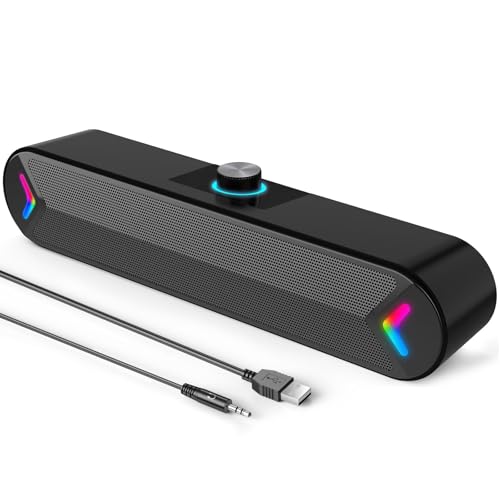
The LENRUE A39PRO is a wired USB-powered sound bar that works with desktops, laptops, and tablets with a standard 3.5mm jack. It uses 2x5W amplification for clear stereo sound and includes a top-mounted volume control for quick adjustments. This setup is best for users who want a straightforward, plug-and-play solution without Bluetooth or extra wireless features. A potential limitation is its reliance on a USB power source and 3.5mm audio input, which may matter for devices with limited ports.
Amazon Basics Stereo 2.0 Speakers

These are a budget-friendly, two-speaker USB-powered setup with inline volume control. They are ideal for basic PC audio needs and office work where space is limited. Because they are a 2.0 system, they lack a dedicated subwoofer for deep bass, making them a better choice for voice clarity, podcasts, and general productivity rather than media with demanding low-end presence.
SOULION R50 Bluetooth Computer Speakers

The SOULION R50 is a 3.5mm PC sound bar with USB power and color-changing LED lights. It operates in multiple modes: Aux, Bluetooth, and USB, making it highly versatile for desktops, laptops, tablets, and smartphones. This model is best for buyers who want decorative lighting and flexible connectivity in one compact speaker bar. A limitation to note is Bluetooth performance can be range-dependent and may require manual memory clearing when reconnecting devices.
LENRUE G11 Computer Speakers

The LENRUE G11 focuses on compact, under-monitor placement with surge sound and accessible lighting. It uses USB or USB-C power and emphasizes distortion-free listening. Best for users who want a small footprint that remains visually unobtrusive on crowded desks. A potential drawback is a smaller sound stage compared to larger desktop setups, which may affect immersive media playback for some users.
Creative Pebble 2.0 USB Speakers
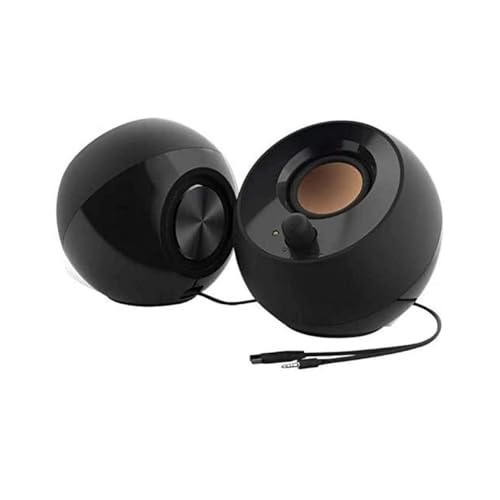
The Creative Pebble 2.0 uses a single USB cable for power and audio, with far-field drivers and passive radiators for enhanced bass and clear mids. The 45° elevated drivers offer improved sound projection for near-field listening at a desk. Choose this if you want a compact, USB-powered setup with better directional audio in a small footprint. A limit is that the single-cable design may be less flexible on multi-device setups that require separate audio controls.
Buying Guide
- Power source and connectivity. USB-powered options are simple and clutter-free but ensure your computer has enough ports. 3.5mm AUX inputs allow compatibility with many devices beyond PCs, including monitors and laptops.
- Speaker configuration. 2.0 stereo setups are compact and reliable for voice and general music. 2.1 or sound bars add richer bass and a more immersive experience but may take more desk space.
- Sound quality considerations. Look for clear mids and highs for dialogue, and check if the system offers a balanced bass without distortion at higher volumes. Small desktop speakers can still deliver satisfying detail with proper driver design.
- Space and placement. For under-monitor or on-desk placement, consider a compact design with angled drivers to improve sound projection and reduce clutter.
- Ease of use and setup. Volume controls on the unit or front panel simplify quick adjustments. Avoid models requiring driver installations if you want plug-and-play simplicity.
- Durability and build. Plastic housings are common; check cable management features if desktop clutter is a concern.
Frequently Asked Questions
- Do I need a dedicated subwoofer for 3.5mm monitor speakers? Not necessarily. Many compact speakers deliver sufficient bass for casual listening; a subwoofer is optional for deeper low-end needs.
- Are USB-powered speakers as good as AC-powered ones? USB-powered units are convenient and quiet, ideal for desk setups. AC-powered models can deliver higher sustained output but may require more space and outlets.
- Is 2.0 better than 2.1 for monitor setups? 2.1 adds a subwoofer for richer bass, which is beneficial for movies and gaming. If space is tight, 2.0 often suffices for clear voice and music.
- Will 3.5mm accessories work with all monitors? Most monitors provide a 3.5mm audio output, but some modern displays rely on HDMI ARC or USB-C. Check your device’s audio output options before buying.
- What is the best placement for desktop speakers? Place the speakers at ear level, angled slightly toward you, and keep them about 6–12 inches from the walls to reduce bass buildup.
- Do these require software drivers? Most listed models are plug-and-play and do not require drivers, ensuring quick setup on Windows, macOS, or Linux.