
Best 3.5mm Splitter 3-Way for Shared Audio
When you need to share audio from a single source with three listeners, a compact 3.5mm splitter 3-way is the practical choice. This guide highlights five reliable options—each best for different use cases like travel, classroom sharing, or casual listening. If you want a simple, no-fuss adapter for group listening, pick a basic splitter. If you need sturdier construction for frequent travel, prefer a metal housing and quality connectors. The listed products focus on clear sound, stable connections, and user-friendly design.
Buyer’s quick reference table
| Product | Best For | Why It Stands Out | Notes |
|---|---|---|---|
| Sovunis 3.5mm 1x Input / 3x Output | General sharing, on-the-go | Gold-plated, compact 1-to-3 splitter | Not for 3-in-1-out use |
| Ancable 3-Way Splitter | Everyday use with stable signal | TRS connectors, simple 1-to-3 design | 3-in-1-out not supported |
| Home or desk setup | Copper conductors, 30 cm length | Cable length to consider | |
| Tnyvm 3-Way Splitter Adapter | Sharing on the go | 3-pole stability, versatile device compatibility | Check device compatibility for shared speakers |
| Tablet or laptop sharing | Gold-plated, clear sound | 1-in/3-out only |
Sovunis 3.5mm Stereo Splitter Cable

Best for compact travel or quick sharing from a single source to three listeners. This Sovunis model uses a 1 input to 3 output setup with gold-plated 3.5mm connectors. The unit is labeled as 3-Pole TRS, suitable for standard stereo audio. It cannot be used to combine three inputs into one output, which keeps signal paths simple. The design favors lightweight portability and straightforward use for headphones or small speakers.
Who it’s best for: travelers, students, or anyone needing a simple, lightweight splitter for a single audio source to three outputs. Why selected: small size, gold-plated connectors for better signal integrity, and a clear 1-to-3 configuration. Limitation: not suitable for 3-in-1-out scenarios.
Ancable 3.5mm TRS 1 Male to 3 Female Splitter

This Ancable splitter provides a straightforward 1-in to 3-out arrangement, ideal for sharing a device’s audio with multiple listeners. The 3.5 mm Mini-Jack TRS connectors are standard for most headphones and speakers. Its simple, compact design makes it a practical choice for desktops, classrooms, or car trips where multiple listeners need to hear the same source.
Who it’s best for: everyday use in homes or classrooms where a dependable, no-frills splitter is needed. Why selected: reliable TRS connectors and a clear 1-to-3 configuration. Limitation: not designed for three inputs to one output.
Bruislard 3.5mm 3-Way Headphone Splitter
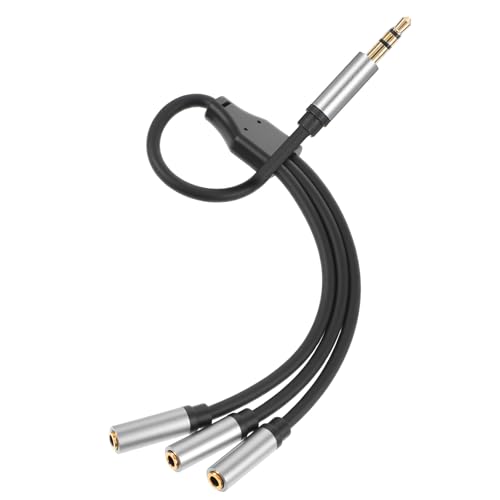
This model emphasizes functional design with a 1-channel input to 3-channel outputs, built with copper conductors for improved conductivity. At about 11.8 inches long, it provides a longer reach for devices on desks or media centers. Best for: shared headphone listening with a dedicated space, like a student room or office.
Who it’s best for: users who want a simple, effective splitter with a bit more cable length to accommodate layout needs. Why selected: copper conductors and a straightforward 1-to-3 layout. Limitation: longer cable might be less portable than shorter options.
Tnyvm Black Headphone Splitter Cable 3 Way
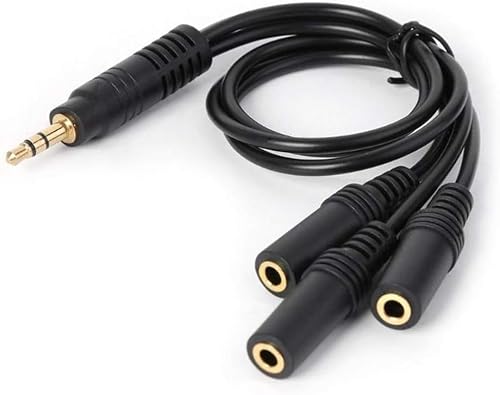
This 3-way splitter is designed to share audio between three devices from a single source. The 3-pole plug configuration helps maintain stable stereo sound with minimal signal loss. Best for: MP3 players, smartphones, or tablets needing simultaneous headphone or speaker connections.
Who it’s best for: users who want dependable stereo sharing with minimal signal degradation. Why selected: reliable 3-pole design, good stability, and wide compatibility. Limitation: ensure you don’t expect 3 inputs to 1 output from this particular model.
Buying Guide: How to Choose a 3-Way 3.5mm Splitter
- Connection type: Most 3-way splitters use 3-pole TRS connectors. Confirm the device outputs and inputs you plan to connect to avoid incompatibilities with mic or control lines.
- Audio quality: Gold-plated connectors help reduce oxidation and maintain signal integrity. Look for copper conductors and shielded designs to minimize interference.
- Cable length: Shorters cables are portable but less flexible; longer cables offer layout options for desks or media setups. Choose based on your space and use case.
- Durability: Aluminum or copper housings tend to be sturdier. For frequent travel, a compact, lightweight model is preferable.
- Intended use: If you need three headphones to share one source, any 1-to-3 splitter works. If you also need to route to separate speakers, confirm the splitter’s compatibility with speakers and amplifiers.
FAQ
- Can a 3-way splitter support three microphones? No. Most 3.5mm splitters are designed for 1 input to 3 outputs for audio, not for combining multiple inputs into one output.
- Will a 3-way splitter degrade sound quality? Some signal loss is possible, especially with long cables or multiple adapters. Look for gold-plated connectors and shielded cables to minimize loss.
- Is a metal housing better than plastic? Metal housings generally offer better durability and shielding, which can reduce interference in busy environments.
- Can I use a 3-way splitter with a smartphone and wireless earbuds? Yes, if the output devices use 3.5mm TRS connections compatible with the splitter’s jacks.
- Do these splitters require power? Most do not require external power; they are passive adapters relying on the device’s output.
- What should I consider for group listening in a classroom? For classrooms, prioritize stability and cable length to reduce tangling and ensure clear, synchronized audio for all listeners.