
Best 3 Inch Full Range Drivers for DIY Speakers
Find the right 3-inch full-range driver for compact speaker builds. This guide highlights five solid options, each suited to different needs—whether you want crisp highs, simple crossover designs, or budget-friendly DIY projects. The top picks are best for hobbyists, small cabinet projects, and classroom or multimedia setups where clear midrange and smooth frequency response matter most.
Summary of chosen products
- Dayton Audio PC83-4 3″ Full-Range Poly Cone Driver — Best for budget builds requiring smooth, true full-range output.
- Dayton Audio PC83-8 3″ Full-Range Poly Cone Driver — Best for balanced sound with extended high frequencies.
- Dayton Audio DMA80-8 3″ Dual Magnet Aluminum Cone Full-Range Driver — Best for high-frequency clarity and controlled dynamics.
- GRS 3FR-4 Full Range 3″ Speaker Driver 4 Ohm — Best for economical, straightforward projects.
- Eboxer-1 3 Inch Mini Full Frequency Speaker — Best for compact multimedia setups and easy DIY installs.
Dayton Audio PC83-4 3″ Full-Range Poly Cone Driver
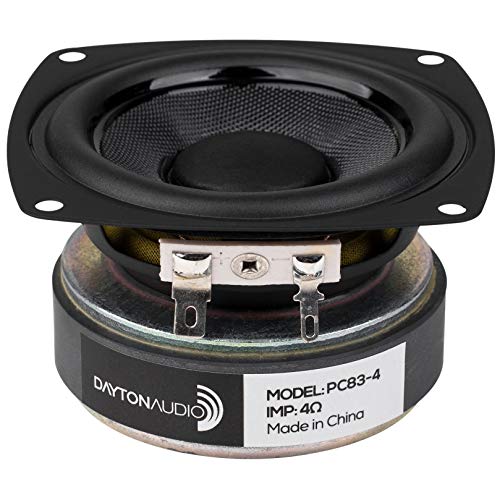
Key features include a copper cap to control inductance and extend high-frequency response, a poly damped woven glass fiber cone for controlled break-up and a smooth roll-off, and a true full-range response suitable for simple speaker designs. This driver is best for budget-conscious builders seeking straightforward, reliable performance with limited crossover requirements.
Best for: Entry-level DIY projects where a simple, compact full-range driver is preferred. Choose this if you want a straightforward build without complex crossovers, and you prioritize a smooth high end.
Caution: The 3-inch footprint limits bass extension; pair with appropriately sized enclosures to avoid muddy low end.
Dayton Audio PC83-8 3″ Full-Range Poly Cone Driver

This 3″ driver shares the same poly cone concept but emphasizes smoother response and a broader upper range, aided by its copper-cap design for higher frequencies. It’s well-suited for compact bookshelf builds where clarity in mids and highs matters, and simple crossovers are desired.
Best for: Small-room speakers that demand clear upper frequencies and easy integration with a simple, single-driver design. Better for listeners who want a crisper top end than entry-level models.
Caution: The emphasis on higher frequencies may require careful enclosure tuning to avoid listening fatigue in long sessions.
Dayton Audio DMA80-8 3″ Dual Magnet Aluminum Cone Full-Range Driver 8 Ohm

The DMA80-8 uses dual neodymium motors to create a symmetrical magnetic field for precise control and strong high-frequency performance, with a large copper cap to reduce distortion. Aluminum cone design contributes to crisp transient response, making it a strong choice for high-fidelity compact systems.
Best for: Applications where strong HF control and detailed sound are desired in a small enclosure. Choose this if you want tighter dynamics and a more extended high-frequency response.
Caution: Aluminum cones can be more sensitive to enclosure resonance; ensure proper box volume and damping to maximize performance.
GRS 3FR-4 Full Range 3″ Speaker Driver 4 Ohm
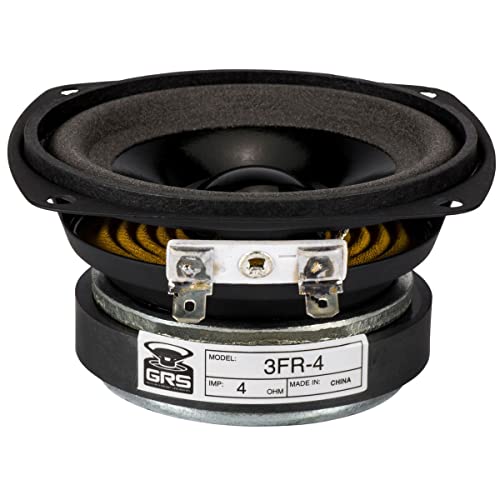
GRS offers a coated paper cone with a foam surround for clear sound in a budget-friendly package. The 4 Ohm impedance and front-gasket design help with straightforward, minimal-crossover builds and basic enclosures.
Best for: Frugal DIY projects where a simple, cost-effective 3″ driver is sufficient. Choose this for entry-level builds where phase and impedance considerations are minimal.
Caution: Performance can vary with enclosure tuning; test different cabinet volumes to optimize bass response.
Eboxer-1 3 Inch Mini Full Frequency Speaker

With a 4Ω impedance and 5W power rating, this compact full-range driver focuses on clear, full-spectrum output for multimedia boxes and DIY mini-systems. It emphasizes smooth midrange and detailed highs while keeping installation simple.
Best for: Small multimedia boxes, DIY computer speakers, or classroom projects where compact size and straightforward wiring are priorities. Choose this if you need a compact unit that’s easy to mount and wire.
Caution: Some users may find the bass extension limited; pairing with a bass-enhancing enclosure or ported design can help where feasible.
Buying Guide: Choosing the Right 3-Inch Full Range Driver
What should you consider when selecting a 3-inch full-range driver?
- Speaker size and enclosure: Small cabinets require drivers with good midrange and controlled bass. Larger enclosures can allow more bass extension from 3″ drivers.
- Impedance and crossover: Most 3″ drivers are 4 ohms or 8 ohms. A simple single-driver setup may be best with 4 ohms; avoid complex crossovers unless needed for your design.
- Cone material and damping: Poly cones, aluminum cones, and coated paper all react differently to excursion. Poly or coated paper generally offer smoother roll-offs; metal cones tend to be crisper but can introduce harsher highs if not properly tamed.
- Motor and inductance: Copper caps and dual magnets help reduce distortion and improve high-frequency response. Consider these features if you plan to push the driver to higher volumes.
- Intended use and listening environment: For multimedia or classroom use, prioritize clarity and detailed mids. For music-focused builds, you may want a driver with a slightly warmer or more extended high end.
FAQ
- What is a 3″ full-range driver best used for?
They are ideal for compact bookshelf speakers, multimedia boxes, and educational projects where a simple, single-driver design is desired.
- Do I need a crossover with a 3″ full-range driver?
Many 3″ drivers can be used in a single-driver configuration without a complex crossover. If you pair multiple drivers, a simple first-order crossover is often sufficient.
- Which material is best for the cone?
Poly cones are common for balanced, smooth performance; aluminum cones deliver crisper highs but may require damping. Coated paper cones offer clarity with cost efficiency.
- How important is impedance?
Impedance affects compatibility with amps and enclosures. Lower-impedance drivers (like 4Ω) draw more current and can be louder with the same amp, but require careful amp compatibility.
- Can these drivers replace tweeters in a system?
These 3″ full-range drivers aim to cover a broad range and may reduce the need for separate tweeters in simple designs, but results depend on enclosure and crossover choices.
- Are these drivers suitable for car audio?
These drivers are primarily designed for home audio or small multimedia boxes and may not match automotive environments without adaptation.