Best 3 Inch Full Range Speaker Guide for DIY Audio
Finding the right 3-inch full range speaker involves balancing size, sound quality, and application. This guide focuses on compact drivers that deliver true full-range performance for DIY speakers, portable projects, or car audio enclosures. Each pick below is suited for small cabinets or satellite speakers, with attention to sensitivity, frequency response, and impedance. Use the buying guide section to compare critical factors and select a model that fits your project goals.
| Product | Brand | Key Feature |
|---|---|---|
| GRS 3FR-4 Full Range 3″ Speaker Driver | GRS | Coated paper cone; 4 Ohm; economical ferrite magnet |
| Dayton Audio PC83-4 3″ Full-Range Poly Cone Driver | Dayton Audio | Poly cone; smooth high frequency with copper cap |
| Pack of 2 Facmogu 3″ Full Range Speakers (8Ω) | Facmogu | Compact pair; 88dB sensitivity; 108 Hz–18 kHz range |
| Facmogu 3″ Tweeter Full Range 2-Pack (4Ω) | Facmogu | 2-pack; similar specs; ideal for small 2.0/2.1 setups |
| PRV AUDIO 3-inch Full-Range 40W (4Ω) | PRV AUDIO | Neodymium motor; compact design; 40W continuous power |
GRS 3FR-4 Full Range 3″ Driver
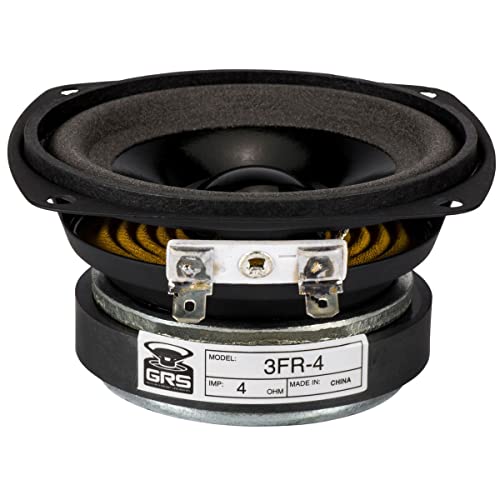
The GRS 3FR-4 is a compact full-range driver designed for economical, space-conscious projects. Its 3-inch coated paper cone and front gasket create a clean sound with minimal cabinet real estate. The device uses a ferrite magnet assembly to balance efficiency and price, making it suitable for simple bookshelf or compact DIY speakers where true full-range output is desired in a small footprint.
Dayton Audio PC83-4 3″ Full-Range Driver
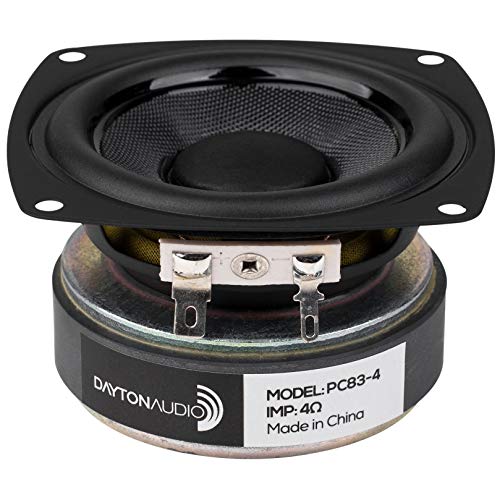
The Dayton PC83-4 employs a poly cone and a copper cap to constrain inductance, helping extend the high-frequency response. Its woven glass fiber cone dampens break-up for a smoother roll-off and cleaner high end. This driver is well-suited to simple, affordable speaker builds where a true full-range response is prioritized over extreme low-end output.
Facmogu 3 Inch Full Range Pair (8Ω)

This Facmogu bundle provides two 3-inch full-range speakers in an 8-ohm configuration. With a sensitivity around 88 dB and a useful 108 Hz to 18 kHz range, these drivers are convenient for stereo DIY projects, compact multimedia systems, or cabinet builds where a small, capable speaker is needed without additional crossovers.
Facmogu 3 Inch Full Range 2-Pack (4Ω)

This 2-pack from Facmogu provides 4-ohm drivers with similar sensitivity and frequency reach to the 8-ohm variant. The compact 3-inch format makes them suitable for small satellites or minuscule enclosures. They are designed for 2.0/2.1 setups and DIY multimedia projects where space constraints matter.
PRV AUDIO 3-Inch 40W 4Ω Driver

The PRV AUDIO 3MR40-NDY-4 is a compact neodymium-driven full-range unit with 40 watts handling. Its slim footprint supports portable or line-array style designs, delivering 91 dB sensitivity for notable output from a small cone. The neodymium motor reduces weight and improves efficiency, making it a strong choice for space-constrained projects requiring higher SPL.
Dayton Audio RS75-4 3″ Driver

The RS75-4 focuses on high-fidelity, low-distortion output with an aluminum frame and cone, paired with a rubber surround. Its reference-level design is optimized for accurate reproduction in compact enclosures, making it suitable for bookshelf speakers and compact 2.0 setups where clarity matters over party-level bass.
Dayton Audio DS90-8 3″ Driver

The DS90-8 is designed with a low-profile cosmetic frame for front mounting without countersinking. Its coated paper cone and a half-roll rubber surround offer durability and accurate reproduction, while its design aims to yield a low 3 dB down point and strong output from compact cabinets. This makes it a practical option for small, refined speaker builds.
Buying Guide: Key Purchase Considerations
When choosing a 3-inch full-range driver, consider the following factors to match your project goals and system design:
- Impedance and compatibility: Most drivers listed are 4 or 8 ohms. Confirm your amplifier or crossover compatibility to avoid mis- matched load or reduced efficiency.
- Frequency range and treble handling: Full-range 3-inch drivers vary in high-frequency extension. If your enclosure is small, a driver with a wider high-frequency response helps avoid a dull sound at higher volumes.
- Sensitivity and power handling: Sensitivity around 88 dB is common for many compact drivers. Higher sensitivity translates to more volume with less power; ensure your amplifier can deliver adequate current for the desired SPL.
- Cone material and suspension: Coated paper offers good damping and sound, while poly cones can provide stiffer response. The surround type (foam, rubber) influences durability and bass extension.
- Cabinet fit and mounting: Check mounting depth, cutout size, and enclosure volume requirements. Some models are optimized for front mounting in compact enclosures while others perform better in vented or sealed boxes.
- Durability and intended environment: Neodymium motors save weight but can be pricier. For portable or automotive applications, factor thermal and mechanical stresses into your choice.
- Pairing with other drivers or tweeters: If you plan a hybrid system, ensure the 3-inch driver integrates smoothly with any tweeters or midrange devices, considering crossover points and phase alignment.
- Finish and aesthetics: For visible installations, consider frame design and mounting cosmetics; some drivers are designed to blend into furniture or cabinet builds without drawing attention.
Design Tips for Using 3-Inch Full Range Drivers
- In small enclosures, place the driver away from corners to minimize bass boost and maintain a balanced overall response.
- Use a simple, gentle crossover or even a direct-connect approach in truly full-range configurations to preserve natural sound.
- Test different cabinet volumes within the manufacturer’s recommended range to optimize bass extension and overall clarity.
- Consider using matched drivers from the same family for consistent timbre across channels, especially in stereo setups.