
Best 3 Inch Speaker Driver Picks for DIY Projects and Tiny Speakers
Looking for a compact 3-inch speaker driver that delivers clear, full-range sound for DIY projects or compact bookshelf speakers? This guide highlights five well-suited options, explaining who each is best for and why. The selections cover everyday budget builds, high-frequency emphasis, and multi-use full-range designs, so you can match your project’s needs. Use the comparison notes below to pick a driver that aligns with your amp, enclosure, and listening goals.
| Product | Best For | Key Benefit |
|---|---|---|
| Dayton Audio PC83-4 | Budget builds, simple enclosures | Copper cap and smooth full-range response |
| Dayton Audio PC83-8 | Higher impedance, versatile amps | Dual benefits of a true full-range with extended high end |
| GRS 3FR-4 | Economical projects, student kits | Coated paper cone, basic ferrite magnet |
| Dayton Audio DMA80-8 | High-fidelity DIY boxes | Dual magnet for better magnetic control |
| ALMOCN 2PCS 3” 4Ohm | Low-cost stereo DIYs | Two-pack convenience for simple builds |
Dayton Audio PC83-4 3″ Full-Range Poly Cone Driver
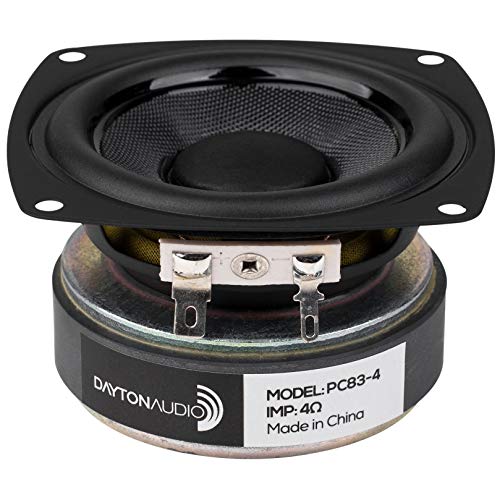
The PC83-4 is a compact, true full-range driver with a poly cone and copper cap. It emphasizes smooth high frequencies without needing a complex crossover, making it suitable for simple speaker designs. Best for budget builds where a straightforward, compact driver is needed.
Who it’s best for: hobbyists and students building small two-way or single-driver enclosures. Why selected: its copper cap helps control inductance, extending high-frequency response for cleaner detail at modest volumes. Caution: its performance may be limited at higher power levels due to a modest magnet assembly.
Dayton Audio PC83-8 3″ Full-Range Poly Cone Driver

This version uses an 8-ohm design, offering compatibility with a broader range of amplifiers and crossovers. It maintains a smooth full-range response and uses a poly-damped woven glass fiber cone to control breakup. Best for people who want easy integration with standard hobbyist amps.
Who it’s best for: compact systems where higher impedance helps with driving multiple drivers or sharing a single amp. Why selected: the extended high-frequency response and controlled breakup improve overall clarity in small enclosures. Caution: higher impedance may require careful amp pairing to reach desired loudness in larger rooms.
GRS 3FR-4 Full Range 3″ Speaker Driver 4 Ohm
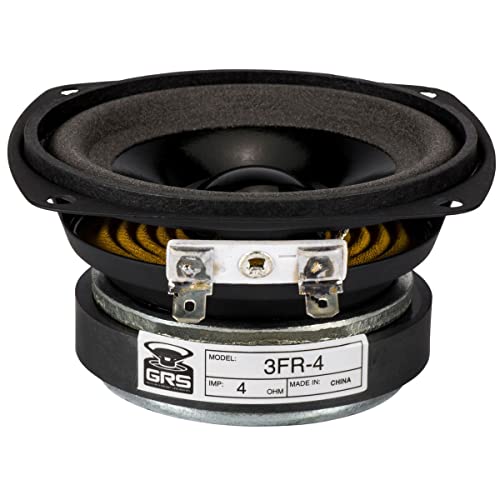
The GRS 3FR-4 offers an economical pathway to 3-inch full-range sound with a coated paper cone and foam surround. It’s a practical choice for basic DIY projects and student kits where budget is a priority. Best for: simple, low-cost enclosures where a basic, clean sound is sufficient. Caution: older designs may show more cone breakup if pushed hard at high volumes.
Dayton Audio DMA80-8 3″ Dual Magnet Aluminum Cone Full-Range Driver 8 Ohm

This driver emphasizes high-frequency response with a dual neodymium/ aluminum approach for improved magnetic control. The larger copper cap helps reduce distortion, and the 8-ohm impedance offers flexible pairing with various amplifiers. Best for: higher-fidelity mini boxes that require precise control and detailed highs. Caution: aluminum cones can be more sensitive to enclosure acoustics; improper sealing may affect performance.
ALMOCN 2PCS 3” 4Ohm 20W Full Range Audio Speaker

This listing provides a two-pack, suitable for stereo DIY builds or dual-driver prototypes. With a 4-ohm impedance and 20W rating, it fits small, efficient amplifiers and compact enclosures. Best for: budget dual-driver projects or starter kits. Caution: data indicates modest power handling; avoid very powerful amps or oversized enclosures that demand higher excursion.
3 Inch Full Range Speaker, High Sensitivity 4Ω 5W Mini

Designed for multimedia and DIY sound boxes, this 3-inch driver balances sensitivity and power handling. It delivers clear sound across a broad frequency range for compact systems. Best for: battery-powered and portable DIY devices where space and power are limited. Caution: rated at 5W, so high playback levels may require careful thermal management or a smaller enclosure to avoid distortion.
Buying Guide: Key Purchase Considerations
What matters most when choosing a 3-inch driver?
- Impedance and compatibility: 4Ω vs 8Ω affects amplifier matching and system sensitivity.
- Power handling: match wattage to your amp and enclosure for clean headroom.
- Cone material: poly, coated paper, or aluminum impacts damping, breakup, and durability.
- Magnet design: dual magnets or larger copper caps can reduce distortion and improve high-frequency response.
- Enclosure and crossover needs: some drivers perform well without a crossover; others benefit from simple one- or two-way networks.
- Intended use: budget kits vs. high-fidelity mini speakers; consider room size and listening goals.
FAQ
- What is a 3-inch speaker driver best used for?
Small portable speakers, compact bookshelf builds, and DIY mono or stereo projects where space is limited.
- Do I need a crossover for a 3-inch full-range driver?
Many 3-inch full-range drivers work well without a formal crossover, but a simple high-pass or full-range setup can improve clarity in some enclosures.
- Is higher impedance better for DIY projects?
Higher impedance (like 8Ω) can make pairing with certain amps easier and may improve damping in some configurations, but it can reduce loudness with certain amplifiers.
- Which material is most durable for daily use?
Poly and coated paper cones offer good durability and damping; aluminum can provide strong high-frequency performance but may be more sensitive to enclosure design.
- Can I mix and match drivers in a single project?
It’s possible, but ensure impedance, sensitivity, and frequency response align to avoid timing and phase issues.
- What should I check before buying?
Confirm enclosure volume, target loudness, amplifier power, and whether a crossover is needed for your specific design.