Best 3 Way Bass Reflex Speaker System for Stage and Studio Use
When searching for a 3-way bass reflex speaker system, American audio enthusiasts look for powerful output, clear mids, and reliable construction. This guide highlights five capable models that demonstrate the versatility of 3-way designs for live sound, venues, and mobile gigs. Each pick balances punchy bass with detailed highs, while preserving intelligible vocals and broad coverage. Read on for in-depth product sections and a practical buying guide to help you compare options side by side.
| Product | Type | Approx. Power Handling | Notable Benefit |
|---|---|---|---|
| JBL SRX835P | Powered 3-Way | 2000 W peak | Onboard DSP and user presets |
| JBL SRX835 | Passive 3-Way | 3200 W peak (system) | Durable enclosure and high SPL |
| Cerwin-Vega SL-12 | 3-Way Floor Tower | Large 12″ woofer | Punchy bass and vocal clarity |
| Cerwin-Vega SL-15 | 3-Way Floor Tower | Large 15″ woofer | Heavy-duty bass for larger rooms |
| EMB KTV800 | 3-Way Karaoke Speaker | 800 W | Side tweeters for wide coverage |
JBL SRX835P Portable 3-Way Powered Speaker

The JBL SRX835P is a self-powered 3-way bass reflex system designed for mobile DJs and live performances. Its 15-inch woofer handles deep bass with clarity, while onboard DriveCore amplification provides robust output. A 400 MHz SHARC DSP drives 20 PEQ’s, 2 seconds of delay, signal generators, input mixing, amplifier monitoring, and 50 user presets. The LCD screen supports quick setup, and the enclosure includes ergonomic handles, M10 suspension points, and pole/tripod mounts for a flexible configuration. This model integrates JBL tunings for compatibility with flagship touring systems, enabling a high level of professional control in a compact footprint.
JBL SRX835 Passive 3-Way Speaker

The JBL SRX835 passive variant shares the same 3-way bass reflex design, optimized for high SPL and durable touring use. Specs indicate an 8 ohm impedance with a maximum SPL well suited for larger venues, and power handling designed to deliver strong performance with bi-amping. The enclosure uses Duraflex-coated plywood and a rugged grille, providing long-term durability for frequent setup and teardown. Ergonomic handles and M10 suspension points add to its flexible deployment for different rigging and stage layouts.
Cerwin-Vega SL-12 12″ 3-Way Floor Tower Speaker
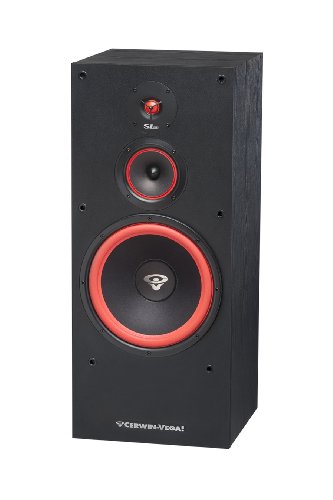
The Cerwin-Vega SL-12 is a 3-way floor tower delivering a punchy 12-inch woofer performance with a capable midrange for vocal clarity. Built for durability with solid wood or plywood construction, it features a robust design capable of handling live sound applications. The 3-way configuration helps separate bass, mids, and highs for more controlled sound in mid-sized rooms, while the tower form factor supports a clean, floor-standing installation with broad dispersion.
Cerwin-Vega SL-15 15″ 3-Way Floor Tower
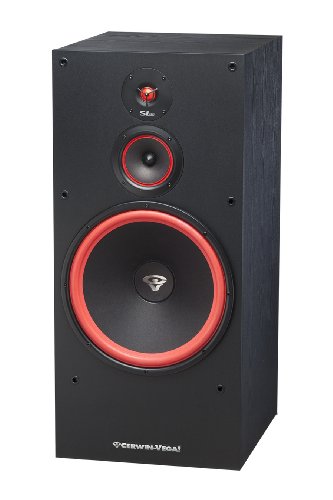
The Cerwin-Vega SL-15 extends the SL-12 concept with a 15-inch woofer for deeper bass extension and higher SPL handling. As a 3-way floor tower, it aims to deliver strong bass impact alongside clear midrange performance, making it suitable for larger venues or outdoor setups where a bold, impactful sound is desired. Durability and a professional design help ensure reliable operation under demanding live sound conditions.
EMB KTV800 800W 10″ 3-Way Karaoke Speaker

The EMB KTV800 is a 3-way karaoke speaker designed to deliver wide coverage with two side-tuned tweeters/squawkers. While its 800 W rating is modest compared to large line arrays, its multi-speaker configuration aims to provide balanced vocals and a fuller midrange, suitable for parties, small venues, or home studios seeking a versatile, karaoke-focused 3-way system. Its double-layer wood housing supports stable sound output, and the compact footprint lends itself to portable setups.
Buying Guide: Key Considerations For 3-Way Bass Reflex Systems
- Power and headroom: Compare peak and continuous power ratings to ensure the system can handle your typical volume without strain. Powered models simplify setup with integrated amplification, while passive models require external amps with matching channels and headroom.
- Speaker arrangement: 3-way designs separate bass, midrange, and treble for clearer vocal presence and controlled dispersion. Consider whether you need floor towers for large rooms or compact enclosures for mobile gigs.
- Cabinet construction: Look for rugged materials, reinforced joints, and protective grills. Durable enclosures reduce damage during transport and repeated setup.
- DSP and tuning: Built-in DSP (like JBL’s SHARC) with presets helps optimize tone for different venues. User presets and tunings can simplify quick setup and consistent performance.
- Coverage and dispersion: Width and height of coverage (e.g., 60×40 degrees) affect how evenly sound projects in a room. Larger rooms may benefit from taller towers or stackable configurations.
- Applications: Powered systems are convenient for solo performers and mobile DJs, while passive models suit fixed install setups where you can select amplifiers separately.
- Durability and mobility: If you travel often, prioritize handles, weight, and mounting options (Pole/tripod compatibility) to streamline loading and positioning.
- Compatibility: Check frequency response and impedance to ensure compatibility with existing gear, crossovers, and monitoring needs.
- Size and footprint: Consider the space where the system will operate. Floor towers provide strong bass but require room for safe clearance and sound projection.
- Price and availability: Evaluate total cost including accessories (speakers, stands, cables) and consider service support or return policies for long-term value.
Choosing a 3-way bass reflex speaker system involves balancing output, clarity, and portability. The models covered here illustrate a spectrum from powered to passive designs, with varied sizes from compact bookshelf-oriented setups to tall floor towers. Use the buying considerations above to match an option to your typical venues, audience size, and travel requirements. Always verify the compatibility of each unit with your existing gear and the dimensions of your performance space to ensure the best possible sound execution.