
Best 3 Way Bass Reflex Speaker System for Home and Stage Use
Yes—these 3-way bass reflex speakers provide extended bass, detailed mids, and crisp highs, making them suitable for home theaters, music setups, and small gigs. This guide highlights five top options and explains who each is best for, based on design, power handling, and targeted use. Whether you’re building a PA rig, upgrading a living room system, or decking out outdoors, you’ll find a clear choice here.
Product overview (selected for buyers seeking clear separation of low, mid, and high frequencies):
| Product | Brand | Type | Best For |
|---|---|---|---|
| JBL SRX835 | JBL | 15″ LF / 6.5″ MF / 3″ HF, passive | Live sound, large venues |
| BMB CSV-900 | BMB | 12″ LF / 3-way | Budget PA, DJ sets |
| Sony SS-CS3 | Sony | 3-way floorstander, 4 drivers | Home theater, stereo |
| Pyle PLMR24 | Pyle | 3.5″ 3-way outdoor/indoor | Patio, deck, poolside |
| Yamaha NS-555 | Yamaha | 3-way tower, dual 6.5″ woofers | Hi-fi listening |
JBL SRX835 Portable 3-Way Speaker

Best for: larger venues and PA setups needing high power and robust output. This 15″ LF driver, combined with a 6.5″ mid-range and a 3″ horn HF, delivers strong bass, clear mids, and crisp highs, suitable for DJs and live performances where punch and scale matter.
Why chosen: It’s designed to handle up to 3200W peak, giving headroom for loud environments without flapping or distortion. The three-way configuration helps maintain vocal intelligibility and instrument clarity across a wide frequency range.
Limitation: As a passive system, it requires a suitable amplifier and proper impedance matching in a larger setup. Budget-conscious buyers should factor in amplifier costs and rigging needs.
BMB CSV-900 12″ 3-Way Bass Reflex (Pair)

Best for: budget-conscious DJs or small venues needing reliable 3-way performance without breaking the bank. The multicellular horn tweeters and squid-like high-frequency design aim to reduce feedback and offer wide dispersion.
Why chosen: The pair provides a balance of woofer punch, midrange detail, and treble extension with a robust horn system that helps minimize phase issues in typical room settings.
Limitation: The description notes specialized horn tweeters and Sox SPL controls; in smaller rooms, high SPL may be less needed and may risk harshness if not tuned properly.
Sony SS-CS3 3-Way Floor-Standing Speaker
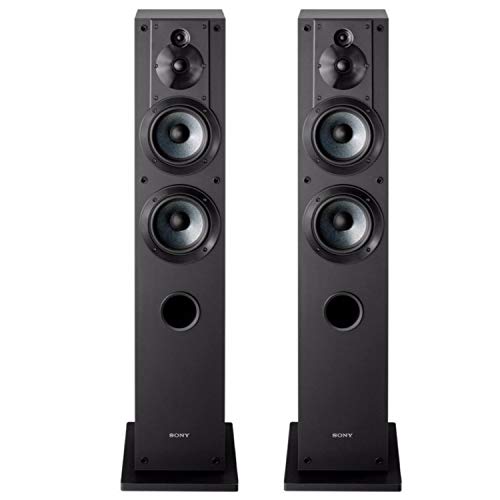
Best for: home audio enthusiasts seeking a 3-way design with strong midrange and clear highs for movies and music in medium rooms. These floorstanders offer balanced performance without needing a subwoofer for casual listening.
Why chosen: The 3-way layout with a 1″ tweeter and midrange/two mid drivers supports smooth high-frequency response and solid bass presence for a room-friendly footprint.
Limitation: The listing emphasizes peak power and impedance, but real-world bass output depends on room acoustics and placement; placement near walls can boost bass but may muddy imaging.
Pyle PLMR24 3.5″ Outdoor 3-Way Box Speaker

Best for: outdoor patios, decks, and poolside setups where weather resistance and compact form factor matter. The built-in enclosure and mounting hardware simplify outdoor installation.
Why chosen: It combines a 3.5″ woofer, midrange, and tweeter with a bass reflex vent to enhance bass response in open-air environments and smaller outdoor areas.
Limitation: Outdoor use requires proper mounting and weatherproofing; acoustic performance may vary with wind and ambient noise, especially at higher volumes.
Yamaha NS-555 3-Way Tower Speaker

Best for: hi-fi listeners who want a tall, room-filling tower with multiple drivers for refined music playback and film scores. The dual 6.5″ woofers add substantial bass extension for a 3-way system.
Why chosen: The design emphasizes a waveguide-enabled mid and a metal-dome tweeter setup, aimed at precise imaging and smooth high-frequency detail across a wide listening area.
Limitation: These are passive, large floorstanding units that require an appropriate amplifier and space; placement away from walls can reduce bass emphasis if room modes are not optimized.
Sony CS Center Channel SS-CS8M2

Best for: central audio in home theater setups where clear dialogue is essential. As a 2-way, 3-driver center channel, it supports front-channel clarity for movies and TV.
Why chosen: The two 3.94″ woofers help boost low-end frequencies for center-channel dialogue without overwhelming the vocal range with excessive bass.
Limitation: Being a center channel, it is not a full-range option; pairing with proper left/right speakers and a subwoofer can yield the best overall system balance.
Buying Guide: Key Considerations For 3-Way Bass Reflex Systems
What room size and type will you use them in? Large rooms and live venues benefit from higher power handling and bigger drivers, while small rooms prioritize speaker sensitivity and placement flexibility.
Do you need passive or powered? Passive models require a compatible external amplifier; powered options integrate amplification but add weight and cost considerations.
How many drivers and what configuration? A 3-way design splits frequencies across woofer, midrange, and high-frequency drivers for clearer separation and less distortion at higher volumes.
What is the placement strategy? Floorstanding models offer robust bass but require space; bookshelf or outdoor models favor wall or corner placement to optimize bass reinforcement.
Durability and environment: Outdoor-rated models withstand moisture and temperature variations; indoor models focus on aesthetics and room acoustics.
Frequently Asked Questions
- What is a 3-way bass reflex speaker system?
A 3-way system uses three separate drivers (low, mid, high) to reproduce a wide range of frequencies with improved clarity and reduced driver strain.
- Do I need a subwoofer with a 3-way system?
Not always. If the 3-way system provides satisfactory low-end response for your listening needs, a subwoofer may be optional; for home theater, a sub can enhance deep bass.
- Why choose passive over powered?
Passive speakers allow flexible amplifier choices and easier upgrades; powered speakers integrate amps but tie you to the built-in power specs.
- How important is room acoustics?
Very important. Room size, shape, and surface materials influence bass modes and imaging, making placement and tuning critical for best results.
- What should I look for in outdoor 3-way speakers?
Weatherproofing, moisture resistance, UV stability, and durable mounting hardware are essential for outdoor performance and longevity.
- How do I compare 3-way speakers?
Compare driver sizes, wattage handling, sensitivity, frequency response, and cabinet design to determine which model best fits your room and use case.