Best 4-Channel Direct Boxes for Studio and Stage
The best choice for a 4-channel direct box depends on your rig, whether you need active isolation, passive simplicity, or multiple outputs. This guide highlights five solid options and who they’re best for, helping you select the right DI box for guitars, keyboards, and pro audio setups. Ideal buyers include live sound engineers needing robust isolation, studio engineers requiring clean conversion, and guitarists or keyboardists seeking flexible input/output options.
Summary of selected products:
| Product | Type | Best For | Key Advantage |
|---|---|---|---|
| dbx DI4 Active 4-Channel Direct Box with Line Mixer | Active | Live sound and complex rigs | Independent per-channel pads and ground lifts |
| ART PDB4 4-channel Passive Direct Box | Passive | Gigging players needing simple DI | 4-channel passive with straightforward operation |
| Radial 4-Play | Active | Pro studios and stage rigs | 4 balanced outputs with selection and mute |
| Whirlwind MultiDirector 4-Channel | Passive | Compact rack setups | 4-channel passive with ground lift and high-cut filter |
| Radial StageBug SB-4 | Active | Stage and instrument players | One-channel active DI with extra output and HPF |
dbx DI4 Active 4-Channel Direct Box

Features: Four totally independent DI box units in 1/2 RU package; Independent 20dB pad switch per channel; Independent ground (earth) lift switch per channel. This configuration suits complex stage rigs or studios needing per-channel control. Best for performers and engineers who require granular input handling and isolation on each channel. Limitations include the need for space-saving, multi-channel setup in tight racks.
ART PDB4 4-channel Passive Direct Box

Features: 4-channel Passive Instrument DI. A straightforward passive DI option for players who want simplicity and reliability. Best for guitar or keyboard rigs that do not require active circuitry. Consider this if you prefer passive isolation with minimal coloration. Caution: Passive DIs rely on the source output impedance; ensure your gear matches for optimal headroom.
WisWinDa 4Channels Pro G404s Direct Box

Features: 4-channel passive hum eliminator and ground loop isolator with XLR/TS/TRS/1/4″ outputs. Improves HiFi quality sound by reducing noise from power systems. Best for car or home audio setups, or environments with potential ground loop issues. Limitation: Passive design means no active buffering; performance depends on source and cabling quality. Choose this if you need noise suppression without active electronics.
Radial 4-Play 4-Channel Output, Instrument Direct Box
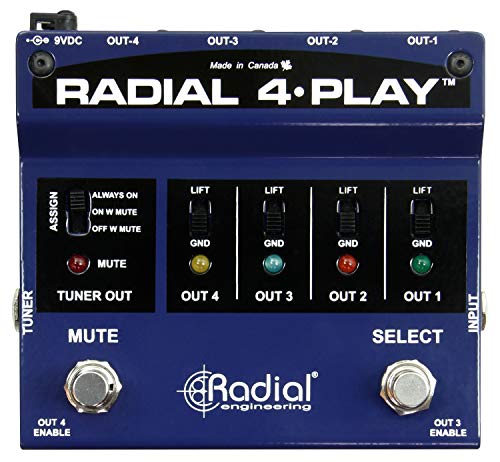
Features: 1-channel active DI with 4 balanced outputs, Output Select Switch, and Mute Switch. Best for studios needing multiple output routing from a single instrument DI, with convenient on-device control. Better for engineers who require quick routing changes during performances. Limitation: Might be larger for ultra-compact rigs, and active design assumes suitable power availability.
PYLE-PRO Premium Direct Injection Box
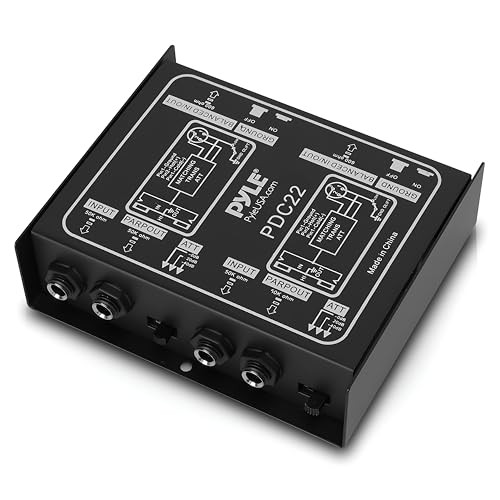
Features: Passive DI with 1/4″ input and XLR output; impedance transformer; buzz and hum cancellation; detachable power cord for live applications. Best for budget-conscious players needing dependable passive DI with simple setup. Limitation: Passive design may lack the headroom of active boxes in high-output scenarios; consider if you need robust buffering and isolation for busy stage environments.
Whirlwind MultiDirector 4-Channel

Features: 4-channel rackmountable direct box with 30dB pad, ground lift switch, and high-cut filter. Best for rack-based live rigs or studio setups needing per-channel attenuation and noise control. Better for engineers who want integrated filtration and isolation in a compact rack. Limitation: Passive design means transformer-based isolation; ensure proper matching with your gear to maximize performance.
Bolanle Passive 2-Channel Direct Box

Features: Dual-channel passive DI with ground lift and three-position attenuation (-0dB, -20dB, -40dB). Best for studios and live setups requiring clean DI with flexible level control. Limitation: As a passive box, output level depends on source impedance; verify compatibility with your mixer or interface for optimal levels.
Radial StageBug SB-4 1-channel Active Instrument Direct Box
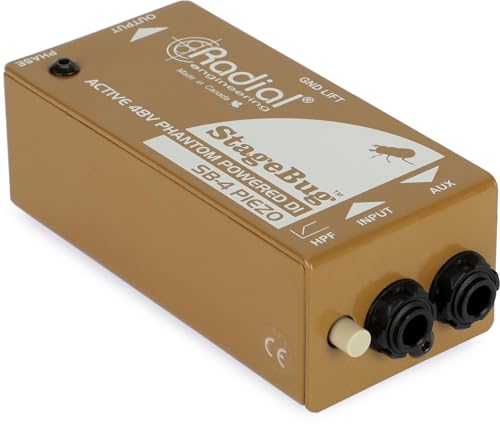
Features: 1-channel active DI with HPF, polarity switch, and an additional 1/4″ aux output for piezo pickups. Best for specific instrument needs where additional tonal shaping and isolation on a single channel are required. Limitation: Only one channel; you may need additional DIs for multi-instrument setups.
Buying Guide
What kind of DI should I choose?
- Active vs. Passive: Active DIs provide buffering and are better for long cable runs or high-impedance sources. Passive DIs are simple, rugged, and depend on source impedance for output.
- Number of channels: If you need four usable channels, four independent DIs simplify routing and isolation. Consider whether you require per-channel pads or ground lifts.
- Output options: Look for devices with multiple balanced outputs, ground lift, and HPF options to manage noise and hum from ground loops.
- Rack footprint and portability: 1/2-rack units save space, while rack-mountable DIs help build compact rigs for stage use.
How should I match DI boxes to my gear?
- Match source impedance and output levels to the DI’s input specification to ensure clean signal transfer and avoid clipping.
- Check where the DI’s ground lift is engaged to eliminate hum without disconnecting needed equipment.
- Consider future expansion: if you anticipate more channels, choose a DI with independent controls per channel.
What are common limitations to anticipate?
- Passive DIs depend on source impedance and may not provide as much headroom with very hot signals.
- Active DIs require power, which could affect setup simplicity in some scenarios.
- High-cut filters or extra outputs provide flexibility but may introduce phase or tonal changes if not configured carefully.
FAQ
- What is a 4-channel DI used for? – It converts high-impedance signals to balanced, low-impedance outputs for reliable long cable runs and stage or studio environments.
- Do I need a ground lift on all channels? – Not always; use ground lift to remove hum from ground loops, but only where it’s necessary to avoid losing essential ground references.
- Is an active DI necessary for keyboards? – Not always; many keyboards work well with passive DIs, but active DIs can offer extra headroom and noise rejection in certain setups.
- Can I daisy-chain DIs? – It’s generally not recommended; each channel should be isolated to minimize crosstalk and noise.
- Should I buy a rackmount DI? – If you perform live and need quick access and neat organization, a 4-channel rack-ready DI can save space and time.
- How important is attenuation on a DI? – Attenuation helps prevent clipping when connecting high-output sources; select a DI with selectable pads if you work with hot signals.