
Best 4-Channel Stereo Mixer for Home Studios
If you’re setting up a compact audio rig, a 4-channel stereo mixer is a flexible solution for blending multiple line-level sources. This guide highlights five reliable models, showing who they’re best for and what to watch out for. Whether you’re streaming, rehearsing, podcasting, or powering a small live setup, these mixers offer independent level controls, stereo/mono switching, and easy routing to help you shape clean, balanced sound.
Quick comparison table of chosen products:
| Product | Best For | Key Benefit | Notes |
|---|---|---|---|
| Jyker JMAMP6 | Studio and live rehearse | Independent channel controls | USB-C powered, low noise |
| LZSIG Mini 4-Channel | Portable setups | Ultra-low noise, 4-in/4-out | TRS/TS compatibility |
| Aveek Mini | Rehearsals and small gigs | Crystal-clear, low-noise sound | 5 ROHM op-amps |
| Pyle PMXU43BT.5 | DJ and streaming | USB/Bluetooth with MP3 and 48V phantom | All-in-one features |
| LiNKFOR CX400 | RCA-centric routing | Four independent channels with RCA I/O | Simple stereo/mono switching |
Jyker 4 Channel Stereo Line Mixer JMAMP6

This 4-channel mixer is designed to blend multiple line-level inputs into a single stereo output. It supports mono or stereo switching per channel and provides independent gain control for precise balancing. The unit is USB-C powered, making it a practical choice for studio desks, live rehearsals, or streaming setups. Best for studios or small live rigs needing flexible routing and tonal control without a large footprint.
Best for: small studios and rehearsal spaces that require precise per-channel level control and flexible routing. Why selected: compact, clean delivery with independent level knobs and Mono/Stereo per channel for versatile signal paths.
Caution: The product relies on individual channel switches for routing; ensure each input source matches the intended mono or stereo path to avoid phase confusion.
LZSIG Mini 4-Channel Audio Mixer
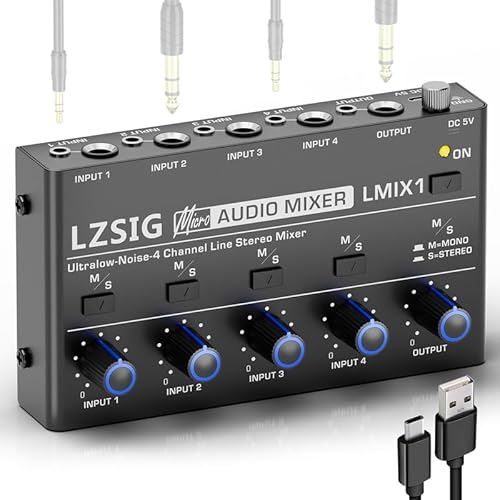
The LZSIG 4-in-1 Mini Audio Mixer emphasizes ultra-low noise performance with an MPS power management chip and ROHM op-amps for clean output. It supports both 3.5 mm and 6.35 mm TRS/TS connections, making it compatible with a wide range of devices. It offers mono or stereo mode to suit various routing needs, making it a solid pick for compact setups such as podcasts, small bands, or classroom audio.
Best for: users needing quiet operation and flexible input/output options in a small footprint. Why selected: professional-grade components deliver clear sound with minimal noise across multiple inputs.
Caution: Some setups may require adapter cables if your gear uses different jack sizes; verify the input/output formats before wiring your rig.
Pyle PMXU43BT.5 Professional 4-Channel Mixer

This mixer combines USB/flash MP3 compatibility, Bluetooth streaming, and a 4-channel input structure with +48V phantom power, making it suitable for streaming, DJ setups, or stage work. It includes a simple control layout with LED peak indicators and an EQ on all channels, delivering straightforward operation for vocal and instrumental blending.
Best for: performers and streamers who want integrated Bluetooth, MP3 playback, and straightforward channel control. Why selected: all-in-one features support easy music playback and wireless streaming from mobile devices.
Caution: Bluetooth input is supported; ensure acceptable latency and source compatibility for live performances where timing matters.
LiNKFOR CX400 4-Channel Stereo Audio Mixer

The LiNKFOR CX400 focuses on straightforward RCA-based routing with four independent channels and separate volume controls. It is ideal for setups centered around RCA devices like CD players, mixers, and legacy audio gear, providing clear per-channel control and straightforward mono/stereo switching for flexible cabling arrangements.
Best for: users prioritizing simple RCA I/O and independent channel volume control. Why selected: dependable, easy-to-use mixer for traditional gear setups without complex DSP features.
Caution: RCA-centric design may limit compatibility with modern digital sources unless converted to RCA outputs.
Kaschun 4-Channel DJ Audio Mixer

Kaschun’s 4-channel mixer brings USB audio interface, XLR, 6.35 mm jacks, and a stable +48V phantom power supply to a compact form. It suits professionals and hobbyists who want USB recording and device compatibility in a portable package. Bluetooth streaming adds flexibility for background music during a session.
Best for: mobile setups and small studios needing USB recording and USB/Bluetooth connectivity. Why selected: versatile ports and portable form factor make it easy to integrate with various gear.
Caution: Bluetooth input is for audio playback only; plan wired sources for critical live feeds to avoid latency or dropout during performances.
Buying Guide
What should you consider when choosing a 4-channel stereo mixer?
- Input and output options: Ensure the mixer has the right jacks (TRS, TS, XLR, RCA) for your gear. Consider whether you need USB audio, Bluetooth streaming, or a built-in MP3 player.
- Channel control: Look for independent level controls on each channel and the ability to switch between mono and stereo per input. This affects how you balance instruments, vocals, and playback devices.
- Noise and headroom: Ultra-low-noise designs and high-quality op-amps help maintain clean signals, especially in small rooms or live environments.
- Power and portability: USB-powered units are convenient for desks and laptops, while battery-free still-air setups benefit from compact hardware with a stable power source.
- Routing flexibility: Mono vs. stereo routing and the ability to sum inputs to mono can simplify certain setups, such as single-speaker playback or streaming.
- Use case alignment: For podcasts and livestreams, prioritize reliable USB audio, clean preamps, and straightforward controls. For DJs and live performances, focus on routing efficiency, output headroom, and monitoring options.
Frequently Asked Questions
- What is a 4-channel stereo mixer best used for?
A 4-channel stereo mixer blends multiple line-level sources into a single stereo output, suitable for studios, rehearsals, streaming, podcasts, and small live setups.
- Do these mixers support both mono and stereo inputs?
Many models offer Mono/Stereo switching per channel, allowing flexible routing. Check each product’s switch and input configuration before purchase.
- Is USB power common for compact mixers?
Yes. USB-powered units are common for desktop setups and portable rigs, providing easy power from computers, laptops, or USB adapters.
- Can I use these mixers with Bluetooth devices?
Some models support Bluetooth streaming for music playback, but Bluetooth inputs are typically not intended for critical live feeds due to potential latency.
- What cables do I need with these mixers?
Commonly required are 1/4″ TRS/TS and RCA cables. Some units also support 1/8″ (3.5 mm) jacks. Verify input/output compatibility with your gear.
- Are these suitable for professional recording?
They can be used for basic recording and livestreaming, but for high-end studio work, you might want dedicated interfaces with multitrack capabilities.