
Overview: Choosing the right 4 inch speaker driver matters for compact speakers, PA systems, car audio, and DIY projects. Below is a concise summary table of the selected drivers to help you compare core specs at a glance.
| Product | Brand | Key Features |
|---|---|---|
| Dayton Audio PC105-4 | Dayton Audio | Poly damped woven glass fiber cone, copper cap, vented voice coil |
| PRV AUDIO 4MR60-4 | PRV AUDIO | Flat midrange, extended response to 8 kHz, compact pro audio design |
| PRV AUDIO 4MR60-NDY-4 | PRV AUDIO | Neodymium motor, broad 90–20,000 Hz range, compact high-efficiency |
| Dayton Audio RS100-4 | Dayton Audio | Reference full-range, low-distortion motor, long excursion |
| Dayton Audio ND105-4 | Dayton Audio | Aluminum cone midbass, extended 60 Hz–10 kHz, large Xmax |
Dayton Audio PC105-4 4″ Full-Range Poly Cone Driver

The Dayton Audio PC105-4 uses a poly damped woven glass fiber cone to control cone break-up and produce a smoother roll-off. A copper cap reduces inductance for extended high-frequency response. Venting in the voice coil former and pole piece helps with heat dissipation and power handling. These features make it suitable for compact full-range enclosures, bookshelf speakers, or small PA cabinets where controlled upper-mid extension and reliable thermal performance are needed.
PRV AUDIO 4MR60-4 4″ Midrange Speaker

The PRV AUDIO 4MR60-4 is specified for pro audio midrange use with a flat midrange response and extended response up to 8 kHz. It offers relatively high sensitivity and compact dimensions, making it practical for line arrays, compact cabinets, or as a midrange element between woofer and tweeter. The stated focus is on accurate vocal and instrument reproduction across the mid frequencies.
PRV AUDIO 4″ Neodymium 4MR60-NDY-4

The PRV AUDIO 4MR60-NDY-4 replaces a conventional motor with a neodymium magnet for increased efficiency in a compact package. The listed frequency span (wideband up to 20 kHz) and 60 W handling indicate use in portable systems, small line arrays, or car installations where space and weight are constrained. This driver targets high fidelity midrange and can serve as a high-efficiency full-range element in some designs.
Dayton Audio RS100-4 4″ Reference Full-Range Driver
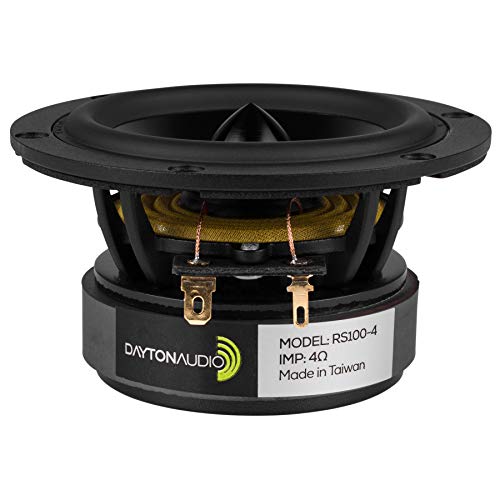
The Dayton Audio RS100-4 is described as a reference full-range driver emphasizing low distortion and a long-excursion motor. The rubber surround and motor design aim to retain bass performance uncommon in many small drivers. This variant is appropriate where single-driver full-range operation is desired or as a midrange in multi-way systems that require clean behavior and extended excursion for improved low-frequency output.
Dayton Audio ND105-4 4″ Aluminum Cone Midbass Neo Driver

The Dayton Audio ND105-4 uses an aluminum alloy cone with a rubber edge and claims extended-range performance from around 60 Hz to 10 kHz. Large excursion capability (noted Xmax) supports stronger low-frequency output for a 4″ driver. The neodymium motor reduces weight while maintaining magnetic strength, making it suitable for small sealed or ported midbass enclosures or compact monitors requiring better low-end extension.
Buying Guide: Choosing The Right 4 Inch Driver
When selecting a 4″ speaker driver, consider these factors to match the driver to your application:
- Application Type: Determine whether you need a full-range driver for single-driver designs, a midrange for multi-way systems, or a midbass element to extend low-frequency output.
- Frequency Response: Check the specified passband. Full-range drivers often emphasize smooth extension to higher frequencies, while midbass drivers focus on low-mid extension and excursion.
- Power Handling And Sensitivity: Match RMS/program power and sensitivity to your amplifier and system goals. Higher sensitivity drivers require less amplifier power for the same level.
- Motor And Magnet Type: Neodymium offers strong flux in a smaller package (lighter weight) and often higher efficiency; ferrite is economical and common in budget drivers.
- Cone Material And Surround: Aluminum and glass-fiber cones are stiffer and control breakup differently than paper or poly cones. Rubber surrounds generally improve durability and excursion over foam surrounds.
- Thermal Management And Venting: Vented pole pieces and voice coil formers improve power handling by reducing heat buildup under high drive levels.
- Excursion (Xmax) And Low-Frequency Capability: For tighter low-end, prioritize drivers listing larger Xmax and motor geometry designed for excursion.
- Physical Size And Mounting Depth: Ensure the driver fits your enclosure or vehicle location; some designs emphasize shallow mounting for retrofit installations.
- Impedance: Match driver impedance (4Ω, 8Ω) to amplifier channels and crossover network design constraints.
- Intended Enclosure: Drivers optimized for sealed, ported, or open-baffle use should be paired with the matching enclosure type for predictable performance.
Comparison Perspectives
- Small Full-Range Use: Drivers with controlled high-frequency roll-off and low distortion (reference full-range designs) are preferable for single-driver speakers.
- Pro Audio / Line Arrays: Compact, high-sensitivity midrange drivers with flat midrange response and reliability under continuous use are typical choices.
- Car And Portable Systems: Neodymium drivers balance weight and performance for constrained spaces and mobile installations.
- Low-End Extension: Aluminum-cone midbass drivers and long-excursion designs provide better bass from a small cone compared to thin paper or poly cones.
- Budget And Replacement Drivers: Economical ferrite-based, coated paper cone drivers can be practical for replacement applications where cost and compatibility are primary concerns.