
Best 4-Channel Microphone Array Systems for Events
Answering your search for a reliable 4-microphone array system, this guide highlights five solid options suited to live events, worship, conferences, and venues of varying sizes. Each choice emphasizes clear voice capture, reduced feedback, and versatile mounting or placement. Best fits include: professional venues needing multiple wireless mics, classrooms or houses of worship requiring dependable auto-scan, and DIY setups that prioritize quick setup and stable performance.
Summary table of selected products:
| Product | Best For | Key Strength |
|---|---|---|
| Phenyx Pro PTU-5000-4H | Fixed-frequency setups | Stable UHF channels, quick plug-and-go |
| Phenyx Pro PTU-7000-4B | Live performances | Auto Scan with IR Sync, 4-channel flexibility |
| MELONARE MWM-41F | Studio to small venues | 4×10 frequency groups, rack-mount capable |
| seeed studio reSpeaker XVF3800 | Meeting rooms and smart environments | 360° far-field, USB plug-and-play |
| GTDaudio 4×800 Channels | Large events | 800 selectable frequencies, true diversity |
Each product below includes a concise overview, best-use guidance, and a practical note on potential limitations to help you compare quickly and choose confidently.
Phenyx Pro PTU-5000-4H: Fixed-Frequency Wireless Mics

Best for fixed setups where consistent channels matter. This 4-channel UHF system uses fixed frequencies (541.9, 546.3, 561.6, 568.65 MHz) to minimize interference and ensure stable transmission. Each mic features a cardioid capsule that helps reject spill and ambient noise, making it suitable for venues with predictable layouts and minimal on-the-fly reconfiguration.
Who it’s best for: small to medium venues, houses of worship, or classrooms with a reliable, plug-and-go wireless plan. Limitation: fixed frequencies offer less flexibility in crowded radio environments.
Phenyx Pro PTU-7000-4B: Auto Scan Wireless Mics

Best for dynamic events and programs that require quick setup and flexible frequency management. The Auto Scan feature rapidly locks onto cleaner UHF frequencies, with IR Sync for fast pairing. Four independent channels provide up to 160 total frequency options, supporting multiple transmitters for larger productions.
Who it’s best for: worship services, conferences, or multi-presenter events where rapid, reliable channel assignment matters. Limitation: higher feature density may complicate initial setup for first-time users.
MELONARE MWM-41F: Rackmount 4-Channel System

Best for professional-stage environments and studios needing clear, pristine audio. The system offers UHF digital transmission with 24-bit/48 kHz sampling, a cardioid pickup pattern, and frequency hopping for interference resistance. Rack-mount capability simplifies integration with other gear.
Who it’s best for: venues that require stable, high-fidelity multi-mic setups and a rack-ready footprint. Limitation: rack-mount needs space and proper mounting access.
seeed studio reSpeaker XVF3800 USB Microphone Array
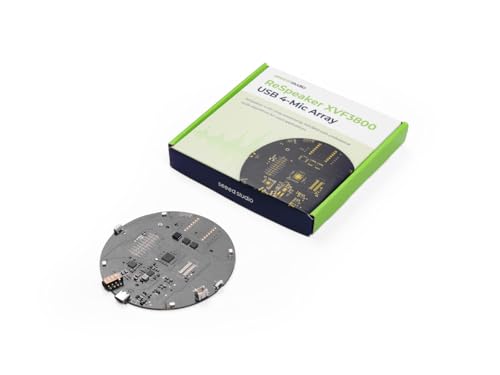
Best for smart classrooms, boardrooms, and developers needing plug-and-play USB mic arrays. This 4-microphone circular array delivers 360° coverage with DoA, AEC, and noise suppression. The XMOS XVF3800 processor helps maintain clear voice capture up to 5 meters and requires no driver installation.
Who it’s best for: meeting rooms, smart devices, and small-to-medium spaces seeking easy USB integration. Limitation: designed primarily for USB use, which may limit wireless flexibility in some setups.
GTDaudio 4×800 Channels UHF System

Best for large gatherings with high channel demand. The system supports up to 800 selectable frequencies per channel and true diversity operation, reducing dropouts. Automatic frequency scanning helps locate clean channels in crowded environments, making it suitable for larger venues or multi-room events.
Who it’s best for: large venues, schools, or events requiring scalable, multi-system coordination. Limitation: higher channel count can add complexity to setup and coordination across multiple units.
Buying Guide: How to Choose a 4-Channel Microphone Array System
Key considerations include intended venue size, wireless interference environment, and whether you need fixed frequencies or auto-scan capabilities. If you operate in crowded RF areas, auto-scan with IR sync tends to minimize setup time and dropouts. Fixed-frequency systems are simpler but require careful frequency planning. Consider whether you need rack mounting, headset or lavalier options, and the expected number of simultaneous transmitters.
Recommended questions to guide your choice:
- Do I need true wireless convenience or fixed channels for quick deployment?
- What is the maximum audience size, and how many mics will be active at once?
- Will I place the system in a rack, on a podium, or as portable gear?
- Is USB connectivity or wireless compatibility a primary requirement?
- What is the environment like—high echo, audience noise, or outdoor variability?
FAQ
- What is a 4-channel microphone array system?
- What are fixed-frequency systems good for?
- What are auto-scan systems best for?
- What is a rack-mount system useful for?
- What should I watch out for in large events?
It is a wireless or wired set that uses four microphones organized to capture sound from multiple directions, often with a single receiver or connected receivers for easy management.
They offer stability in environments with minimal RF congestion and are ideal for fixed-stage setups or venues with predictable RF conditions.
They rapidly locate cleaner frequencies, reducing setup time and interference in crowded venues or multi-system configurations.
Rack mounting helps integrate the mic system with other professional audio gear, providing a clean, organized, and secure installation.
Coordinate multiple channels to avoid frequency collisions, ensure adequate range, and plan for potential interference from other RF devices.