Best 4 Ohm 12 Inch Guitar Speaker for Your Rig and Style
Choosing the right 12-inch guitar speaker with a 4-ohm impedance can influence tone, headroom, and how efficiently your amp pushes sound into a room. This guide collects five widely used options that are compatible with many guitar amps and cabinets, highlighting their strengths across genres from gritty rock to clean blues. Each pick is assessed for clarity, power handling, and build quality to help players match their preferences with a reliable 4-ohm 12-inch speaker.
| Product | Brand | Impedance | Power Handling | Key Benefit |
|---|---|---|---|---|
| Jensen Speaker, Green, 12-Inch (C12N4) | Jensen | 4 Ohm | 50 Watts | Balanced, vintage-style tone with reliable vintage build |
| Goldwood Sound GW-212/4 OEM 12″ Woofer | Goldwood Sound, Inc. | 4 Ohm | 120 Watts RMS / 240 Watts Max | High headroom for loud practice and recording |
| CELESTION Amplifier Speaker (T5155) | CELESTION | 4 Ohm | 100 Watts | Strong drive with defined low end for modern amps |
| CELESTION Neo 250 Copperback 4 Ohm Guitar Speaker | CELESTION | 4 Ohm | High power, light weight | Transparency with reduced midrange glare |
| CELESTION Guitar Speaker, 12″ (T1221) | CELESTION | 8 or 16 Ohm | — | High-definition tone with drive, versatile for multi-speaker rigs |
The following sections detail each option, highlighting how it performs in typical playing situations, and how it pairs with common guitar amplifiers and cabinets.
Jensen C12N4 12-Inch 4 Ohm Speaker

The Jensen C12N4 is a 12-inch guitar speaker designed around a 4-ohm impedance, rated at 50 watts. This makes it a practical choice for vintage and classic rock tones where you want a balanced response with dependable low-end articulation and clear mids. Its overall construction emphasizes sturdy build quality, suitable for both studio and stage setups where reliability matters as much as tonal character.
Goldwood GW-212/4 12″ 4 Ohm Replacement

The Goldwood GW-212/4 is a robust 12-inch woofer built for 4-ohm systems, rated at 120 watts RMS and 240 watts peak. With a wide frequency response and a 1.5-inch aluminum voice coil, this model offers solid dynamic range and headroom for loud stage volumes. It is appropriate for players seeking a loud, punchy guitar tone without sacrificing clarity in the midrange or low end.
CELESTION T5155 12-Inch Amplifier Speaker
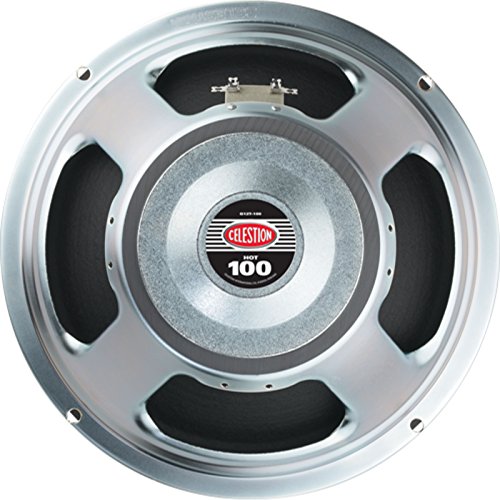
The Celestion T5155 is a 12-inch guitar speaker available in 4, 8, or 16 ohms, delivering 100 watts of power with a 97 dB sensitivity. It is designed to provide strong presence and drive for modern high-gain amps. Players seeking articulate crunch with defined lows will find this model to be a reliable option for rock and metal rigs that require responsive dynamics and consistent performance across the drive spectrum.
CELESTION Neo 250 Copperback 4 Ohm Guitar Speaker

The Celestion Neo 250 Copperback is a high-power 12-inch speaker weighing just 5 pounds, designed for players who prefer transparency and a more open midrange. Its 4-ohm impedance supports tighter, more efficient coupling with many modern amps. The Neo magnet helps reduce weight while preserving dynamic response and definition, making it a strong choice for players who want clarity at higher volumes without sacrificing punch.
CELESTION Guitar Speaker, 12″ T1221

The Celestion T1221 is a 12-inch guitar speaker available in 8 or 16 ohms, designed to deliver controlled low end and drive for rock and modern high-gain amplification. While it does not offer a 4-ohm option, its tonal balance and drive characteristics make it a viable candidate in multi-speaker cabinets or setups that can accommodate multiple impedance options. This model can complement a 4-ohm lineup to expand tonal versatility.
Buying Guide: Key Purchase Considerations
When selecting a 4-ohm, 12-inch speaker for a guitar rig, consider the following factors to ensure the choice aligns with your gear and playing style:
- Impedance compatibility: Ensure the speaker’s 4-ohm rating matches your amplifier or cabinet’s expected load. A mismatch can affect amp stability and tone.
- Power handling and headroom: Check both RMS and peak power ratings. A higher headroom helps retain clarity when pushing the amp for dirty tones, especially in loud practices or live settings.
- Tone character: Speakers vary in emphasis—some are brighter with tighter lows (Neo magnet designs), while others are warmer and more vintage (paper cone and traditional magnets). Match to your preferred genre and guitar/amp combination.
- Speaker construction and durability: Look for robust frames, good mounting depth, and reliable voice coils if you transport gear frequently or run loud volumes.
- Weight and handling: Lightweight models (like Neo magnet designs) reduce cabinet weight, which can matter for touring or frequent transport.
- Application context: Consider whether you need a speaker for live performance, studio recording, or practice. Higher sensitivity can translate to better alignment with lower-watt amps in quieter rooms, while high power handling suits high-output rigs.
- Pairing with other speakers: If building a multi-speaker cabinet, consider impedance matching among all drivers to maintain proper load and tonal balance across the cabinet.
- Brand and availability: Reputable brands (Celestion, Jensen, Eminence, Goldwood) often provide consistent performance, with broad compatibility and parts availability.
In practice, the Jensen C12N4, Goldwood GW-212/4, Celestion T5155, and Celestion Neo 250 Copperback each provide distinct advantages for different players: vintage warmth and reliability, high headroom for loud stages, strong drive with controlled lows, and a light, transparent response for modern tones. The Celestion T1221 offers versatility for impedance-mismatched builds or multi-speaker cabinets where a variety of tonal textures is desired.
Always audition speakers with your own guitar and amp when possible. If you rely on a specific genre, test for how the speaker responds to your preferred gain setting, guitar pickups, and effects chain. For a balanced setup, consider combining one speaker with a strong low-end focus with another that emphasizes midrange clarity to achieve a well-rounded cabinet.