Best 4 Ohm Stereo Receiver Guide for Home Audio
The buyer’s intent is clear: find reliable stereo receivers that work well with 4-ohm speakers and deliver solid, distortion-free sound. This guide highlights five capable options, each selected for 4-ohm speaker compatibility, strong build quality, and practical features. Ideal buyers include vinyl lovers, home theater enthusiasts, and multi-room listeners. The summary table below helps you compare core specs and intended use at a glance.
| Product | Best For | Key Feature | Notes |
|---|---|---|---|
| Sony STRDH190 | Budget-friendly stereo setups | Phono input + Bluetooth | Low-power, simple, reliable |
| Yamaha RX-V6A | Modern multi‑room/home theater | HDMI 2.1, MusicCast | Versatile, high-end features |
| Onkyo TX-8470 | Vinyl lovers and wired setups | Phono input, high‑fidelity design | Dedicated MM/MC phono board |
| Yamaha R‑S202BL | Two‑system speaker setups | Bluetooth, wide frequency response | Compact and straightforward |
| Denon AVR-S570BT | 5.1/8K ready home theaters | 8K HDMI, eARC, Bluetooth | Surround‑sound oriented |
Sony STRDH190 2-Ch Stereo Receiver

The Sony STRDH190 is a compact, straightforward stereo receiver with a phono input and Bluetooth. This model is best for budget buyers who want simple vinyl playback alongside wireless streaming. It provides 100 watts per channel into 8 ohms, which translates to strong room-filling sound with compatible 4 ohm speakers when matched correctly. The inclusion of a phono input makes it an attractive entry point for vinyl enthusiasts who need a dedicated front‑end before expanding to more channels.
Who this is best for: first‑time buyers, small rooms, and those prioritizing simplicity and vinyl playback. Limitations: it focuses on stereo output and basic features, so it lacks multi‑room or advanced HDMI options found on higher‑end models.
Yamaha RX‑V6A 7.2-Channel AV Receiver

The Yamaha RX‑V6A is a feature‑rich AV receiver designed for modern homes. It supports HDMI 2.1 with eARC, 4K/8K workflows, Wi‑Fi, Bluetooth, AirPlay 2, and MusicCast multi‑room streaming. This model is well suited for users who want a gateway into immersive home theater while still driving 4 ohm stereo speakers with excellent fidelity. It’s especially strong for those who want seamless streaming, smart controls, and room‑adjustable sound tuning.
Who this is best for: households seeking a future‑proof AV hub with multi‑room capabilities. Caution: higher price point and larger footprint may be overkill for purely stereo listening in small spaces.
Onkyo TX‑8470 2‑Channel Stereo Receiver

The Onkyo TX‑8470 emphasizes two‑channel audio fidelity with a focus on vinyl enthusiasts. It includes a dedicated MM/MC phono board and high‑quality components for richer, cleaner sound. This makes it an excellent pick for users who want a hi‑fi‑grade stereo experience without extending into multi‑channel audio. The two‑channel design helps with more focused output and potentially better dynamic range for 4 ohm speakers in a dedicated listening room.
Who this is best for: vinyl lovers, purists, and listeners who value phono playback. Limitation: feature set is primarily two‑channel, so it lacks built‑in streaming or extensive network features found in newer models.
Yamaha R‑S202BL Stereo Receiver
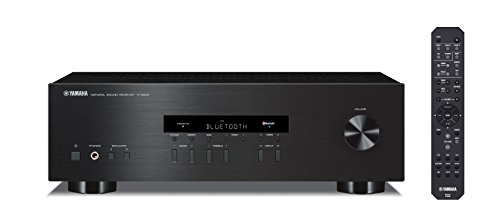
The Yamaha R‑S202BL offers solid audio performance with a simple control set and Bluetooth streaming. It includes a built‑in speaker selector for two systems and a broad frequency response, making it a practical choice for small to medium rooms where a straightforward stereo setup is desired. It pairs well with 4 ohm compatible speakers when matched carefully for voltage and impedance, offering dependable, balanced sound without unnecessary complexity.
Who this is best for: users seeking a dependable, compact two‑system stereo solution. Caution: fewer modern streaming options beyond Bluetooth and a conservative feature set compared with newer models.
Denon AVR‑S570BT 5.2 Channel Receiver

The Denon AVR‑S570BT brings 5.2 channel processing, 8K HDMI inputs, eARC, and Bluetooth streaming. While positioned as a home theater receiver, it remains a strong option for 4 ohm speakers due to its robust amplification and modern video/audio processing. It supports immersive audio formats and high‑quality digital connections, making it a versatile hub for both music and movies in a mid‑size living space.
Who this is best for: home theater fans who still want high‑quality stereo listening and multi‑source streaming. Limitation: more channels than a dedicated stereo receiver, which can complicate setup for strictly two‑channel listening in smaller rooms.
Buying Guide: Key Considerations for 4 Ohm Speakers
- Impedance compatibility: Ensure the receiver can drive 4 ohm speakers without overheating or noticeable distortion. Some models are optimized for 6–8 ohms and may require careful matching.
- Power output: Look for a receiver with sufficient wattage per channel at 4 ohms to achieve clean, dynamic sound in your room size.
- Phono input: If you use vinyl, a built‑in phono preamp is convenient; otherwise, consider an external phono stage.
- Connectivity: Determine whether you need HDMI, Bluetooth, Wi‑Fi, AirPlay, or MusicCast for streaming and multi‑room setups.
- Two‑channel vs. multi‑channel: For pure stereo, prioritize two‑channel performance and dedicated front‑end; for home theater, prioritize HDMI inputs and room‑calibrated sound features.
- Room size and acoustics: Smaller rooms benefit from less power, while larger spaces may require higher headroom and better speaker pairing.
Frequently Asked Questions
- Can any stereo receiver drive 4 ohm speakers? Yes, but some may run hotter or require more careful matching; check the rated impedance and power output per channel at 4 ohms.
- Is a built‑in phono input essential for vinyl lovers? It’s convenient, but you can use an external phono preamp if needed.
- Should I prioritize HDMI for 4 ohm stereo setups? HDMI is more relevant for home theater and HDMI switching; for pure stereo, Bluetooth or line inputs may suffice.
- Do 4 ohm loads limit sound quality? Properly matched receivers can deliver excellent fidelity; impedance is only one factor among design, damping factor, and component quality.
- Is a multi‑room capable receiver better than a dedicated stereo amp? It depends on your needs. Multi‑room adds convenience but can complicate setup and cost.
- What is the advantage of a high‑end AVR over a two‑channel stereo receiver? An AVR adds surround processing, multiple HDMI inputs, and streaming features, beneficial for mixed media use.