
Best 4 Pin to 3 Pin Microphone Adapter Options for Clear Studio and on-Location Audio
For musicians, podcasters, and video crews, choosing the right 4 pin to 3 pin microphone adapter is essential to connect older four-pin devices to standard three-pin inputs. This guide presents five reliable adapters that balance durability, signal integrity, and ease of use. Each pick targets a different use case—from field interviews to studio setups—so you can match the right adapter to your gear and environment. A quick buying table is provided below to highlight key points at a glance.
| Product | Best For | Key Benefit | Potential Limitation |
|---|---|---|---|
| Beufee 4-Pin Female to Mini XLR 3-Pin Male | Mobile rigs and field recordings | Gold-plated mini XLR for stable contact | Gold-plated may wear with heavy use |
| CERRXIAN Mini XLR Female to XLR Male Coiled Cable | Studio gadgets with mixed gear | Coiled design reduces clutter | Coiled cable may be longer than needed |
| HangTon XLR 4 Pin Female to XLR 3 Pin Male Power Cable | Camera rigs and battery-powered setups | Compatible with ARRI, RED and many cameras | Specialized power-use case |
| Tinsea 4Pin XLR to 3Pin XLR Mini Connector | Lavalier mics to standard gear | Integrated active preamp for better levels | Requires compatible TA4F mics |
| SZRMCC 4 Pin XLR to 3 Pin XLR Cable | Live sound and studio mentoring | Balanced signal with EMI/RFI rejection | Shorter length options may exist |
Beufee 4-Pin Female To Mini XLR 3-Pin Male Adapter

Beufee’s adapter uses a zinc alloy shell to resist interference and protect internal circuitry. The mini XLR side is gold plated for stable contact and reduced signal loss, while the XLR female to mini XLR male connection enables signal transmission between devices with 4-pin and 3-pin configurations. This option is best for field kits and portable setups where durability and dependable contact matter most.
Who it’s for: field recording professionals and mobile setups needing rugged hardware and solid EMI protection. Why selected: strong build and gold-plated contacts promote clearer signal transfer in environments with potential interference.
Caution: gold plating is durable but may wear with heavy abrasion; handle cables and connectors to extend life.
CERRXIAN Mini XLR Female To XLR Male Coiled Cable

This coiled fiber keeps your workspace tidy while providing reliable signal paths. The cable converts mini XLR four-pin devices to standard three-pin XLR inputs, compatible with a wide range of professional audio equipment. The 24k gold-plated contacts and premium shielding improve noise rejection and reduce RF interference.
Who it’s for: studios or mobile rigs needing a compact, tidy cable that resists tangling. Why selected: balanced benefits from a premium shield and gold contacts.
Caution: the coiled design can be longer than expected when stretched; plan cable length for your use case.
HangTon XLR 4 Pin Female To XLR 3 Pin Male Power Cable

HangTon’s power cable supports 12–35V N eutrik XLR power connections, designed for block or V-mount batteries and camera lights. It’s suitable for ARRI Alexa Mini LF, RED DSMC2, and similar professional camera systems that rely on a 4-pin power feed bridging to 3-pin micro devices.
Who it’s for: camera operators and production crews that need dependable power transfer alongside audio connectivity. Why selected: broad compatibility with major cinema cameras and power configurations.
Caution: this is primarily a power cable; ensure your audio path remains clean without introducing power-induced noise.
Tinsea Microphone Conversion Mini 4Pin XLR to 3Pin Male XLR
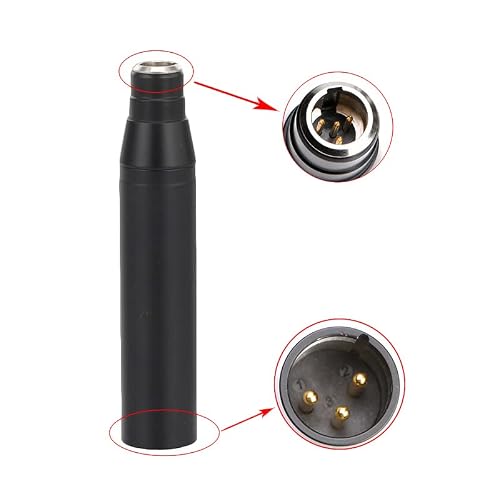
Tinsea provides a direct TA4F mini 4-pin to 3-pin XLR conversion with an integrated active preamp. This helps level the signal and adapt impedance for improved audio quality when pairing lavalier mics with standard audio gear. It is designed to bridge wireless transceivers that use TA4F with conventional XLR inputs.
Who it’s for: operators using wireless lavalier mics that need a clean, balanced wired output to a mixer or recorder. Why selected: built-in preamp and impedance management improve signal integrity in mixed environments.
Caution: requires compatibility with TA4F mics; not universal for every 4-pin mic system.
SZRMCC XLR Balanced 4 Pin To 3 Pin Cable

SZRMCC offers a short, balanced 4-pin XLR to 3-pin XLR cable designed for DMX, studio microphones, and stage equipment. It emphasizes EMI/RFI rejection and uses oxygen-free copper for clear signal transfer. The design supports stable audio paths in professional setups where noise is a concern.
Who it’s for: live sound techs and studio engineers needing reliable shielding and a compact cable. Why selected: solid EMI/RFI rejection and durable construction.
Caution: limited length options may constrain certain rigs; verify cable length fits your setup.
Buying Guide
What to consider when choosing a 4 pin to 3 pin microphone adapter:
- Compatibility: Check whether your devices use mini XLR (4-pin) or standard XLR (3-pin) connections and confirm the adapter’s connector types match.
- Durability: Look for metal housings, robust connectors, and good shielding to minimize interference in field and studio environments.
- Signal Integrity: Gold-plated contacts and shielded cables improve contact reliability and reduce noise, especially in high-EMI areas.
- Cable Design: Coiled designs reduce clutter but can extend length unexpectedly; plan cable management for your shooting or recording space.
- Power Considerations: If using an adapter for power cables or camera rigs, ensure the adapter supports the necessary voltage range and power transfer without introducing noise.
- Preamp and Impedance: Some adapters include an active preamp to optimize levels; verify compatibility with your mic and mixer or recorder inputs.
- Use Case: Distinguish between mobile field use, studio setups, and camera rigs to select the best balance of portability, shielding, and connector compatibility.
FAQ
- What is a 4-pin to 3-pin microphone adapter used for? – It connects a 4-pin mini XLR microphone to a standard 3-pin XLR input or device, enabling signal transmission between different connector formats.
- Do all adapters support phantom power? – Not all do; if your mic requires phantom power, confirm the adapter’s ability to pass or supply phantom power through the connection.
- Is shielded cable important for studio use? – Yes. Shielding helps reject EMI/RFI and reduces hum or buzz in noisy environments.
- Can I use these adapters for video cameras? – Some adapters are designed to work with camera rigs and power cables; verify compatibility with your camera model and input types.
- Which adapter is best for field recording? – A rugged, shielded adapter with a durable housing and stable contacts is preferable for outdoor or on-location work.
- Do adapters degrade audio quality? – When well-made and properly connected, adapters should preserve signal integrity; lower-quality connectors may introduce noise or signal loss.