
Best 4 Pin XLR to 3 Pin XLR Adapters for Pros
Whether you’re powering cinema cameras, broadcast gear, or stage audio, the right 4 pin XLR to 3 pin XLR adapter can simplify power and signal paths. This guide compares five top options, highlighting ideal buyers, key benefits, and practical limitations. Best for independent filmmakers, live sound technicians, and studio engineers, these adapters support reliable power transfer and clean signal routing in 12–35V environments.
| Product | Best For | Key Benefit |
|---|---|---|
| HangTon XLR 4 Pin Male to XLR 3 Pin Female Adapter Power Extension Cable | Camera operators on V‑mount blocks | Versatile 12–35V power transfer |
| gotor 4 pin XLR to 3 pin XLR Adapter 4 pin XLR Female to Dual 3 pin XLR Male | Long cable runs, high interference areas | Dual 3-pin outputs with low noise |
| HangTon XLR 4 Pin Female to XLR 3 Pin Male Power Cable Adapter | Rigging for ARRI/Canon/Sony lights | Wide device compatibility |
| Youkamoo 4 Pin XLR to 3 Pin XLR Splitter Cable | Split signals to two 3-pin paths | Balanced signal splitting with two outputs |
| CERRXIAN XLR Y Splitter Cable, 4Pin to Dual 3Pin | Stage and studio patching | Low cross-talk, robust locking |
HangTon XLR 4 Pin Male to 3 Pin Female Adapter

This adapter converts a 4‑pin XLR power source to a 3‑pin XLR device input, supporting 12–35V systems. It is suited for block or V‑mount batteries, ARRI and RED camera ecosystems, and other gear with 3‑pin power connections. Best for camera operators who need a compact power path between battery blocks and 3‑pin devices.
Best for: shooters needing a reliable power extension from block/V‑mount batteries to 3‑pin devices. Caution: confirm connector pitch compatibility with your camera or light before use.
gotor 4 Pin XLR to 3 Pin XLR Adapter Dual 3 Pin Output

This adapter converts one 4‑pin XLR to two 3‑pin XLR outputs. It emphasizes copper purity and signal fidelity, with balanced cabling that improves signal‑to‑noise ratio and reduces interference. It’s ideal for distant mics or wiring in high‑interference environments.
Best for: environments demanding two independent 3‑pin paths from a single 4‑pin source. Caution: dual outputs may require careful load management to avoid overdriving one path.
HangTon 4 Pin Female to 3 Pin Male Power Cable Adapter

This variant provides a 4‑pin female input to a 3‑pin male output, suitable for powering a range of cameras and lights that require a 3‑pin connection. It supports 12–35V systems and is compatible with ARRI, Canon, and Sony equipment. Best for: setups requiring a 4→3 pin power path to feed specific devices.
Limitation: ensure the exact 3‑pin standard matches your device’s pinout to guarantee correct power delivery.
Youkamoo 4 Pin XLR To 3 Pin Splitter Cable

This splitter cable converts a single 4‑pin XLR signal into two 3‑pin XLR outputs. It is ideal for splitting a balanced signal to two destinations or feeding multiple 3‑pin devices in a studio or live setup. Best for: patching to two 3‑pin devices from one 4‑pin source. Caution: check that both outputs remain within the device’s input limits.
CERRXIAN XLR Y Splitter Cable 4Pin to Dual 3Pin

This Y splitter distributes one 4‑pin female input into two independent 3‑pin outputs with low cross‑talk and minimal degradation. It uses high‑purity copper conductors and gold‑plated contacts for durable, reliable signal transfer. Best for: stage or studio scenarios needing two parallel 3‑pin paths from a single source. Limitation: ensure shielding supports EMI/RF environments.
SZRMCC XLR Balanced Cable 4 Pin XLR to 3 Pin XLR

This balanced cable pairs a 4‑pin male to a 3‑pin female, designed for stable audio signal transmission across DMX stage lighting and studio gear. It emphasizes EMI/RFI rejection with oxygen‑free copper conductors for clean, low-noise signal paths. Best for: reliable power and signal paths in mixed DMX and audio setups. Caution: verify connector compatibility with your gear’s pinout.
gotor 4 Pin XLR To Dual 3 Pin Female Cable
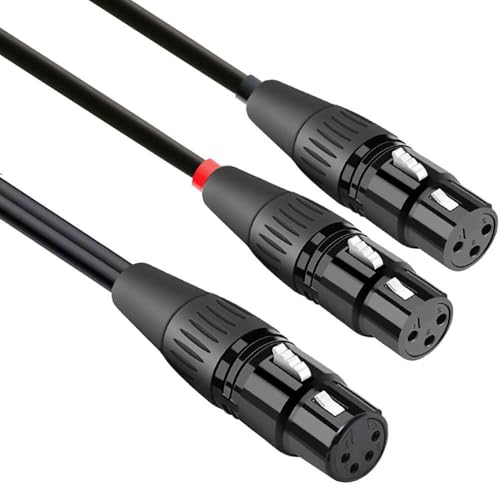
This dual 3‑pin female output cable provides a 4‑pin input with two 3‑pin female ends. It claims high conductivity and low noise with copper purity and a protective outer jacket. Best for: patching a single 4‑pin source to two 3‑pin devices in a controlled environment. Caution: ensure both outputs meet device input requirements to avoid impedance mismatches.
Buying Guide
What should I consider when choosing a 4‑pin to 3‑pin XLR adapter?
- Connector compatibility: Verify pin standards (4‑pin vs 3‑pin) and device compatibility with your gear.
- Voltage range: Ensure the adapter supports your system’s voltage (commonly 12–35V).
- Signal path requirements: Decide if you need a single path, dual outputs, or a Y/splitter configuration.
- Cable quality: Look for oxygen‑free copper conductors, shielding, and robust jackets to minimize noise and EMI.
- Durability features: Gold plating, locking mechanisms, and rugged jackets improve reliability in live or field use.
How to choose between a splitter versus a Y adapter?
- Splitter: One input to two outputs while maintaining separate lines; use when one source feeds two destinations with similar loads.
- Y adapter: Designed to split into two paths with secure connectors; ideal when both outputs must stay together to ensure synchronized power and signal.
What is the risk of using mismatched pinouts?
- Incorrect wiring can cause insufficient power delivery, signal loss, or damage to sensitive gear. Always confirm the device’s pin configuration before connection.
Are these adapters suitable for professional video gear?
- Yes, many models are designed for cameras, lights, and broadcast gear that use 4‑pin or 3‑pin XLR power connections within the typical 12–35V range.
FAQ
- What is the main purpose of a 4‑pin to 3‑pin XLR adapter?
To convert a 4‑pin power source to a 3‑pin device input, enabling compatibility with a wider range of equipment. - Can I use a splitter for two different devices from one power source?
Yes, but ensure each device’s power draw stays within the supply’s capacity and the adapter’s specifications. - Are these adapters compatibile with ARRI cameras?
Yes, several models are marketed for ARRI/RED/Sony/Broadcast gear and support common camera batteries and power rails. - Do all adapters have locking connectors?
Not all do; some feature locking clips or standard friction fit. Choose based on stability needs for your setup. - What about EMI and noise considerations?
Premium options emphasize shielding and high‑purity copper to minimize EMI/RFI and maintain signal integrity.