Best Four-Player Arcade Controller Kits for DIY Gaming on PC and Raspberry Pi
Building a four-player arcade setup at home is easier than you think with the right DIY kits. These kits typically include joysticks, illuminated push buttons, and a USB encoder, making it simple to connect to PC, MAME, Raspberry Pi, or other emulation platforms. Below are five top-rated options that cater to multi-player setups, emphasizing reliability, zero-delay performance, and compatibility across Windows, Mac, and popular retro gaming systems.
| Product | Brand | Key Benefit |
|---|---|---|
| EG STARTS 4 Player Classic DIY Arcade Joystick Kit | EG STARTS | Dedicated four-player kit with 4/8-way sticks and LED-lit buttons |
| EG STARTS 2 Player Arcade Games DIY Kit | EG STARTS | Compact 2-player core with LED arcade buttons for expansion |
| Hikig 2 Player LED Arcade Kit | Hikig | LED buttons plus dual joysticks, adaptable to MAME and Raspberry Pi |
| Arcade Kits 2 Player Classic Arcade DIY USB Encoder | EG STARTS | Solid base kit with 2-player setup and 16x 30mm LED buttons |
| SJ@JX 2 Player Arcade Game DIY Kit | SJ@JX | Zero-delay USB encoder with 4/8-way joystick support |
EG STARTS 4 Player Classic DIY Arcade Joystick Kit Parts
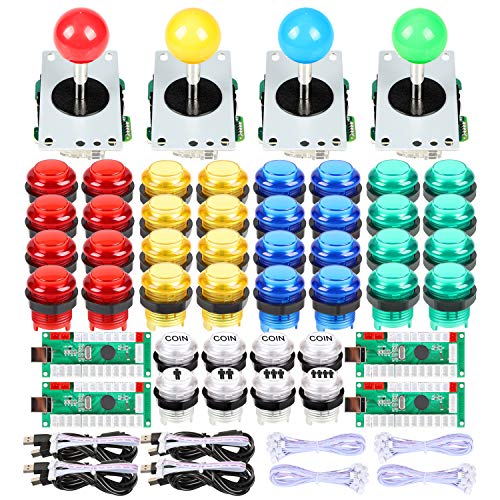
The EG STARTS 4 Player Classic kit provides a complete four-player arcade experience with a 4/8-way joystick configuration and LED-illuminated 5V push buttons. It’s built for DIY projects like MAME, Raspberry Pi, and other retro gaming consoles. Its components are designed for heat-resistant durability and long life, supporting a party-ready arcade cabinet build. The included parts are compatible with a range of emulation software and are straightforward to wire into a standard USB encoder. Whether expanding an existing setup or creating a dedicated four-player arcade from scratch, this kit offers a solid foundation.
EG STARTS 2 Player Arcade Games DIY Kit

This kit focuses on a two-player arcade foundation with ellipse joystick handles and LED arcade buttons, serving as an excellent expansion core for a larger four-player setup. It features a zero-delay encoder that works across Windows systems, helping reduce input lag during fast-paced arcade titles. The LED lighting not only enhances aesthetics but also provides immediate status cues during gameplay. It’s ideal for enthusiasts who plan to add two more players later or integrate with additional controllers in the same cabinet.
Hikig 2 Player LED Arcade Kit
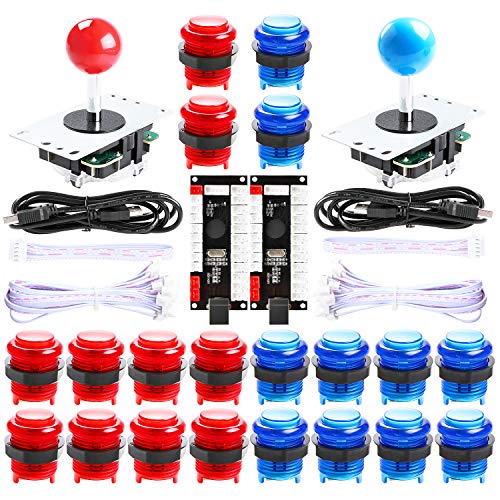
The Hikig kit delivers a compact two-player solution with LED arcade buttons and dual joysticks, designed for MAME and Raspberry Pi setups. It emphasizes LED visibility, quick wiring, and reliable USB encoding to ensure responsive play. The components are packaged for DIY assembly with a focus on compatibility across popular emulation platforms. This kit can serve as a scalable core; you can pair it with additional four-player hardware or a custom control panel to reach a four-player configuration.
EG STARTS Arcade Kits 2 Player Classic

Designed as a solid base for two players, this kit packs 16 LED buttons and a USB encoder into a compact package. It emphasizes zero-lag performance and broad Windows compatibility, making it a dependable option for building a more complex four-player arcade. If you’re starting with a two-player cabinet, this kit provides a reliable expansion path by allowing you to add two more players or swap in a four-player control scheme in a future upgrade.
EG STARTS Arcade Buttons 1 Player DIY Kit
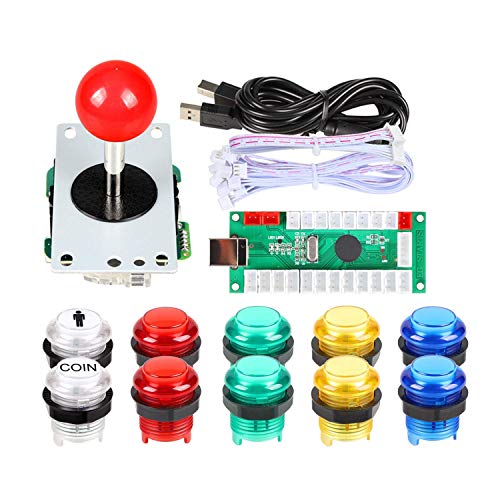
This single-player kit focuses on high-quality control and 5V LED pushbuttons, with an 8-way joystick that uses gilded contact legs for reliable performance. While designed for one player, its robust components—reliable USB encoder and durable joystick—make it a strong building block for a longer four-player project. It’s well-suited for enthusiasts who want to start with a compact, high-quality module that can later be scaled up by adding additional players and encoders.
SJ@JX Arcade Game DIY Kit 2 Player

The SJ@JX kit features zero-delay USB encoding with 4/8-way joystick support and two micro-switch joysticks, suitable for MAME and Raspberry Pi environments. The setup emphasizes reliability with a tested micro-switch design and a 5-pin cable, enabling smoother control and faster response times. While marketed as a two-player option, multiple kits can be networked or integrated into a larger four-player cabinet to deliver a shared arcade experience.
SJ@JX 2 Player Arcade Game DIY Kit (Matt Frosted Black Buttons)

This SJ@JX kit mirrors the 2-player design with a focus on reliability and zero-delay encoding. It includes a 4/8-way Sanwa-style joystick and 5-pin cable, suitable for PC, Raspberry Pi, and Android setups. Like other options, it can be integrated into a larger four-player cabinet by adding more joysticks and encoders, creating a cohesive four-player arcade experience for shared gaming sessions.
Qenker 2-Player LED Arcade Kit
The Qenker kit includes two arcade joysticks and 20 LED arcade buttons with two zero-delay USB encoders, designed for USB MAME PC gaming and Raspberry Pi retro setups. It emphasizes a visually striking LED presentation and reliable encoder performance across Windows systems. While a two-player solution, it can be combined with additional four-player configurations to create a full four-player arcade panel with synchronized lighting and control responses.
Buying Guide: Key Purchase Considerations For A Four-Player Arcade Build
- Compatibility: Verify that the kit supports your preferred platform (Windows, macOS, Raspberry Pi, RetroPie). Zero-delay encoders are a strong signal of low input lag across systems.
- Joystick and Button Quality: Look for Sanwa or similar high-quality micro-switch joysticks and 5V LED-lit buttons. Durable construction reduces wear on long-term use.
- Expansion Path: If you’re starting with a two-player setup, choose kits that can be easily expanded to four players. Check connector compatibility and encoder capacity.
- Wiring Complexity: Some kits come with simple wiring and plug-and-play encoders, while others require manual soldering. Assess your comfort with DIY wiring and panel design.
- Panel Layout: Plan a control panel layout that fits your cabinet design. Consider the spacing between controls to avoid accidental presses during intense matches.
- Power and Lighting: LED buttons add visual appeal but may require a stable 5V supply. Ensure your power plan accommodates the lights without affecting performance.
- Maintenance and Spare Parts: Availability of spare buttons, sticks, and encoders matters for long-term reliability and project longevity.
- Aesthetics and Theme: Choose button colors and LED schemes that match your cabinet’s look—this enhances the overall arcade feel and player experience.
- Budget and Time: Four-player builds can scale in complexity. Start with a robust core kit and plan for incremental upgrades to manage costs and project timeline.
Future-proofing a four-player arcade involves selecting a solid encoder with ample outputs, a dependable button/button-joystick pairing, and clear documentation. Cross-check component compatibility across all selected products to minimize wiring headaches. The kits above provide a mix of two-player cores and four-player-ready options, supporting scalable builds from beginner to advanced DIY arcade projects.