Best 4 String Bass Tuner for Precise on-the-Go Tuning
If you play four-string basses, you need a tuner that reads your instrument’s vibrations clearly and stays reliable in any venue. This guide highlights five top clip-on tuners that excel for bass players, outlining who each product is best for, their key strengths, and a practical caveat. Use these options to keep your bass in perfect pitch whether you’re rehearsing at home, on stage, or in a noisy studio.
| Product | Best For | Why It Stands Out |
|---|---|---|
| Fender FCT-2 | Live performers and studio players | Vibration sensing with a clear color LCD needle for fast, precise tuning across instruments |
| Ranch Clip-On | Multi-instrument players | Universal tuning across guitar, bass, ukulele, violin, banjo; strong noise immunity |
| D’Addario Eclipse PW-CT-17BK | Compact setups and headstock access | Wide calibration range; easy-to-read full-color display |
| Sound harbor Clip-On | Budget-conscious players | Quick, accurate, 360° rotatable screen for flexible viewing |
| AARVI Clip-On | Noisy environments | Six tuning modes plus chromatic; fast and reliable in loud rooms |
Fender FCT-2 Professional Multi-Instrument Clip-On Tuner

Best for players who need quick, accurate tuning across multiple instruments. The Fender FCT-2 senses vibrations directly from the instrument, so tuning remains consistent in loud venues and quiet practice rooms alike. Its color LCD needle display provides fast, intuitive feedback, helping you center pitch at a glance. This tuner includes modes for Guitar, Bass, Ukulele, Violin, and Chromatic tuning, making one device suitable for varied setups. Caution: reliance on vibration sensing can be sensitive to extreme body resonance; keep it steady during aggressive playing styles.
Ranch Clip-On Tuner: Fast & Accurate Chromatic
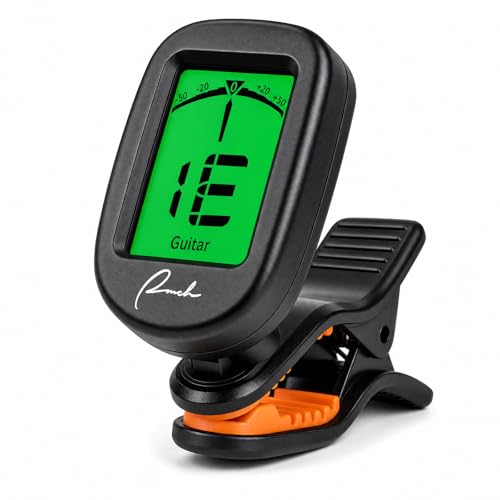
Best for players who switch between multiple instruments and demand robust ambient-noise immunity. Ranch’s multi-instrument tuner supports acoustic/electric guitar, ukulele, violin, bass, banjo, and mandolin, enabling a single device to cover many gigs. Its microprocessor with a sensitive piezo sensor delivers fast pitch detection, ideal for on-stage tuning. The 360° rotatable display helps in awkward headstock angles. Caution: some users may prefer tighter calibration control for casual practice sessions.
D’Addario Eclipse Headstock Clip-On Tuner
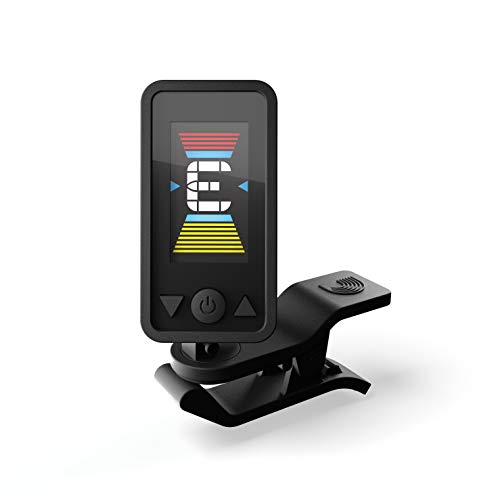
Best for players who value a dedicated low-profile headstock tuner with straightforward tuning. The Eclipse model offers quick tuning with a tall, easy-to-read vertical display and a strong, adaptable clamp for varied viewing angles. It supports a wide calibration range (435–450 Hz), ensuring precise performance for different tunings. Caution: the clamp’s grip may feel tight on larger headstocks, requiring a careful fit to avoid slip during vigorous playing.
Sound harbor Clip On Guitar Tuner Pack

Best value option for beginners and budget-conscious players needing a straightforward clip-on tuner. It supports quick and accurate tuning across acoustic-electric guitars, bass, ukulele, violin, banjo, and more. The 360° rotatable screen makes viewing easy from any angle, and the built-in vibration sensor helps tune in noisy environments. Caution: feature set is simpler than premium models, so advanced users might want more mode options or displays.
AARVI Clip-On Tuner With 6 Modes

Best for players who frequently perform in loud venues. AARVI offers six tuning modes plus chromatic tuning, plus a fast processor and high-sensitivity vibration sensor to deliver rapid pitch detection even in noisy environments. The 360° rotating display and universal clip improve readability on various headstocks. Caution: battery life and long-term durability should be assessed with heavy daily use; check the clip’s grip if you frequently switch between instruments.
Buying Guide: Key Purchase Considerations
- What instrument do you primarily tune? If you switch among bass, guitar, and other instruments, a multi-instrument tuner (like Fender FCT-2 or Ranch) reduces gear clutter.
- Display type and readability: A vertical or color LCD display enhances at-a-glance readability in dim or bright stages. Look for rotatable screens for awkward headstock angles.
- Calibration range: A wider range (e.g., 435–450 Hz) supports alternate tunings. Decide if you need this flexibility for your setup.
- Sensor type: Clip-on tuners rely on vibration sensing. They perform better in noisy environments but can pick up vibrations from the body or strap; ensure a stable fit.
- Portability and power: Battery life matters for rehearsals and tours. Check auto-off features and clip durability for frequent transport.
Frequently Asked Questions
- Are clip-on tuners accurate for bass? Yes. Clip-on tuners measure vibration from the instrument, which works well for bass frequencies when the device is securely attached.
- Should I choose a multi-instrument tuner or a bass-specific one? A multi-instrument tuner is convenient if you also tune guitars or other strings. A bass-specific model may offer faster bass-specific calibration.
- Is chromatic tuning necessary for bass players? Chromatic mode helps detect all pitch variations, making it useful for alternate tunings and drop tunings.
- Do clip-on tuners work in loud venues? Many clip-ons are designed with vibration sensing and noise immunity, which helps in loud environments, but a quick test in your typical venue is recommended.
- What is the advantage of a rotatable display? A rotatable display lets you read tuning data from different angles, improving visibility on various headstock shapes.
- Can these tuners cause string slippage? If the clip is too tight or positioned incorrectly, it may slip; ensure a secure, gentle grip without squeezing the strings.