
Best 400 Watt Dual Amplifier for Car Audio: Top 5 Picks
Answering the search intent directly, this guide highlights top 400-watt dual amplifiers suitable for car and marine audio setups. Each pick targets specific listener needs—from robust marine performance to compact DIY installs. This list favors models with clear wiring options, solid protection features, and compatibility considerations. Whether you’re upgrading a factory stereo, bridging channels for a sub, or building a four-channel system, these choices help you find the right balance of power, reliability, and value.
| Product | Power (W RMS) | Type | Best For |
|---|---|---|---|
| Taramp’s TS 400X4 Black | 400W RMS (4x100W @ 2Ω) | 4-Channel Class D | Balanced full-range output, flexible configurations |
| Pyle Hydra PLMRA200 | 400W | 2-Channel Marine | Budget-friendly marine setup, simple 2-channel power |
| Pyle PLMRA410BT | 400W | 4-Channel Bluetooth Marine | 4-channel bridgeable, wireless streaming |
| Taramp’s TS 400×4 TS400X4 | 400W RMS | 4-Channel Class D | High-efficiency multi-channel amp |
| Pyle PLMRA400.5 | 400W | 4-Channel Elite Hydra | Water resistant, easy integration |
Taramp’s TS 400×4 400W RMS 4-Channel Amplifier
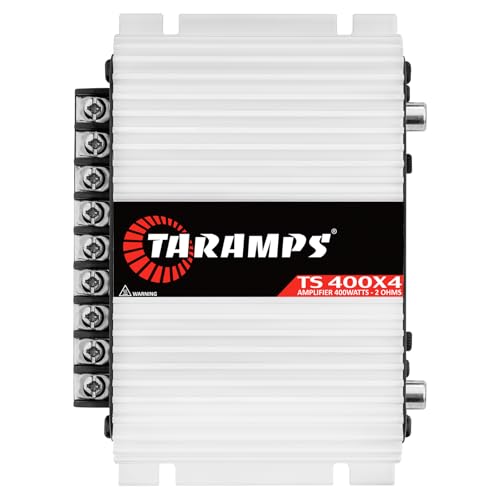
Best for high-efficiency, four-channel car setups where space is limited. The TS 400×4 provides 400W RMS total across four channels, enabling clear midrange and treble performance while leaving headroom for bridged configurations. The Class D design minimizes heat, enabling stable operation in smaller enclosures. This model is well-suited for enthusiasts who want to power multiple speakers without excessive current draw.
Who this is for: car audio builders seeking compact power with flexible channel use and strong heat management. Why selected: it delivers reliable four-channel power with efficient Class D operation, supporting various speaker arrangements.
Caution: Professional installation is strongly recommended to ensure proper setup and to avoid potential damage or warranty voiding if improperly installed.
Pyle Hydra Marine Amplifier PLMRA200

Best for budget-conscious boaters who want a reliable 2-channel amplifier with marine-grade protection. The PLMRA200 powers two speakers with quality stereo output and includes premium RCA inputs for straightforward integration. Built-in short protection and a robust heatsink help safeguard the electrical system in marine environments.
Who this is for: boat owners upgrading an existing setup without overhauling the entire audio system. Why selected: it’s a compact, protected option that fits many 2-channel configurations in wet environments.
Caution: Its marine rating focuses on protection rather than rugged, rugged-duty coastal applications; ensure compatibility with your head unit and speaker impedance.
Pyle PLMRA410BT 4-Channel Marine Amplifier

Best for users who want a 4-channel bridgeable marine amplifier with built-in wireless streaming. The PLMRA410BT features 2.1 Bluetooth connectivity and a bridge mode, along with an electronic crossover to tailor high- and low-pass responses. It’s suitable for multi-speaker installations on boats where streaming from a phone or tablet is desirable.
Who this is for: installers prioritizing wireless convenience and flexible channel configurations. Why selected: combines marine durability with Bluetooth streaming and adjustable crossovers.
Caution: While designed for marine use, verify IP rating and mounting conditions for your specific boating environment as exposure varies by choice of location.
Pyle PLMRA400.5 4-Channel Elite Hydra Series
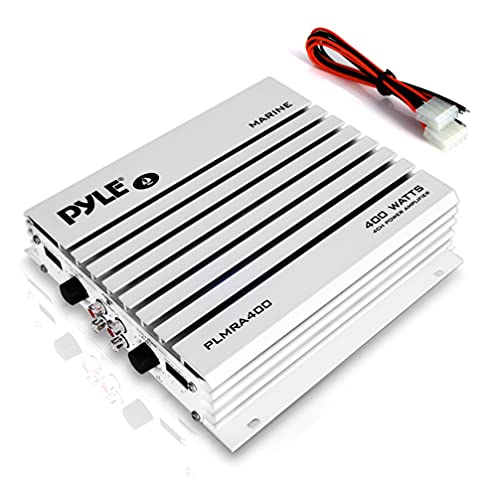
Best for users who need a four-channel, water-resistant amplifier with robust protection features. The PLMRA400.5 brings dual MOSFET power supply, RCA inputs, level control, and LED indicators. It’s suited for boats or outdoor installations where moisture and weather are considerations.
Who this is for: marine or outdoor setups requiring steady power and clear indicators. Why selected: strong protection features, simple RCA input integration, and consistent 400W capability across channels.
Caution: Ensure the enclosure and wiring meet marine-grade standards and that the installation avoids direct water exposure to electronics.
Buying Guide
- Power needs and channel count: Match the amp’s RMS power to speaker ratings. Four-channel models work well for a full-range system, while two-channel amps are efficient for bridged sub configurations.
- Environment and durability: Marine-rated units offer corrosion protection and water resistance. For dry vehicles, standard automotive amps may suffice.
- Wiring and inputs: Look for RCA inputs for easy integration with most head units. High-level inputs can connect to factory radios but may require adapters.
- Protection features: Short-circuit protection, thermal protection, and robust heatsinks help prevent system damage in harsh conditions.
- Crossovers and tuning: Built-in HPF/LPF options simplify speaker matching. A full-range mode is valuable for flexible speaker choices.
- Installation considerations: Class D efficiency reduces heat, but proper mounting and ventilation remain essential. Professionally installed setups minimize risk and ensure optimal performance.
- Compatibility: Check impedance compatibility (e.g., 2Ω vs 4Ω) and whether the amp can be bridged to drive subwoofers or midrange drivers effectively.
- Future expansion: If you plan to upgrade speakers later, choose an amp with extra channels or easy bridging options.
FAQ
Q: Is a 400W RMS amplifier enough for standard car speakers?
A: Yes, if the speakers are rated to handle the power and the system is tuned properly. Avoid overpowering speakers beyond their rated handling.
Q: Do marine amps work in cars?
A: They can work, but marine amps are designed for harsher environments. Check ratings, cooling, and mounting considerations.
Q: Should I bridge a four-channel amp?
A: Bridging can increase power to a sub or dedicated speaker, but confirm the amp’s bridging capability and impedance requirements.
Q: What is the advantage of a Class D amp?
A: Higher efficiency, lower heat, and smaller size, which is beneficial in tight installations.
Q: How important are crossovers?
A: Important for protecting tweeters and matching speaker subsets. Built-in crossovers simplify setup and tuning.
Q: Is professional installation necessary?
A: For many high-power or marine setups, professional installation ensures safety, optimal performance, and warranty compliance.