
Best 48V Phantom Power for Condenser Microphones: Top Picks for Home Studio and Stage
If you’re shopping for a reliable 48V phantom power supply for condenser mics, this guide spotlights solid options for home studios, podcasters, and live performers. The featured products cover compact, USB-C ready, and traditional wall-powered designs to fit different setups. Best for quiet home recordings are compact units with minimal noise; best for stage use are rugged, easy-to-carry models; best for travel are battery-powered units with long life. Below, find five top picks with clear reasons to choose each one and practical caveats where applicable. A quick buyer’s table is provided after the intro for fast comparison.
| Product | Best For | Key Benefit |
|---|---|---|
| Neewer 1-Channel 48V Phantom Power Supply | Home Studio and Beginners | Compact, universal XLR interface |
| Fotoconic 1-Channel 48V Phantom Power Supply | Stage and Studio | Newer on/off switch with LED |
| Acogedor 48V Phantom Power Supply | Budget, Dual Microphones | Stable filtering and dual-mic support |
| FIFINE PM48 | Portable and Versatile | Wide compatibility with USB-C option |
| Rockville PSP5 | Compact Powerhouse | Low-noise, durable housing |
Neewer 1-Channel 48V Phantom Power Supply

Best for beginners and small home studios, this Neewer unit delivers stable 48V power to condenser microphones and passes the audio signal to a sound card through a compact, durable housing. It features a universal XLR input/output and includes a high-quality XLR cable. The single-channel design keeps signal paths simple, making it ideal for one-mic setups with a mixer or audio interface. Limitation: lacks advanced features like USB power or battery operation—best used near a power outlet.
Fotoconic 1-Channel 48V Phantom Power Supply

Designed for both stage and studio use, this Fotoconic model provides reliable phantom power with an easy-to-use XLR interface and included cable. It includes a newer on/off switch and LED indicator for at-a-glance status. It’s well-suited for users who need a straightforward, portable power solution for condenser mics and compatible equipment. Limitation: may offer fewer feature sets than higher-end models; verify compatibility with longer cable runs in your setup.
Acogedor 48V Phantom Power Supply
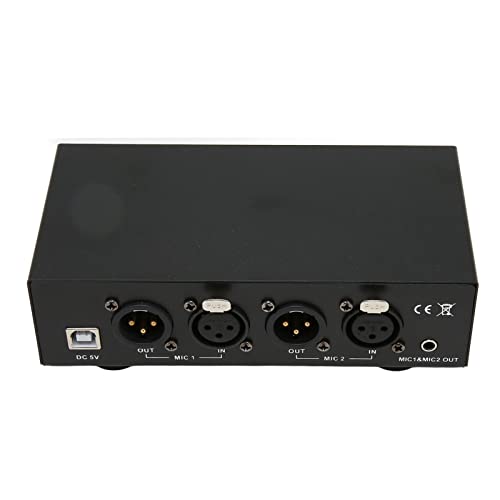
Best for budget-conscious buyers needing dual-microphone support, this unit emphasizes high stability and balanced output. Its design focuses on stable filtering to minimize interference, with a low-pass filter to reduce external noise. It’s a practical choice when powering two condenser mics from a single supply on small setups. Limitation: some users may prefer units with USB-C or multiple voltage options for modern rigs.
FIFINE PM48 48V Phantom Power

Well suited for portable studios, this unit combines sturdy metal construction with wide compatibility. It works with most condenser mics and mixers and includes a USB-C data cable option for power connectivity. The PM48 is a versatile pick for users who need robust construction plus convenient modern connectivity. Limitation: may be overkill for purely stationary home studios that don’t require USB-C features.
Rockville PSP5 Universal 48V Phantom Power

Best for compact, on-the-go use in home studios or live setups, the Rockville PSP5 emphasizes low-noise phantom power in a small form factor with durable metal construction. It’s a solid choice for users prioritizing reliability in cramped or mobile environments. Limitation: specific audio interfaces and mic models may require shorter cabling and careful placement to avoid interference.
Buying Guide: How to Choose the Right 48V Phantom Power
What should you consider when selecting a phantom power supply for condenser microphones?
- Power stability: Look for units that advertise stable 48V output with filtering to minimize noise.
- Compatibility: Ensure universal XLR input/output and compatibility with your microphone and mixer or audio interface.
- Form factor: Choose a model that fits your workspace, whether compact for travel or rugged for stage use.
- Power source: Decide between wall-powered, USB-C powered, or battery-powered options based on where you record.
- Channel count: If you use multiple mics, consider dual/multi-channel supplies or stacking solutions.
- Indicators and controls: An on/off switch and LED indicators can help with quick status checks during performances or sessions.
Practical Purchase Scenarios
- Home studio with a single condenser mic: Neewer or Fotoconic provide simple, reliable power with minimal setup.
- Stage and field recording: Fotoconic’s LED indicator and sturdy build can be advantageous for quick setup.
- Budget dual-mic setups: Acogedor offers stability and dual outputs for two mics at once.
- Portable recording on the go: FIFINE PM48 or Rockville PSP5 balances portability with performance.
- Studio with multiple mics and devices: Xvive P1 and similar multi-power options can simplify power management.
FAQ
- What is phantom power and why do condenser mics need it? Phantom power provides a low-voltage DC supply (usually 48V) that powers internal microphone circuits without requiring extra cables on the mic itself.
- Can I power two mics from one supply? Some units offer dual outputs or you can use a splitter with a compatible powered supply; verify each model’s channel count and load specifications.
- Is USB-C power enough for condenser mics? Some models include USB-C connectivity for power or data, which can be convenient for modern laptops and USB interfaces, but verify that it can deliver the necessary 48V.
- Are battery-powered phantom power supplies reliable for long sessions? Battery-powered options offer portability, but battery life varies by model and mic current draw; plan for charging breaks in longer sessions.
- What should I avoid when using phantom power? Avoid high-gain settings with noisy preamps, and keep cables organized to prevent phase issues or interference from adjacent power supplies.
- Which model is best for beginners? A compact, single-channel unit with simple controls—like Neewer or Fotoconic—provides straightforward operation for new users.