
Best 4×4 USB Audio Interfaces for Home Studios in 2026
Looking for a reliable 4×4 USB audio interface to expand your recording setup? This guide highlights five solid picks that suit different creators—from podcasters to multi-track musicians. Each option offers four simultaneous inputs and four outputs, with high-resolution audio and practical features like low-latency monitoring and multiple preamps. The top contenders target home studios, project rooms, and on-the-go producers who need clean sound, versatile I/O, and solid software compatibility.
Summary of selected products
- Behringer U-PHORIA UMC404HD – Audiophile-grade 24-bit/192 kHz, 4×4 USB 2.0 with Midas preamps
- MOTU M4 – 4×4 USB-C, two high-quality mic preamps, rich software bundle
- Behringer UMC404HD – Another Behringer 4×4 with Midas preamps, reliable for multi-source setups
- Zoom AMS-44 – Four inputs, four outputs, live streaming and DAW-ready
- OseTub USB Audio Interface – 4 inputs, 4 outputs, 24-bit/192 kHz, direct monitoring
Behringer U-PHORIA UMC404HD Audiophile 4×4 Interface

The Behringer U-PHORIA UMC404HD delivers four inputs and four outputs with 24-bit/192 kHz performance. Its Midas-designed mic preamps provide clean, transparent gain, suited for recording multiple instruments or vocal tracks simultaneously. This model is best for home producers who want studio-grade preamps on a budget and broad DAW compatibility (Pro Tools, Ableton Live, Cubase, and more).
Best for: Home studios that need four simultaneous tracks with high-quality preamps and broad software compatibility. Use this for multi-mic recording sessions and instrument capture where clarity matters.
Limitation: USB 2.0 bandwidth can limit sustain with heavy multi-track sessions on older computers; ensure your system supports 24-bit/192 kHz workflows.
MOTU M4 4×4 USB-C Audio Interface

The MOTU M4 combines robust 4×4 inputs and outputs with high-quality conversion and two preamps. Its USB-C connectivity provides a modern interface for new laptops and desktops, plus a generous software bundle that can help optimize recording and mixing workflows. This choice is well-suited for creators who value a modern connection standard and hardware monitoring for zero-latency tracking.
Best for: Musicians and podcasters who want a future-proof USB-C interface with excellent audio quality and real-time monitoring. Choose this if you need straightforward DSP-like performance with strong driver support.
Limitation: Some users might prefer hardware loopback features with more extensive routing; rely on the included software tools for advanced routing if needed.
Behringer UMC404HD Audiophile 4×4 Interface
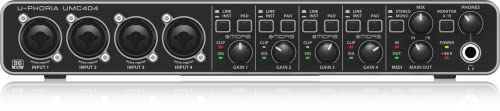
This Behringer model emphasizes 24-bit/192 kHz recording and four preamps, making it a versatile option for multi-channel recording. The combined USB 2.0 bus with MIDI I/O supports workflow needs in small studios where both audio and MIDI data travel together. It’s a practical workhorse for educational setups or small ensembles.
Best for: Quick multi-track sessions with reliable preamps and straightforward plug-and-play operation. It’s a solid choice if you value channel count over a heavy feature set.
Limitation: Interface drivers and DAW compatibility can vary by OS version; confirm support for your preferred software before purchasing.
Behringer U-PHORIA UMC404HD USB 2.0 Interface (Bundle)
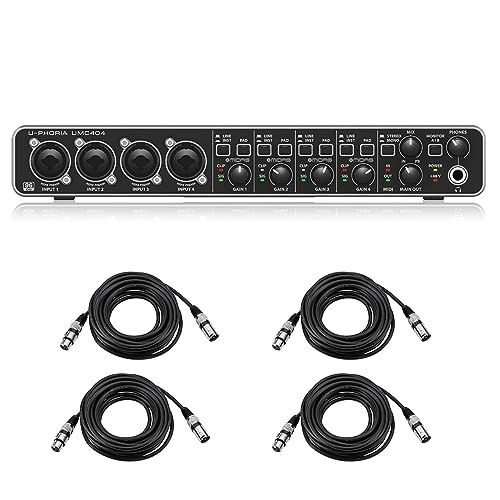
This bundle version includes additional Midas-equipped 4 preamps and a practical XLR cable setup, expanding its appeal for small studios or audition spaces. The 24-bit/192 kHz resolution remains a selling point for accurate vocal and instrument capture, making it well-suited for collaborative projects where multiple inputs are needed simultaneously.
Best for: Producers who want an all-in-one package with essential cables and a capable 4×4 interface. Choose this if you prefer ready-to-record bundling without shopping for extras separately.
Caution: Bundle contents vary by seller; verify included items before checkout to avoid missing essential cables needed for immediate use.
Zoom AMS-44 USB Audio Interface

The Zoom AMS-44 is designed for musicians and podcasters who need four inputs and four outputs with practical live streaming features. It supports direct monitoring and a user-friendly mode switch for studio or streaming tasks. Its straightforward routing helps streamline DAW work while also supporting real-time broadcast scenarios.
Best for: Content creators who alternate between recording, mixing, and streaming. Choose this if you value flexible input routing and simple live performance integration.
Caution: While versatile, its software ecosystem may be less expansive than some competitors; plan to rely on the hardware’s direct monitoring for latency-free work.
OseTub USB Audio Interface 4×4

The OseTub interface is a budget-friendly 4×4 option offering 24-bit/192 kHz support with two XLR/1/4″ combo inputs and two additional balanced line inputs. It targets entry-level home studios that need consistent performance across four channels, plus clear signal routing for playback and recording. Direct monitoring and low-noise outputs enhance the tracking experience.
Best for: Beginners or budget-conscious producers who still require four synchronized inputs and reliable engineering standards. Choose this if you want a cost-effective, straightforward recording path with solid performance.
Limitation: Onboard features may be simpler than high-end models; deeper routing and effects require external software or hardware if needed.
Buying Guide: Choosing a 4×4 USB Audio Interface
- What to prioritize: Balance between mic preamp quality, converter resolution, and latency. For vocals and acoustic instruments, prioritize clean preamps and high sampling rates (24-bit/192 kHz).
- Connection type: USB 2.0 remains common, but USB-C offers improved compatibility with newer laptops. Choose USB-C if your computer supports it for easier compatibility and potential power efficiency.
- Input/output configuration: Ensure your preferred model supports the exact number of inputs and outputs you need for your setup, including any MIDI I/O if you use external keyboards or controllers.
- Monitoring and routing: Direct monitoring reduces latency during tracking. Look for models with simple dial controls or dedicated switches for zero-latency monitoring and DAW playback mixing.
- Software and compatibility: Confirm driver support for your operating system and DAW. Some interfaces ship with bundles that can enhance recording and mixing workflows, especially for Mac and Windows users.
- Use case: Podcasters may value robust headphone monitoring and loopback features; musicians recording multi-tracks may prioritize preamp quality and stable ASIO/Core Audio drivers for DAWs.
FAQ
- What does 4×4 mean in an audio interface? It refers to four inputs and four outputs, enabling simultaneous recording and playback of multiple audio channels.
- Is 24-bit/192 kHz necessary for home studios? It’s beneficial for high-fidelity recordings, especially with dynamic and condenser mics, but usability depends on your project needs and hardware.
- Do I need MIDI I/O on a 4×4 interface? If you use external keyboards or MIDI devices, yes; many 4×4 units include MIDI I/O for integrated production workflows.
- Which interface is best for streaming and podcasting? Interfaces with zero-latency monitoring, reliable Direct Monitoring, and easy loopback features tend to be ideal for live streaming.
- Can USB-C interfaces work with older computers? USB-C is common on newer machines, but many interfaces also support USB-A. Check your computer’s ports and driver support for compatibility.
- Are bundled software tools important? Bundles can speed up setup and provide useful loops, plugins, or sample content, but core recording quality depends on preamps and converters.