
Find the Right 5.1 Soundbar — This guide compares top 5.1 soundbars that include wireless subwoofers and rear speakers for immersive home theater audio. Below is a quick summary table of the selected models to help you compare core features at a glance.
| Model | Key Features | Ideal For |
|---|---|---|
| RAINEVERRY 5.1 CH Surround Sound Bar | Dolby Digital Plus, 400W, 16″ wireless subwoofer, wireless rear speakers | Dolby-based surround on a budget |
| VIZIO 5.1 Soundbar SE (SV510X-08) | Wireless subwoofer, two surround speakers, VIZIO app | Reliable performance for medium/large rooms |
| Amazon Fire TV Soundbar Plus | 5.1 channel, Dolby Atmos, center dialogue channel, sub + surround speakers | Fire TV ecosystem and clear dialogue |
| Samsung HW-B750F 5.1 ch | Built-in side speakers, Q-Symphony support, adaptive sound | Samsung TV owners seeking multi-directional audio |
| JBL Bar 9.1 | Detachable battery surround speakers, Dolby Atmos, 820W output | High-power immersive setup with removable surrounds |
RAINEVERRY 5.1 CH Surround Sound Bar With Rear Speakers
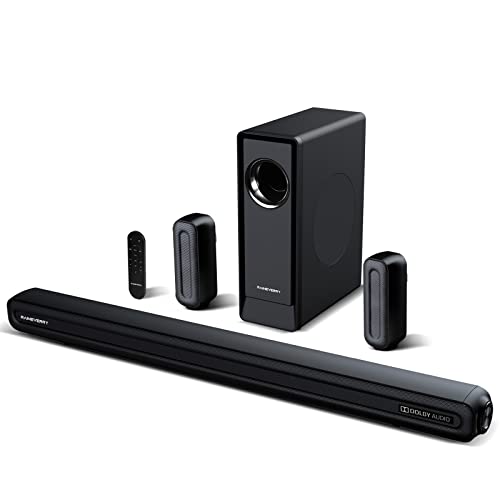
Brand: RAINEVERRY. This system advertises a full 5.1-channel surround sound experience driven by Dolby Digital Plus and a 5.1 surround engine with DSP. It includes wireless rear speakers and an emphasized bass response via a large 16″ wireless subwoofer. The feature set mentions multiple EQ modes (Music, Movie, News, 3D) and a smart remote to adjust treble and bass.
Connectivity highlights include HDMI and optical inputs plus Bluetooth 5.3. The system claims up to 400W total power and bass extension to around 50 Hz. For users prioritizing a virtualized, room-filling surround delivered with included rear speakers, this model positions itself as a high-output, feature-rich option.
VIZIO 5.1 Soundbar SE With Wireless Subwoofer

Brand: VIZIO. The VIZIO SE 5.1 soundbar features three full-range drivers in the bar, two wireless surround speakers, and a compact wireless subwoofer. It delivers up to 96 dB of sound and is positioned for medium to large rooms.
This model integrates with the VIZIO mobile app for advanced settings and firmware updates (VIZIO account required). Note that the soundbar remote may be sold separately depending on seller listings. The system emphasizes easy integration and balanced performance across dialogue, music, and movie content.
Amazon Fire TV Soundbar Plus With Subwoofer And Surrounds

Brand: Amazon. This Fire TV Soundbar Plus ships as a 5.1 channel package including a subwoofer and two surround speakers. The feature set calls out Dolby Atmos and DTS:X support and a dedicated center channel to clarify dialogue.
Integration with the Fire TV ecosystem may offer streamlined setup for Amazon users and simplified voice/media control when paired with Fire TV devices. The design centers on delivering cinematic surround effects with emphasis on intelligible vocals via the center dialogue channel.
Samsung B-Series HW-B750F 5.1 ch With Side Speakers

Brand: Samsung. The HW-B750F highlights built-in side-firing speakers in addition to front channels and a wireless subwoofer to create multi-directional spatial audio. It supports Q-Symphony to work in tandem with compatible Samsung TVs and features Adaptive Sound and Voice Enhance modes.
Samsung lists Dolby Audio support and DTS Virtual:X for a pseudo-3D effect without separate rear speakers, though it’s also offered as a 5.1 solution. This model may be especially useful for users with Samsung TVs who want integrated audio processing between TV and soundbar for an enhanced soundstage.
JBL Bar 9.1 Channel Soundbar System With Detachable Surrounds

Brand: JBL. The JBL Bar 9.1 features high total output (listed at 820W) and native Dolby Atmos and DTS:X decoding. A distinctive feature is the detachable, battery-powered surround speakers that provide true wireless placement for rear channels.
This configuration supports powerful dynamics and flexible room placement. The detachable rears remove the need for trailing wires and enable a more authentic 5.1 layout. Users seeking the most “real” surround experience among soundbars often consider systems with removable surrounds like this model.
Buying Guide: Choosing The Right 5.1 Soundbar With Wireless Rear Speakers
Selecting a 5.1 soundbar with wireless rear speakers requires attention to several technical and practical factors. Below are key considerations and comparison perspectives to guide your choice.
1. True Rear Speakers vs Virtual Surround
- True Rear Speakers: Systems listing included rear speakers deliver discrete rear channels for more accurate surround imaging. Look for detachable or wire-free rear units for flexible placement.
- Virtual Surround: Some soundbars (often with side-firing drivers or Dolby virtualization) simulate surround without physical rears. This can be effective in smaller rooms but is less precise than dedicated rear speakers.
2. Decoder Support And Channels
- Dolby Atmos / DTS:X: These object-based formats enhance vertical and spatial effects. Verify that the soundbar decodes the formats you expect to use with your content.
- Dolby Digital Plus / Dolby Digital: Common for streaming and TV content; many 5.1 systems rely on these for multichannel playback.
3. Subwoofer Size And Bass Performance
- Subwoofer Size: Larger drivers (6.5″ or bigger) typically produce deeper, fuller low end. Consider room size; larger rooms benefit from more robust subs.
- Wireless Or Wired: Wireless subs simplify placement but still require power. Confirm wireless pairing stability and whether a power cord is needed for the subwoofer.
4. Power Output And Room Size
- Wattage And SPL: Higher total output can fill bigger rooms and deliver cinematic dynamics. Brands often list watts or peak output; use this as a directional metric, not a sole determinant.
- Room Size: Small rooms: virtual or compact 5.1 setups suffice. Medium/large rooms: look for higher output, larger subs, and dedicated rear channels.
5. Connectivity And Compatibility
- HDMI eARC/ARC: For lossless multichannel audio and simplified control, HDMI eARC is preferred if your TV supports it.
- Optical, Bluetooth, HDMI Inputs: Ensure the soundbar has the inputs you need for cable boxes, game consoles, and streaming devices.
- App Control And Firmware: Some manufacturers offer mobile apps to fine-tune EQ and update firmware; this can improve long-term performance and feature set.
6. Brand Ecosystem And Features
- Manufacturer Integration: Samsung’s Q-Symphony pairs soundbar and TV speakers. Amazon Fire TV Soundbar integrates tightly with Fire devices. Consider ecosystem benefits if you use a brand’s TV or streaming platform.
- Detachable Or Battery-Powered Rears: Detachable rears (like JBL) offer placement flexibility without trailing cables, useful for minimal wiring and flexible room layouts.
7. Use Case: Movies, Gaming, Music
- Movies: Prioritize systems with Dolby Atmos/DTS:X and a strong subwoofer for dynamic effects and low-frequency impact.
- Gaming: Low-latency HDMI eARC/ARC and precise directional audio are beneficial. Some models include a Game Mode for audio sync.
- Music & Dialogue: Dedicated center channels and voice enhancement modes improve vocal clarity for TV shows and podcasts.
8. Placement, Room Acoustics, And Calibration
- Placement: Rear speakers should be placed behind listening positions and elevated for best surround imaging.
- Acoustics: Soft furnishings and carpets reduce reflections and improve bass response. Hard surfaces may create harsher sound.
- Auto-Calibration: Some soundbars offer room calibration to optimize output for your room — a useful convenience for non-technical users.
Compare these perspectives and match features to your primary use case, room size, and device ecosystem to select the most suitable 5.1 soundbar with wireless rear speakers for your setup.