
Best 5.1 Computer Speaker Systems for Immersive Desktop Audio
Looking for a genuine 5.1 surround setup for your computer? This guide highlights five options that deliver true or near-true multi-channel sound for gaming, movies, and music. Best for dedicated home theater setups, gaming PCs, and multimedia workstations that prioritize immersive audio. The top picks cover distinct budgets and feature sets to fit desks and living rooms alike. Below, compare the strongest 5.1-capable systems and closely related 5.1-environment alternatives.
Summary table of selected products:
| Product | Best For | Key Benefit |
|---|---|---|
| Acoustic Audio AA5170 Home Theater 5.1 Bluetooth System | Movie lovers and multi-source setups | Built-in BT and 6 inputs for versatile sources |
| SteelSeries Arena 9 | PC gaming with USB connectivity | True 5.1 USB surround with wireless rear speakers |
| Klipsch ProMedia 2.1 THX Certified | Clear, precise desktop sound | THX-certified two-way satellites and strong bass |
| Logitech Z313 2.1 System | Compact, budget-friendly 2.1 upgrade | Simple 2.1 setup with convenient control pod |
| OHAYO 60W Computer Speakers | Desktop gaming and media in a compact form | High-power 30W x 2 with subwoofer and USB input |
Acoustic Audio AA5170 Home Theater 5.1 System

The Acoustic Audio AA5170 is a full 5.1 speaker system designed to transform a home theater setup into a PC-appropriate surround experience. It includes a powered subwoofer, five satellite speakers, and a built-in amplifier with a total system power of up to 700 watts. Best for: users who want a stand-alone 5.1 package that can connect to multiple sources via RCA and digital options, with an integrated FM tuner and front-panel controls. Limitations: as a larger, higher-powered system, it may require more desk or room space and a dedicated power outlet.
What makes it stand out:
- 6 independent RCA inputs plus digital/optical options for flexible source connections
- Dedicated front, center, and surround satellite arrangement for immersive sound
- Front-panel controls and illuminated display for easy operation
Best for: multi-source listening and movie playback in a living room or media area where space is available. Better for those who want Bluetooth streaming as a supplementary option via its multi-input design.
Caution: setup is more involved than compact 2.1 systems; ensure adequate space for the five satellites and the subwoofer.
SteelSeries Arena 9 5.1 Desktop Gaming Speakers

The SteelSeries Arena 9 delivers true 5.1 surround sound via USB with wireless rear speakers, ideal for PC gamers seeking an isolated, cable-light system. Best for: gaming setups that benefit from precise channel separation, easy USB connectivity to PC, and rear speakers that minimize cable clutter. Limitation: rear speaker wireless connection depends on the subwoofer’s placement and may be disrupted by physical barriers.
What makes it stand out:
- True 5.1 surround with two front, two rear, center, and a robust subwoofer
- USB power and a single USB connection for simple PC setup
- Wireless rear speakers provide flexible placement for room layouts
Best for: competitive or story-driven games where positional audio enhances immersion. Choose this if you want a dedicated gaming-oriented 5.1 system with minimal cabling.
Caution: the wireless rear link can be sensitive to interference; ensure clear line-of-sight between the subwoofer and rear satellites where possible.
Klipsch ProMedia 2.1 THX Certified

The Klipsch ProMedia 2.1 THX Certified system blends Klipsch’s proven audio clarity with THX certification for reliable, room-filling sound. Best for: users who want precise midrange and crisp highs from desktop speakers paired with deep, controlled bass. Limitation: being 2.1, it does not provide full 5.1 surround like multi-speaker packages, but offers high-quality stereo plus strong sub-bass for its class.
Why it’s a strong pick:
- THX certification ensures a baseline of accurate, enveloping sound
- Two satellite speakers with a powered subwoofer deliver punchy bass and clear detail
- Efficient design fits neatly on a desk without dominating space
Best for: desktop users who value sound fidelity and compact setup over full surround seating. Choose this if you want the closest to professional-grade audio in a small footprint.
Logitech Z313 2.1 Multimedia Speaker System

The Logitech Z313 is a compact 2.1 system that adds full-range audio with a strong subwoofer and a convenient control pod. Best for: budget-conscious buyers seeking a simple upgrade to computer audio with easy setup and reliable performance for casual gaming and multimedia. Limitation: does not offer true 5.1 surround or rear-channel sound, which limits immersion for movies or immersive games.
What to know:
- 25 Watts RMS output with a compact subwoofer for enhanced bass
- 3.5mm audio inputs provide broad compatibility with PCs and mobile devices
- Control pod offers quick volume and power adjustments
Best for: users who want a straightforward, affordable stereo system with decent bass. Avoid this if you specifically require a true 5.1 surround experience for gaming or film audio.
BlueDee Computer Speakers
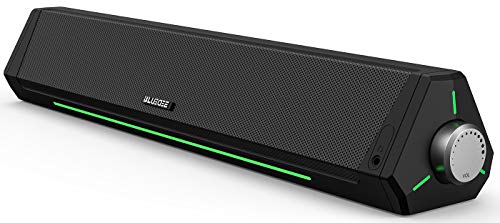
The Bluede e model provides Hi-Fi quality with dual drivers and soft lighting accents for an ambient desk setup. Best for: users seeking a stylish, compact audio system with Bluetooth and 3.5mm jack compatibility for everyday computing tasks. Limitation: not a true 5.1 system; no rear-surround or dedicated center channel, which reduces immersion for movies.
What to expect:
- Hi-Fi sound with dual drivers and anti-magnetic tech for crisper audio
- Bluetooth 5.0 and 3.5mm AUX inputs for flexible connections
- Ambient lighting strips to enhance desk aesthetics
Buying Guide: Key Considerations for 5.1 Computer Speaker Systems
What is your primary use?
For gaming and movies, prioritize true 5.1 systems (like Acoustic Audio AA5170 or SteelSeries Arena 9). For everyday desktop tasks and light gaming, a high-quality 2.1 with a strong subwoofer (like Klipsch ProMedia or Logitech Z313) can be sufficient.
How much space do you have?
True 5.1 packages require more floor or desk space for the satellites. If space is limited, consider compact 2.1 or 2.0 systems with strong bass and virtual surround features.
What connectivity do you need?
Look for systems offering multiple inputs (RCA, optical, USB, Bluetooth). Bluetooth adds convenience for mobile devices, while wired options reduce latency in competitive gaming.
Is sound quality or ease of setup more important?
THX-certified 2.1 systems provide strong, accurate sound in compact form factors. True 5.1 systems deliver multi-channel immersion but can be more complex to install and calibrate.
Budget and future-proofing
Higher-end 5.1 packages provide richer room-filling sound and better expansion options, whereas budget 2.1 options offer good value and straightforward upgrades.
Power and placement
Powered subwoofers need ventilation and room for bass to breathe. Place satellites at ear level and maintain symmetry for balanced imaging across the listening area.
Frequently Asked Questions
- Can a 2.1 system feel like 5.1? A well-designed 2.1 system can deliver deep bass and clear stereo, but it cannot reproduce true rear-channel audio. For surround immersion, choose a true 5.1 package.
- What does THX certification mean for PC speakers? THX certification indicates adherence to a set of performance standards for accurate, balanced playback and efficient sound reproduction.
- Is USB connectivity necessary for modern PC gaming? USB minimizes cables and usually provides simple power and signal, but many setups still benefit from multiple wired inputs for compatibility with consoles and other devices.
- Where should I place rear satellites in a 5.1 system? Place front left/right on either side of the monitor, center below or above the screen, and rear satellites behind or to the sides at about ear level when seated.
- Are wireless rear speakers reliable? Wireless rear speakers offer cleaner layouts but can experience interference; ensure a clear path and minimize obstacles between the subwoofer and rear units.
- How do I calibrate a 5.1 system? Start with baseline levels using a test tone, adjust subwoofer crossover and satellite levels, and fine-tune center reverb for dialogue clarity. Use your software or receiver’s calibration tools if available.