
Best 4K 5.1 Surround Sound Receivers for Home Theater
The best 4K 5.1 surround sound receivers deliver immersive home theater audio with 4K video pass-through, easy setup, and reliable connectivity. This guide highlights five top options, each suited to different buyer needs—from turnkey all-in-one systems to flexible, feature-rich AVRs. Whether you want a compact package with included speakers or a robust receiver to upgrade an existing setup, you’ll find a clear, evidence-based pick here.
Buyer snapshot: The top picks cover a range of needs. For a ready-to-use package with 5.1 speakers, the Yamaha YHT-4950U is ideal. If you prefer a well-rounded, feature-rich AVR with solid Bluetooth and HDMI options, the Yamaha RX-V385 and Denon AVR-S670H stand out. For higher power and multi-input versatility, Donner MAMP4 provides strong amplification with multiple inputs. Denon’s AVR-S570BT offers flexible 8K/HDMI support and multi-room streaming. The quick comparison table below helps you see core strengths at a glance.
| Product | Best For | Key Benefit | Limitations to watch |
|---|---|---|---|
| Yamaha YHT-4950U | Beginner to intermediate setups | All-in-one 5.1 with included speakers | HDMI count is modest |
| Yamaha RX-V385 | Versatile home theaters | Bluetooth, HDMI 2.1/HDCP 2.2 | PHONO/analog input not mentioned |
| Donner MAMP4 | Budget-conscious multi-input 5.1 | Bluetooth 5.3, USB, mic inputs | No HDMI input |
| Denon AVR-S670H | 8K/4K cinema enthusiasts | 8K/60 passthrough, ARC/eARC, upscaling | Higher price point |
| Denon AVR-S570BT | 8K/HDMI flexibility with Bluetooth | HDMI 2.1, eARC, wireless streaming | 5.1 channel is a step below 7.1/7.2 |
Yamaha YHT-4950U 4K Ultra HD 5.1 System
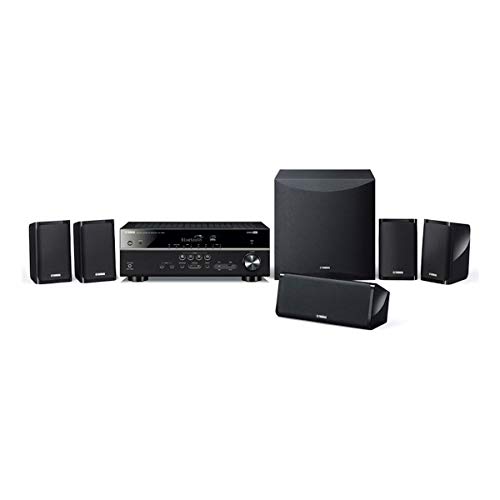
Best for users seeking a complete, ready-to-go home theater package. The kit includes an AV receiver, five speakers, a powered subwoofer, and speaker wire. Ideal for small to medium rooms where a fast setup is preferred. The system’s HDMI count supports core 4K playback and basic movie watching without extra shopping for components.
Who this is for: For buyers who want an all-in-one solution with straightforward wiring and a single purchase to power a full 5.1 experience. Why selected: It eliminates guesswork by providing matched speakers and a compatible receiver in one package, simplifying placement and calibration.
Limitation to consider: The HDMI inputs are limited relative to premium standalone AVRs, which may matter for sophisticated gaming setups or future expansion.
YAMAHA RX-V385 5.1-Channel 4K Ultra HD AV Receiver

Best for versatile mid-range setups needing solid Bluetooth and HDMI 2.1/HDCP 2.2 support. This model emphasizes 5.1-channel surround with practical connectivity for modern TVs and streaming devices. It’s a strong all-around choice for users who want reliable performance without stepping into flagship price tiers.
Who this is for: For buyers seeking a balanced feature set with modern HDMI and wireless audio options. Why selected: It blends dependable sound quality with a feature-rich HDMI profile suitable for contemporary 4K media players and consoles.
Caution: It may lack some advanced room correction features found on higher-end Denon or Yamaha models, depending on room acoustics and calibration needs.
Donner MAMP4 5.1 Channel Amplifier
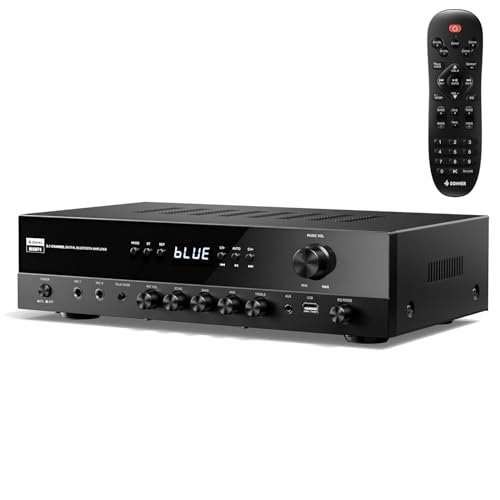
Best for budget-conscious buyers who want a multi-input amplifier with Bluetooth 5.3 and USB. This unit supports 5.1 channels with a sub and several inputs, making it suitable for a custom home theater where HDMI input needs are modest. It emphasizes low noise in standby thanks to updated relays.
Who this is for: For users upgrading an existing speaker setup on a tighter budget and who value diverse input options. Why selected: It offers strong power distribution across channels and convenient remote control features for adjusting tone and ambience.
Limitation: It does not include HDMI inputs, so you’ll need a separate HDMI switcher or source with digital outputs if you rely on HDMI connections for all devices.
Denon AVR-S670H 5.2 Ch Home Theater Receiver

Best for 8K/4K cinema enthusiasts who want top-tier upscaling, HDR support, and robust streaming. This 5.2-channel model delivers high power per channel, advanced video processing, and comprehensive HDMI features including ARC/eARC. It’s well-suited for home theaters aiming for cinematic fidelity without stepping into the most premium tiers.
Who this is for: For buyers prioritizing future-proof video capabilities and advanced audio processing along with reliable wireless and multi-room streaming. Why selected: It provides strong 8K/60 video passthrough and Dolby Atmos-era audio features with excellent calibration possibilities.
Caution: The 5.2 channel configuration means a separate subwoofer and possible expansion might be needed for larger rooms or 7.1 configurations.
Denon AVR-S570BT 5.2 Channel AV Receiver

Best for flexible setup with strong Bluetooth streaming and 8K/HDMI capabilities. This AVR supports HDR formats and eARC, facilitating easy TV audio integration. It’s a solid choice for users wanting reliable 5.1 surround with a future-ready HDMI configuration.
Who this is for: For buyers who want modern video formats, good audio quality, and wireless music playback. Why selected: It blends robust 5.1 capabilities with convenient streaming and gaming-friendly features.
Limitation: While versatile, the 5.1 channel layout may be less immersive than higher-channel-count systems for very large rooms or those seeking per-seat surround cues.
Buying Guide
What to consider when choosing a 4K 5.1 receiver
- Room size and speaker arrangement: Larger rooms benefit from higher power and additional channels. For smaller spaces, a complete 5.1 package like the Yamaha YHT-4950U can be simpler and effective.
- HDMI and video formats: If you game or watch 8K/4K content, prioritize HDMI 2.1 and HDR support (Dolby Vision, HDR10+). Denon AVR-S670H and AVR-S570BT highlight these features.
- Audio formats: Dolby Atmos and DTS:X capabilities matter for immersive sound. Some models like the Denon S670H provide advanced upmixing and multidimensional audio processing.
- Inputs and outputs: Consider how many HDMI inputs you need and whether you require USB, Bluetooth, or Optical/Coaxial connections for legacy devices.
- Built-in streaming and multi-room: If you want wireless music throughout the home, a model with robust Bluetooth or Wi-Fi streaming and multi-room support is advantageous.
- All-in-one vs. component approach: All-in-one packages simplify setup, but some buyers prefer a mix of a separate AVR with high-end speakers for maximum customization.
FAQ
- What is a 5.1 surround system?
Answer: It uses five full-range channels and one dedicated subwoofer to deliver directional sound and bass for a cinema-like experience. - Do I need 8K support to enjoy 4K content?
Answer: No. 8K support is future-proofing; 4K content remains the standard for most media today. 8K passthrough helps with future media compatibility. - Is HDMI eARC important for TV audio?
Answer: Yes. eARC provides higher bandwidth, enabling advanced formats and better lip-sync with compatible TVs and soundbars. - Should I buy an all-in-one system or a separate AVR?
Answer: All-in-one packages are easiest to set up, while separate AVRs offer more customization and room for upgrades as components wear or you expand. - What’s a good rule of thumb for room size?
Answer: For small rooms, 50–70 watts per channel is often sufficient; larger spaces may require 70–100+ watts per channel and proper placement to maximize efficiency. - Do I need a separate subwoofer?
Answer: For authentic 5.1 surround and deep bass, a powered subwoofer is essential; most 5.1 packages include one, but some receivers offer compact bass options.