
Best 5.1 Surround Sound Receivers With HDMI for Home Theater
Answering buyers’ need for easy, feature-rich HDMI-enabled 5.1 surround sound, this guide highlights five solid options. Each product suits different setups—from entry-level home theaters to enhanced gaming and multi-room listening. The top picks include models with HDMI inputs, Bluetooth, and robust processing to deliver immersive audio with clear dialogue and dynamic effects. Whether you want simple setup or room-filling cinema sound, these receivers help you maximize your speaker system.
Buyer quick-glance table:
- Denon AVR-S570BT: Best for budget-friendly, 8K-ready home theater with strong audio processing.
- Pyle PFA560BT: Best for compact spaces needing HDMI output and multiple inputs.
- Sony STR-DH590: Best for easy, virtual surround with reliable 4K pass-through.
- Yamaha RX300A: Best for Dolby Atmos support in a 5.2 setup with flexible speaker layouts.
- Denon AVR-S670H: Best for premium 8K/4K performance and multi-format compatibility.
Denon AVR-S570BT 5.2 Channel AV Receiver

Best for: Small to mid-sized rooms that want 8K/4K passthrough and robust cinematic features without a premium price. This model supports (4) HDMI 2.1 inputs and eARC, enabling reliable 8K/60 and 4K/120 video and high-quality audio with Dolby and DTS processing. It’s well-suited for users who want high dynamic range, immersive audio, and Bluetooth streaming in a modest setup.
Why selected: It combines Denon’s core home theater processing with extensive HDMI support, enabling future-proof video features while delivering strong 5.1 surround performance. The setup is straightforward for most 5.1 speaker arrays and includes multi-room Bluetooth streaming.
Best for: People building a home theater on a budget who still want advanced video compatibility and easy onboard Bluetooth.
Caution: 8K/60 Hz requires compatible sources; users should verify HDMI cable quality to prevent bandwidth bottlenecks.
Pyle 100 W 5 Channel AV Receiver – PFA560BT
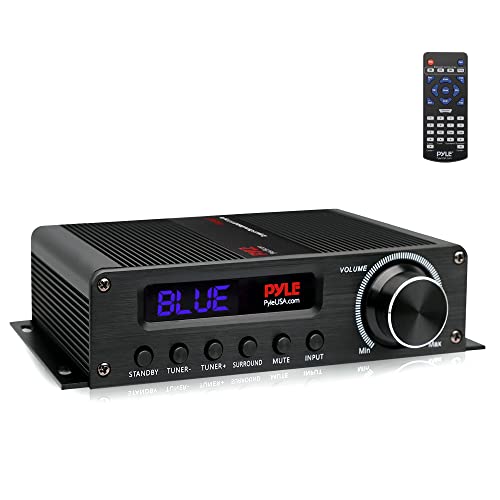
Best for: Compact home theater systems needing HDMI output and multiple input options. This 5-channel amp includes Bluetooth, HDMI output, and several inputs for flexible device connections in smaller rooms or apartments.
Why selected: Its 100W total power per channel offers clear, room-filling sound without oversizing the system. The HDMI connection supports modern devices, and the inclusion of Bluetooth makes it easy to stream from mobile devices.
Best for: Users who want a practical, mid-powered 5.1 solution with straightforward setup and a focus on flexibility over sheer power.
Caution: While it provides HDMI output and multiple inputs, it lacks some advanced room correction features found on higher-end models.
Pyle Wireless Bluetooth Home Audio Amplifier – PFA540BT

Best for: Larger living rooms or entertainment spaces where 5.1 channel sound, Bluetooth, and multiple HDMI/HDMI-out options are desired. This model emphasizes wireless convenience and robust input flexibility.
Why selected: It delivers substantial power with reliable Bluetooth streaming and a broad input assortment, helping to bridge legacy gear with newer HDMI-enabled devices.
Best for: Those who need a capable, feature-rich amplifier with HDMI support and easy wireless integration.
Caution: Some users may prefer additional room correction features for ideal speaker alignment in complex rooms.
Sony STR-DH590 5.2 Channel Surround Sound Receiver

Best for: Entry-level theaters seeking virtual surround features with reliable 4K pass-through and easy setup. The Sony model is known for straightforward operation and dependable performance in smaller to medium rooms.
Why selected: It provides virtual surround with S-Force PRO, plus 4K pass-through, making it a practical choice for users who want a simple, affordable 5.1 setup without complexity.
Best for: Budget-conscious buyers who still want a credible, plug-and-play surround experience.
Caution: It uses virtual surround rather than true discrete rear channels, which may matter to purists seeking a more expansive sound field.
Yamaha RX-V Series RX300A 5.2-Channel Receiver

Best for: Home theaters needing Dolby Atmos support with flexible speaker layouts and strong video capabilities. This model suits users planning 3.1.2 or 5.2 configurations with improved height effects and modern HDMI inputs.
Why selected: It blends Dolby Atmos with robust HDMI handling and Bluetooth multipoint, delivering immersive sound with flexible installation options for Dolby-enabled content.
Best for: Viewers seeking tall, dimensional sound in a compact 5.2-capable package with room for up-firing or ceiling speakers.
Caution: The interface and setup flow may be less intuitive for first-time buyers compared with simpler, non- Atmos-focused receivers.
Denon AVR-S670H 7.2 Channel Home Theater Receiver

Best for: Premium users seeking 8K/4K compatibility, Dolby Atmos, and comprehensive HDMI features. The AVR-S670H supports a wide range of formats and multi-room audio, delivering top-tier performance for complex setups.
Why selected: Denon’s flagship-like feature set includes robust upscaling, advanced surround formats, and ARC/eARC support, making it a strong centerpiece for larger home theaters.
Best for: Audiences who want future-ready video and audio features, plus room to expand with extra channels or more sophisticated calibration.
Caution: Higher cost and more complex configuration may deter buyers seeking simpler plug-and-play options.
Buying Guide
What matters most in an HDMI-enabled 5.1 receiver?
Video compatibility: Look for 4K/120, 8K/60 pass-through, HDR formats, and eARC support to ensure your TV and devices work seamlessly with high-quality audio.
Audio processing: Dolby Atmos, DTS:X, and DSP options influence how immersive your sound is. Consider whether your room benefits from room calibration and dynamic range features.
HDMI and inputs: How many do you need?
Count the devices you plan to connect: Blu-ray players, game consoles, streaming boxes, and a TV. More HDMI inputs reduce switching clutter. Some receivers offer extra HDMI outputs for separate zones.
Power and speaker matching
Match RMS power to your speaker impedance and room size. Larger rooms benefit from higher wattage to maintain clear, dynamic sound at higher volumes, while smaller rooms can avoid overpowering everything with excess power.
Connectivity and ecosystem
Bluetooth is handy for mobile streaming; multi-room audio helps fill multiple spaces. If you own a preferred smart home system or streaming service, verify compatibility before buying.
Ease of use and setup
Some models emphasize simple setup with guided calibration, while others offer detailed onscreen menus. Consider whether you value quick setup over deeper customization options.
Cabling and placement considerations
Use good-quality HDMI cables and speaker wires. Position speakers for best surround effect—front left/right at ear level, center aligned with the TV, and rear surrounds slightly behind and to the sides.
FAQ
- What is the difference between 5.1 and 5.2 channels? A 5.1 system has five main channels plus a subwoofer. A 5.2 system adds a second subwoofer or a different configuration, depending on the receiver’s support.
- Do these receivers support 8K video? Some do, like Denon AVR-S670H, which offers 8K/60 Hz pass-through. Verify HDMI specification for your exact model.
- Is HDMI ARC/eARC necessary for best TV audio? ARC/eARC simplifies TV-to-receiver audio, enabling high-quality signals and fewer cables. It’s recommended for modern setups.
- Can I use Bluetooth streaming with a 5.1 system? Yes, most of these receivers support Bluetooth streaming, which is convenient for mobile devices and casual listening.
- Are virtual surround systems as good as true 5.1? Virtual surround can simulate space with fewer channels; it may not match the depth of a true discrete 5.1 setup for purists.
- What should I consider when choosing power? Consider room size, speaker efficiency, and listening distance. More power helps at higher volumes but isn’t the sole determinant of sound quality.