
Best 5-String Bass Strings With High C Tuning
Looking for 5-string bass strings that accommodate a high C and stay balanced across the low B to high C range? This guide highlights five strong options, explains who they’re best for, and shows why each choice matters. Ideal buyers include players chasing a bright high C for solos, metal players needing tight intonation, session players seeking consistent feel, and players upgrading from standard 4-string sets who want a reliable high-C option.
Summary of selected products (quick reference):
- GHS 5M-C-DYB Bass Boomers — High C, versatile, durable, ideal for rock to studio work.
- Ernie Ball Regular Slinky 5-String — Popular all-around set with balanced tone.
- D’Addario ECB81-5 XL Chromes Flatwound — Flatwound, mellower and smooth for jazz/precision feel, 5-string with high C compatibility.
- DR Hi-BEAM Stainless Steel — Bright, long-scale roundwound, good for modern styles.
- Elixir Electric Bass Strings — Nanoweb coating, long-lasting tone, 5-string configuration.
GHS Strings 5M-C-DYB Bass Boomers Bass Guitar Strings Set

Brand: GHS Strings. Features emphasize longevity, durability, and versatility for players who move quickly from live gigs to studio sessions. The set is described as high-fiber tension with a focus on long-lasting tone and reliability.
Best for: Players who want a durable, versatile 5-string set with a defined high C for aggressive or energetic playing. Choose this if you need a single string set that performs well across gigs and studios.
Caution: Description emphasizes durability; actual feel and tone may vary with instrument setup and playing style.
Ernie Ball 5-String Regular Slinky Nickel Wound Bass Strings
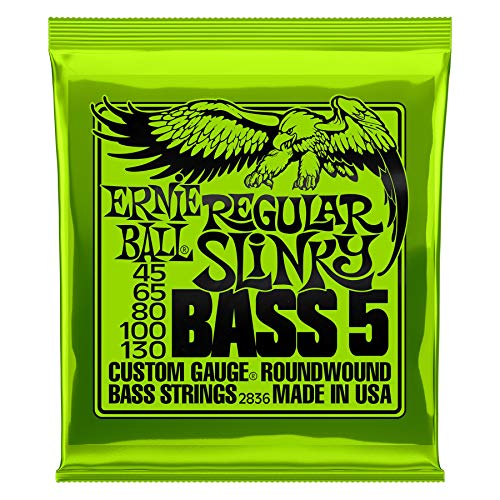
Brand: Ernie Ball. Features highlight the popularity and musical versatility of Slinky bass strings, with a rich and balanced tone suitable for many genres.
Best for: Players seeking a trusted, widely used 5-string set with reliable feel and a balanced tone for diverse styles.
Caution: Not every 5-string setup favors Regular Slinky’s specific tension; ensure your bass nut and truss setup accommodate string tension.
D’Addario XL Chromes Flatwound Bass Strings ECB81-5

Brand: D’Addario. Features describe a mellow tone with smooth, dark warmth, thanks to flatwound construction and a hex-core for stable intonation and durability.
Best for: Players prioritizing a smooth, jazz-friendly or warm-dark tone with easy finger feel on a 5-string bass, especially in studio settings.
Caution: Flatwound feel may reduce brightness some players expect on modern rock or metal styles.
HI-BEAM™ Stainless Steel Bass Strings (45-125, 5 Strings)

Brand: DR Strings. Features describe .030-.090 gauge, stainless steel, and long scale, suggesting brightness and extended life.
Best for: Players seeking a bright, responsive feel with strong sustain across the 5-string range, suitable for modern rock and metal.
Caution: Longer scale tension may demand careful setup if your bass is tuned very low or has tight nut slots.
Elixir Electric Bass Strings, Nickel Plated Steel-NANOWEB

Brand: Elixir. Features highlight long-lasting tone with NANOWEB coating, corrosion resistance, and a warm, rounded sound with comfortable feel.
Best for: Players who want extended tone life and consistent performance on a 5-string setup, ideal for frequent gigging and long practice sessions.
Caution: Coated strings can feel slightly different under the fingers initially; some players acclimate over time.
Ernie Ball 5-String Power Slinky Nickel Wound Bass

Brand: Ernie Ball. Features describe heavy gauge options, tin-plated high-carbon steel core, and a powerful, balanced tone suited for heavier styles and extended range.
Best for: Players seeking stronger tension and a bold tone across the 5-string spectrum, particularly in rock and metal contexts.
Caution: Heavier gauges require appropriate neck relief and nut clearance; verify setup before installation.
Buying Guide
What should you consider when choosing 5-string bass strings with high C?
- Higher gauges deliver more tension and stability, helping maintain intonation with a high C. Balance feel with comfort for your playing style.
- Flatwound versus roundwound, coated versus uncoated, and the target genre influence your pick. Jazz prefers flats or coated rounds; rock and metal often favor brighter rounds.
- Coated strings last longer but can alter feel and tone slightly. Consider your playing frequency and sweat exposure.
- Hex-core strings tend to intonate reliably; non-hex cores may feel different in the nut slots and saddles.
- 5-string basses with high C require careful nut slot width and bridge saddles; verify nut slot depth and truss rod adjustments if upgrading several gauges.
Frequently Asked Questions
- Do all 5-string sets include a high C string? Most sets are designed for standard 5-string tuning and will accommodate a high C when tuned appropriately, but always check the product notes for high-C compatibility.
- Which material sounds brightest on a 5-string with high C? Stainless steel roundwound strings typically offer brighter, more articulate highs than phosphor bronze or flatwounds.
- What is the difference between flatwound and roundwound for high C? Flatwounds provide mellower, darker tones with smoother feel; roundwounds give brighter attack and more texture, which can affect high-C presence.
- Should I choose coated or uncoated strings for frequent gigging? Coated strings last longer and resist corrosion, making them better for frequent players; some players prefer the feel of uncoated strings for fast playing.
- How does high-C affect setup? High-C tension can influence neck relief; ensure truss rod adjustment and nut height accommodate the higher tension if you change gauges or sets.
- Is high-C tuning common for 5-string basses? Yes, many players use high C for extended range solos or tonal versatility across genres.