Best 5 String Bass Tuner Options for Precision Tuning in Any Setting
Choosing the right 5-string bass tuner means prioritizing accuracy, visibility, and reliability in your playing environment. This guide highlights tuners that excel with low-B or extended-range basses, and clarifies which players benefit most from each model. The top selections cover clip-on tuners that sense vibrations, headstock tuners designed for bass-scale tuning, and all‑purpose multi-instrument options. Your best pick will depend on whether you play on stage, in a practice room, or in a studio, and whether you value speed, clarity, or rugged ergonomics.
Buyer snapshot: The following table compares five strong candidates across key factors like tuning accuracy, display readability, and environmental performance. Use this quick reference to narrow down before diving into each product’s details.
| Product | Best For | Why It Stands Out | Notable Limitation |
|---|---|---|---|
| Fender FCT-2 | Live performers needing quick visual cues | Vibration sensing, cross-instrument modes, fast LCD needle | Standard tuning range emphasis; may be less specialized for extreme low-B |
| D’Addario Eclipse | Bassists needing ultra-quiet tuning | High accuracy via vibration, swivel display for dark stages | Cello-bias design; best for bass and cello players |
| SNARK SN5X | Budget-conscious players wanting versatility | 360° display and versatile clip-on design | Grip and build may be lighter than pro tiers |
| LEKATO | Long practice sessions with long battery life | Rechargeable power, long run time, bright display | Rechargeable only; ensure you keep charge cycles |
| KLIQ UberTuner | Multi-instrument players requiring speed | Fast, accurate tuning; color display rotates for visibility | Requires clip positioning for best angle |
Fender FCT-2 Professional Multi-Instrument Clip-On Tuner

Best for players who perform in varied environments, the Fender FCT-2 uses vibration sensing to stay accurate even in loud venues or noisy rooms. Its dedicated modes cover guitar, bass, ukulele, violin, and chromatic tuning, making it a flexible choice for bassists who frequently switch between instruments. The color LCD needle display provides quick, glanceable feedback, helping you land in tune without fiddling with settings. Choose this if you value universal compatibility and fast, intuitive tuning under diverse stage conditions. Caution: If you mainly tune down to extended-range low-B, confirm the outlet range suits your instrument’s calibration settings.
Who it’s best for: Bassists who share gear or regularly switch between guitar and bass, or who perform live in variable acoustics. Why selected: It delivers reliable vibration-based tuning with clear visual cues and broad instrument compatibility, reducing setup time before gigs.
D’Addario Eclipse Cello & Bass Tuner
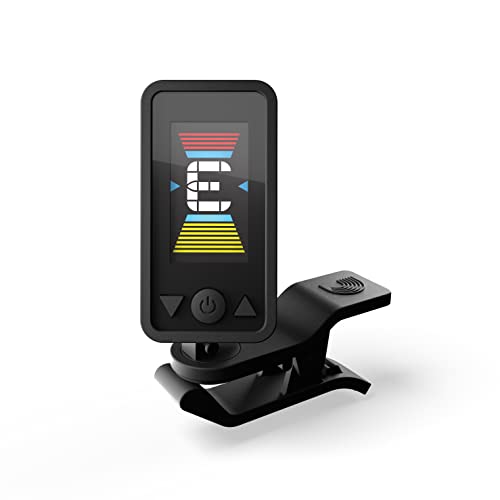
The Eclipse Bass Tuner emphasizes extreme accuracy through a piezo transducer that detects instrument vibration. Its wide calibration range (430-450Hz) supports precise tuning for bass and cello, especially beneficial for players who frequently detune or adjust intonation on extended-range instruments. The non-marring lever-lock clamp ensures a secure, painless fit, while the vertical, full-color display is easy to read in dark environments. Best for: bassists and cellists who need pinpoint tuning in darker stages or rehearsal rooms. Caution: The focus on vibration sensing may feel slightly less responsive in ultra-quiet studio settings.
Who it’s best for: Players prioritizing precision and clamp stability, especially on bass and cello. Why selected: It blends high-accuracy tuning with a robust clamp and readable display, reducing drift during dense playing passages.
Snark SN5X Clip-On Tuner

The SN5X is a versatile, budget-friendly clip-on tuner that supports guitar, bass, and violin. Its “Stay Put” clip and 360-degree display rotation help players maintain a comfortable viewing angle whether right- or left-handed. It relies on a vibration-based approach to reduce ambient noise interference, making it well-suited for loud practice rooms or stage environments. Best for: players who want a reliable, straightforward tuning device without extra bells and whistles. Caution: Build quality and precision can be more variable at the lowest price tier.
Who it’s best for: Bassists who need a dependable, portable tuner on a tight budget. Why selected: It offers strong vibration sensing, flexible mounting, and a broad instrument range in a compact form.
LEKATO Guitar Tuner Rechargeable

LEKATO emphasizes long battery life and a bright 360º rotatable display. It uses an advanced microprocessor and high-sensitivity piezo sensor to deliver fast, accurate tuning for guitar, bass, chromatic, ukulele, and violin. The rechargeable lithium battery supports over 10 hours of continuous use, with auto power-off after five minutes of inactivity to save energy. Best for: practice sessions and gigs where power efficiency and quick readability matter. Caution: The device relies on microcontroller-based tuning; ensure firmware updates if needed for future instrument profiles.
Who it’s best for: Bass players who value uninterrupted practice with a long-lasting charge and a large, legible screen. Why selected: It combines fast detection, durable construction, and efficient power management for extended sessions.
Guyker Guitar Bass Tuners (3R + 2L)

Guyker tuners offer precision with a 17:1 gear ratio and sealed lubrication for stable tuning on electric, jazz, and precision basses. The set includes three right-hand and two left-hand pegs with mounting hardware, designed for a solid feel and consistent performance. Best for: players upgrading headstock hardware who want reliable, long-term tuning stability. Caution: These are peg tuners, not clip-ons, so installation requires headstock modification and compatibility with 11/16″ peg holes.
Who it’s best for: Bassists upgrading to precision machine heads on compatible models. Why selected: The high gear ratio and robust construction offer tight tuning stability and a professional feel, useful for long gigs and studio work.
KLIQ UberTuner Clip On Bass Tuner
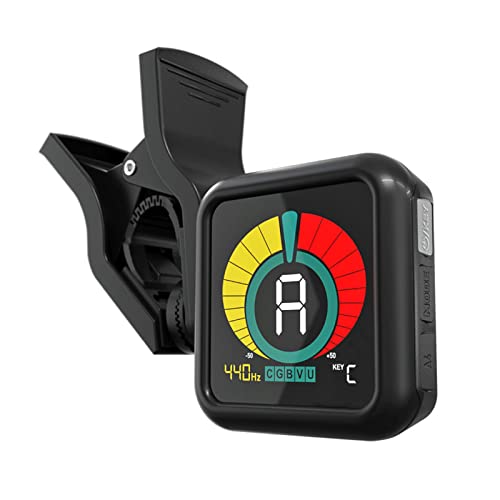
The KLIQ UberTuner provides fast, accurate chromatic tuning across multiple instruments, including bass. Its 360° color display rotates to accommodate stage angles, and the tuner relies on a professional-grade piezo sensor for precise pitch detection. Best for: multi-instrument players seeking a single, fast tuner for on-the-spot adjustments. Caution: The color display, while highly legible, can be overbearing if you prefer a minimalistic interface.
Who it’s best for: Bass players who perform with multiple instruments and need quick switching between setups. Why selected: It combines quick tuning with flexible viewing angles and broad instrument support in a compact clip-on form factor.
KAISH Cloverleaf 5 String Bass Tuners

KAISH cloverleaf tuners are designed to fit a range of 5-string bass models with standard headstock holes. They require specific mounting hole spacing and peghead hole size, making them a good option for players performing upgrades on compatible American, Standard, or Highway One models, as well as some Squier variants. Best for: players completing a headstock upgrade where a secure, stylish tuning solution is desired. Caution: Verify peghead hole measurements and mounting spacing before purchase to avoid fit issues.
Who it’s best for: Bassists restoring or upgrading older or high-end 5-string basses where a stable, precise tuner head is essential. Why selected: The cloverleaf design is compact, and KAISH emphasizes solid construction and reliable tuning retention in a chrome finish.
Buying Guide
What should you consider when choosing a 5-string bass tuner?
- Type: Clip-on (vibration-based) vs. headstock/tremolo-style tuners. Clip-ons work well in loud environments, while headstock tuners can be more robust in studio settings.
- Display: Readability at a glance matters on dark stages. Look for color LCD or highly legible backlit displays with adjustable angles.
- Calibration range: For bass players, a wide range (and bass-friendly calibration) helps with precision on low-B strings.
- Power: Rechargeable batteries offer long sessions, but charged spares are handy. Auto-off features conserve energy on inactive instruments.
- Installation: Clip-on tuners are easiest for quick setups; machine-head tuners require proper mounting and compatibility with peg holes.
- Environment: If you play in noisy venues, vibration sensing tends to be more stable than microphone-based tuning.
How to choose by scenario
- Live stage performances: Prioritize vibration sensing, fast visual feedback, and a display angle you can read at a glance.
- Practice rooms: A bright, readable display and stable, lock-tight mounts help avoid on-stage confusions.
- Studio use: Precision calibration and a low-noise tuning signal matter; consider models with wide calibration ranges for accurate cents tuning.
FAQ
- Q: Are clip-on tuners accurate enough for 5-string bass tuning? A: Yes, many clip-ons rely on vibration detection which is reliable in loud environments and on low-B strings.
- Q: Do all tuners support chromatic tuning for bass? A: Most multi-instrument tuners include chromatic modes, but verify the instrument profile before purchasing.
- Q: Which tuner is best for dark stages? A: Models with backlit or color displays (such as Eclipse or KLIQ UberTuner) are ideal for low-light environments.
- Q: Is a dedicated bass tuner necessary, or can a guitar tuner work? A: A bass-capable tuner is preferable for extended-range accuracy and string tension differences.
- Q: Can I use a tuner on extended-range basses without retuning the whole setup? A: Yes, many tuners support fine calibration ranges suitable for extended-range strings.
- Q: Do tuners affect tuning stability over time? A: Consistent mechanical mounting and proper string tension help maintain stable tuning between uses.