
Best 5 String Stand Up Bass Essentials and Accessories for Players of All Levels
If you’re shopping for a 5 string stand-up bass setup or compatible accessories, this guide highlights practical options for expanding tone, maintaining string stability, and improving fretboard knowledge. The top picks here suit different buyers: players seeking a ready-to-play bass kit, string enthusiasts aiming for tone longevity, and learners building a solid theory foundation. Below is a quick comparison table to help you decide at a glance.
| Product | Best For | Key Benefit |
|---|---|---|
| Ktaxon Electric Bass Guitar 5 String | All-around players | Stable intonation and rich, adjustable tones |
| Yamaha TRBX305 WH 5-String | Balanced playability | Ultra-comfortable body and durable construction |
| Ernie Ball 5-String Regular Slinky | String upgrades | Popular, balanced tone for multiple genres |
| Elixir 5-String NANOWEB | Long-lasting tone | Coated protection with consistent warmth |
| Fretboard Notes Poster | Learning and practice | Visual fretboard reference for quick study |
Ktaxon Electric Bass Guitar 5 String Kit

The Ktaxon 5-string bass kit delivers two single pickups with two volume and two tone controls for a fuller, adjustable tone. Its headstock stabilization system and dual adjustment lever help maintain intonation and consistent resonance. The body is designed with lightweight, resonant construction, and the neck uses durable maple with a basswood body. This option is best for players seeking a complete starter kit with straightforward tone shaping and stable setup.
Who it’s best for: new players and intermediate players who want an affordable, ready-to-play kit with reliable setup. Caution: check the string tension and stability after setup, as initial adjustments may be needed for optimal intonation.
Ernie Ball 5-String Regular Slinky Nickel Wound Bass Strings
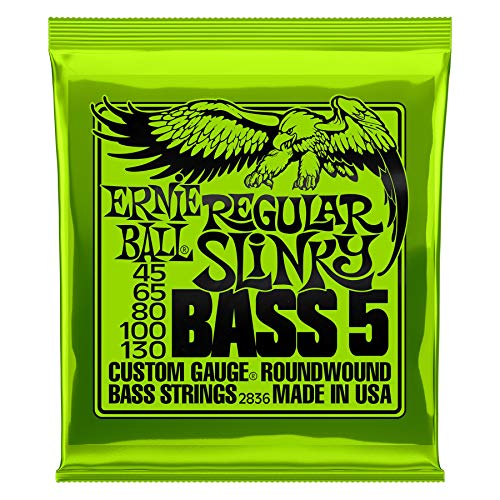
Ernie Ball Regular Slinky 5-string set features nickel-wound strings designed for a balanced, rich tone across the low B to high G strings. Used by players across rock, metal, and funk, these strings are a standard choice for many bassists seeking reliability and a familiar feel. The 45-130 gauge range provides versatile tension for varied playing styles.
Who it’s best for: players upgrading existing basses or starting with a familiar, widely-supported setup. Caution: some players may prefer lighter or heavier gauges depending on playing style and tension comfort.
Ernie Ball 5-String Power Slinky Nickel Wound Bass Strings

Power Slinky 5-string set delivers a sound with robust low-end and clear highs, ideal for players seeking stronger presence on the B string without sacrificing midrange. Made in the USA with tin-plated carbon steel core and nickel-plated winding, these strings are known for consistent tone and durability across genres.
Who it’s best for: players who perform with higher tension and want a modern, punchy attack. Caution: higher tension may require truss-rod and nut adjustments on some bass models.
Elixir 5 String NANOWEB Nickel Plated Steel Strings

Elixir NANOWEB 5-string sets emphasize long-lasting tone with coated protection. The nickel-plated wrap wire delivers a warm, rounded tone and a natural feel that remains comfortable through extended practice. NANOWEB coating helps resist sweat and humidity-related tone degradation.
Who it’s best for: players prioritizing longevity and consistent tone over time. Caution: price is higher than uncoated options, though perceived tonal stability can justify the investment for frequent players.
5 String Bass Guitar Chart Fretboard Notes Poster

This laminated 8.5×11 inch fretboard chart provides quick reference for the notes across a 5-string bass. The poster includes the Circle of Fifths, Nashville Numbering, Major Scale, and relative minor notation to aid practice and improvisation. It’s a practical visual aid for beginners and intermediate players learning fretboard layout.
Who it’s best for: learners and players who prefer visual references during practice. Caution: not a substitute for hands-on fretboard experience; use alongside regular playing drills.
Buying Guide
What to consider when choosing a 5-string stand-up bass setup
- Intended use: Live performance, studio work, or practice at home can steer you toward different kits or strings.
- Neck and body comfort: Look for a bass with an ergonomic neck, balanced weight, and comfortable strap positioning.
- String tension and gauge: Lighter gauges are easier to play; heavier gauges offer more tension and sustain but require more finger strength.
- Tone shaping controls: Preamps, pickups, and tone knobs influence warmth, brightness, and sustain. Pick a model that matches your preferred style.
- Durability and maintenance: Coated strings last longer in challenging conditions; consider materials and hardware quality for longevity.
How to compare products quickly
- Kit vs. separate components: A kit is convenient for beginners; separate strings or posters offer customization for seasoned players.
- String type: Nickel-wound strings deliver balanced tone; phosphor bronze or flatwound options are less common on 5-string electric setups.
- Material and construction: Durable bodies and necks provide better sustain and stability for frequent playing.
Frequently asked questions
- What is a 5-string stand-up bass? A 5-string bass typically includes a low B string in addition to the standard four strings, offering extended range for different styles.
- Do I need special equipment to play a 5-string bass? Basic accessories like a reliable amplifier, strap, tuner, and strings suitable for 5-string setups are common needs; most options above cover these areas.
- Are coated strings worth it? Coated strings last longer and resist corrosion, which can be beneficial for frequent players or those who sweat a lot.
- What gauge should I start with? Beginners often start with lighter gauges for easier playability, then move to medium or heavier gauges as technique improves.
- How important is fretboard reference material? Practice aids like fretboard posters can speed up learning and help with memorization, but hands-on practice remains essential.
- Can I mix string brands on a bass? Mixing brands is possible but may result in imbalanced tension and tone; many players prefer a matched set for consistency.