Best 5000 Watt Home Stereo System for Powerful Home Audio
Answer: Look for a high-wattage, multi-channel setup that delivers clear highs, robust bass, and easy connections. The top picks below cover a range from ultra‑high powered multi‑room amps to complete home theater bundles, helping you decide who each option suits best—karaoke lovers, movie fans, or music enthusiasts. This guide focuses on systems that push strong output, reliable inputs, and practical setup for American homes.
Summary table of chosen products
| Product | Brand | Approx. Power | Best For |
|---|---|---|---|
| Pyle 4 Channel Bluetooth Home Amplifier – PD3000BA | Pyle | 3000W peak | Karaoke and home theater setups needing bright power |
| Pyle 4 Multi-Zone Stereo Amplifier – PT8000CH | Pyle | 8000W | Multi-room, large wired systems |
| Bobtot Home Theater Systems Surround Sound Speakers | Bobtot | 1200W peak | Compact home theater with strong bass |
| Rockville HTS56 1000W System | Rockville | 1000W peak | Movie nights with karaoke features |
| Yamaha YHT-5960U | Yamaha | 80W x 5.1 | Complete, user-friendly home theater |
Pyle 4 Channel Bluetooth Home Amplifier PD3000BA
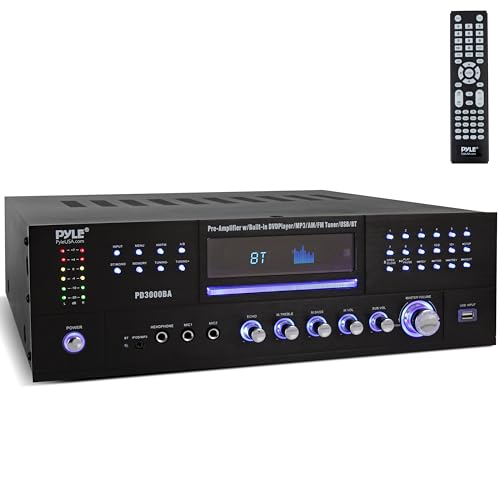
The PD3000BA is best for buyers who want a built‑in CD/DVD player and multiple input options in a compact, rack‑mountable package. It offers 3000 peak watts, making it suitable for driving speakers rated 2–8 ohms in a home theater or large living room. This model is a good choice for karaoke enthusiasts who value mic inputs with echo and a straightforward remote interface. A notable limitation is the peak watt rating; actual continuous power depends on impedance and speaker load, so users should plan for realistic listening levels rather than peak bursts.
Best for: Home theater fans who also want a front‑loading CD/DVD option and wired flexibility. Choose this if you need a single amplifier to power multiple speakers and a built‑in disc player.
Pyle 4 Multi-Zone Stereo Amplifier PT8000CH

The PT8000CH is best for large multi‑room setups that require centralized control. With 8000 watts and 4 bridgeable channels, it supports distributing sound across several zones while maintaining adjustable volume per area. It’s well suited for venues or big homes where one source feeds multiple rooms. A limitation is the complexity of wiring and setup; it’s less friendly for casual users than simpler two‑zone models.
Best for: Home or small venue installations needing multi‑zone capability. Choose this if you want to stream or source from several devices while keeping consistent volume across rooms.
Bobtot Home Theater Systems Surround Sound
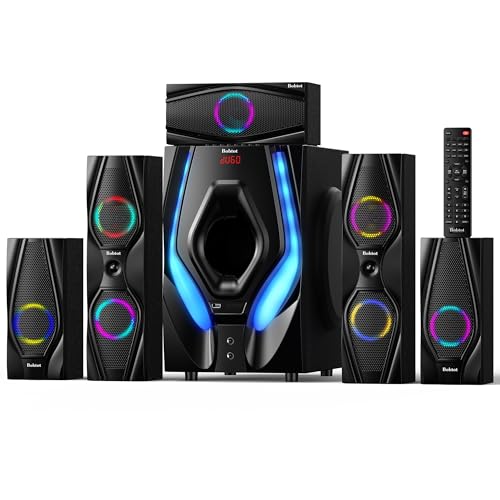
The Bobtot kit is best for users seeking a complete article-sized package with strong bass and simple setup. It features up to 1200 watts peak power on a 5.1/2.1 selectable system with an ARC optical input and Bluetooth. The included umbrella of features supports family movie nights, gaming, and casual listening. A potential limitation is that exact wattage under normal listening may vary with the content and room acoustics.
Best for: Families or small living rooms wanting an all‑in‑one surround solution that’s easy to operate. Choose this if you value built‑in Bluetooth and a ready‑to‑use 5.1/2.1 setup without extra equipment.
Rockville HTS56 1000W System
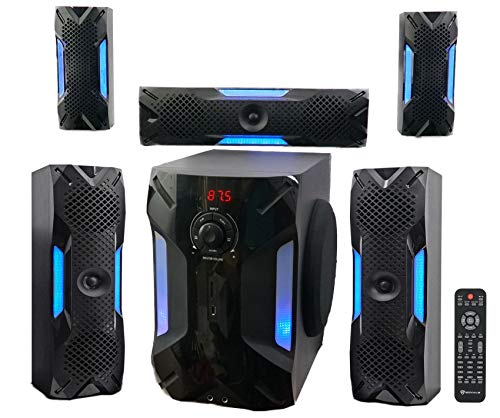
The Rockville HTS56 is best for home cinema enthusiasts who want a compact yet powerful 5.1 setup with multiple inputs. It delivers 1000W peak power across five satellite speakers and an 8″ subwoofer, with Bluetooth, USB, SD, RCA, and optical inputs. Built‑in karaoke features, 2 mic inputs with echo control, and a 5‑band EQ enhance party versatility. A caution is that the system may require careful placement to optimize the bass response in smaller spaces.
Best for: Movie lovers and party hosts who want rich surround sound with flexible inputs. Choose this if you need karaoke functionality and an easy, all‑in‑one package.
Yamaha YHT-5960U Home Theater System

The Yamaha YHT-5960U is best for those seeking a complete home theater solution with robust communication options. It delivers 5.1-channel surround with 80 watts per channel, 4K60/8K HDMI support, eARC, Dolby Vision, and MusicCast. This model is ideal for integrating streaming and physical media in a simple, well‑rounded system. A limitation is that while powerful, it’s not designed for extremely loud, standalone party audio in very large rooms.
Best for: Light to medium‑large living rooms wanting a modern, user‑friendly system with streaming and HDMI 2.1 features. Choose this if you want an upgradeable, quality‑oriented home theater setup.
Buying Guide: Key Purchase Considerations
- Power needs: Match amplifier wattage to speaker impedance and room size. Higher wattage can drive larger spaces but may not always improve perceived loudness if speakers are underpowered.
- Channel count and layout: Decide between stereo, 5.1, or multi‑zone arrangements based on room setup and intended use (music rooms vs. home theater).
- Input options: Ensure the system has Bluetooth, USB, optical, HDMI, and analog inputs compatible with your devices.
- Built‑in features: CD/DVD players, karaoke inputs, streaming services, or MusicCast can affect ease of use and future upgrades.
- Room acoustics: Placement, wall absorption, and subwoofer position influence bass accuracy and overall clarity.
FAQ
- Q: Do I need 5000W to get loud sound at home? A: Not necessarily. Realistic listening levels depend on speaker efficiency, room size, and setup. Higher wattage helps with headroom, but proper speaker pairing matters more.
- Q: Is a multi‑zone amplifier better for home use? A: If you have multiple rooms and want centralized control, a multi‑zone amp is advantageous. For a single living area, a standard 2‑ or 5.1 setup often suffices.
- Q: Should I choose a system with a built‑in CD player? A: If you own CDs or prefer a disc option, a built‑in player adds convenience. If not, you can save space with a streaming‑focused model.
- Q: How important is HDMI support in a stereo system? A: HDMI is critical for modern TVs and streaming devices. It also supports high‑quality audio formats and easy integration with home theater components.
- Q: Can these systems replace a dedicated AV receiver? A: For basic to mid‑level home theaters, yes. For advanced setups with many devices, a separate AVR may offer more customization and future expansion.