
Best 6.5 Mm Jack Plug Adapters for Easy Audio Conversions
Answering the common need to bridge 6.5 mm (1/4″) jacks with smaller 3.5 mm (1/8″) inputs, these adapters help users connect headphones, aux cables, guitars, and audio gear without extra cables. They’re ideal for musicians, home studio setups, and portable audio users who want quick, reliable signal transfer. The top picks below are best for different use cases, from DIY wiring to ready-made adapters with gold-plated contacts.
Buyer’s summary table (selected products at a glance):
| Product | ||
|---|---|---|
| Ceemiaa 2-Pack 6.5mm to 3.5mm Adapters | General headphones, amps, AV gear | Gold-plated contacts for crisp sound |
| HSP-HSWITI 1/4″ TS Plug (5 Pack) | DIY cable builds | Custom length, durable metal shell |
| Bibabala 4-Pack 6.5mm to 3.5mm Adapters | Portable audio and keyboards | Multiple color variants for identification |
| uxcell 6.5mm Headphone Socket PCB Mount | PCB projects and repairs | Simple PCB mounting design |
| Olnverath 4-Pack 6.5mm to 3.5mm Adapters | Keyboards, piano, mixer setups | Solid build with gold-plated contacts |
Ceemiaa 2-Pack 6.5mm to 3.5mm Adapters
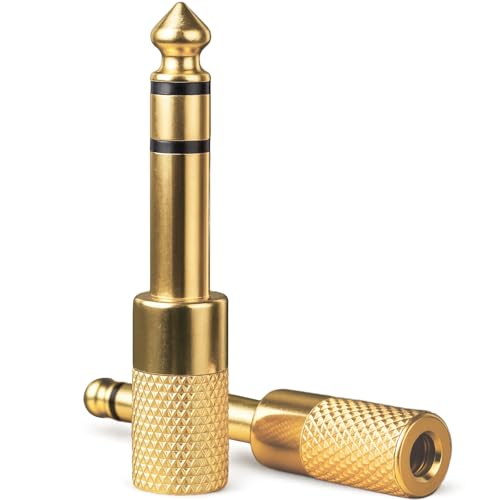
Best for: Musicians and home studios needing quick connection from 1/4″ outputs to 3.5mm inputs. These adapters convert a 6.5mm stereo jack to a 3.5mm plug, enabling headphones, MP3 players, and mobile devices to work with amps, mixers, and AV gear. They feature 24K gold-plated connectors for high conductivity and reduced noise.
Why selected: They offer a ready-made, reliable bridge between common pro audio gear and consumer devices. The premium contacts reduce signal loss in typical setups. Caution: As stereo adapters, ensure your devices require a 1/4″ to 3.5mm connection rather than a balanced TRS/TRS configuration that needs specialized cabling.
HSP-HSWITI 1/4″ TS Plug – 5 Pack

Best for: DIY cable enthusiasts and professionals building or repairing 1/4″ instrument or speaker cables. This is a raw TS mono plug, not a plug-and-play adapter, so users must solder wire cores to internal terminals.
Why selected: It enables precise cable length customization and repairs, with a full metal shell and gold-plated tip for corrosion resistance and stable signal transfer. Caution: Requires basic soldering skills and equipment; not suitable for plug-and-play users.
CCeCCe 10 Pack 1/4” Dust Cap Covers
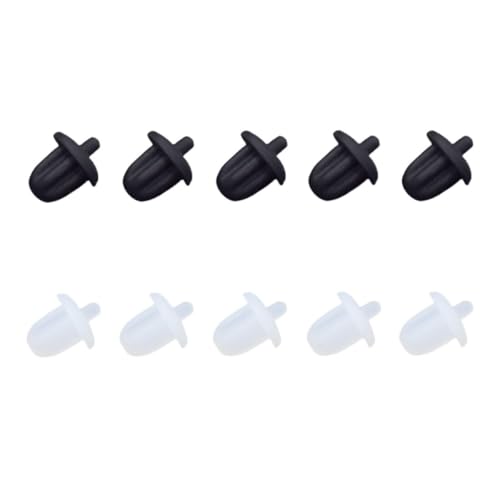
Best for: Protecting 6.35mm connections from dust when not in use. These rubber dust caps fit 6.35mm female ports on amps, interfaces, and speakers, preserving signal integrity.
Why selected: Keeps ports clean and ready, reducing contact resistance from dust. Caution: Not a cable adapter; must be used with existing sockets.
uxcell 6.5mm Headphone Socket PCB Mount

Best for: Electronic enthusiasts and hobbyists doing PCB-level audio projects, repairs, or small devices needing a 6.5mm input jack. It features a 6.5mm socket with three terminals for straightforward wiring.
Why selected: Simple, compact, and suitable for PCB integrations. Caution: This is a jack socket, not a full adapter; installation requires soldering and board mounting.
Olnverath 4-Pack 6.5mm to 3.5mm Adapters

Best for: Musicians and educators who need compact adapters for keyboards, mixers, and portable audio devices. The kit includes multiple color variants for quick identification during live setups.
Why selected: Sturdy construction with gold-plated contacts provides reliable signal transfer. Caution: Some users may prefer individual adapters over a mixed pack for color-coded organization.
Buying Guide
What to consider before buying
- Connection type: Ensure you need 6.5mm to 3.5mm (1/4″ to 1/8″) adapters or a PCB/miscellaneous connector depending on your project.
- Contacts and durability: Gold-plated contacts reduce signal loss and resistance, especially for longer use.
- Form factor: Ready-made adapters are convenient; DIY or solder-required plugs suit custom lengths or repairs.
- Usage scenario: For live performances, choose compact, reliable adapters; for home setups, consider color-coding or multi-packs.
- Dust protection: Dust caps help protect sockets when not in use, preserving contact quality.
How to choose by scenario
- Studio/field musician: Prefer gold-plated, mono or stereo compatibility with minimal noise.
- DIY/cable repair: Look for solder-required plugs or cable-specific adapters with robust shells.
- Educational or classroom use: Multi-pack sets with color variants help students identify connections quickly.
Compatibility considerations
- Balanced vs. unbalanced: Most 6.5mm to 3.5mm adapters are unbalanced stereo TRS; check for compatibility with your headphone jacks or instrument outputs.
- Device outputs: Confirm whether your device outputs a mono TS or stereo TRS signal to avoid miswiring.
- Durability vs. flexibility: Metal shells offer durability; plastic shells save weight but may wear faster.
Maintenance tips
- Keep connectors clean and dry to avoid signal degradation.
- Avoid forced connections; ensure the plug fits snugly without excessive force.
- Store in a protective case when not in use to prevent bent tips or damaged contacts.
Common questions
- What is the difference between 6.5mm and 3.5mm adapters? They convert between larger pro audio jacks and smaller consumer audio jacks for compatibility across devices.
- Do these adapters affect sound quality? In general, high-quality gold-plated contacts reduce signal loss and noise, but poor fits or damaged connectors can cause degradation.
- Can I use a 6.5mm to 3.5mm adapter for balanced cables? Most consumer adapters are unbalanced; balanced connections may require specialized adapters or cables.
- Are DIY solder plugs safe for beginners? Basic soldering skills are required; improper wiring can damage equipment.
- Should I choose a multi-pack or individual adapters? Multi-packs are convenient for classrooms, studios, and ongoing projects; individual adapters suit specific systems.
- How do I prevent dust in jacks? Use dust caps on unused ports and store adapters in protective cases.