
Best 6-Channel Audio Snakes for Stage and Studio
Looking for reliable 6-channel audio snakes to manage multiple mic or line-level signals? This guide highlights five solid options and explains who each is best for. Whether you’re a live sound engineer, a studio setup, or a small venue tech, you’ll find candidates that balance durability, organization, and ease of use. The top picks emphasize channel color-coding, robust shielding, and practical lengths to fit common stage and FOH needs.
| Product | Length | Key Benefit | Best For |
|---|---|---|---|
| Seismic Audio SADROP-6×30 | 30 ft | Compact drop snake for main front-of-house extension | Small venues, bands needing easy stage-to-FOH patch |
| Seismic Audio SARLX-6×6 | 6 ft | Color-coded, numbered 6-channel XLR snake | Studio work and quick multi-line patching |
| Seismic Audio SARLX-6×10 | 10 ft | Balanced XLR channels with clear labeling | Live events requiring compact, labeled cables |
| Seismic Audio SAHB-6x2x30 | 30 ft | Two stereo feeds for sub/split applications | Sub-snake use and mic-to-board routing |
| Seismic Audio SADMS-6×30 | 30 ft | Compact sub snake for extending main FOH | Front-of-house expansion with minimal footprint |
Notes: Each product shown is a 6-channel option commonly used in live sound and studio setups. The table highlights typical strengths to help you compare at a glance.
Seismic Audio SADROP-6×30 6 Channel Drop Snake Cable

Features: Model #: SADROP-6×30. Contents: 6 Channel 30 Foot Compact Drop Snake. Application: Extending main Front of House Snake.
Best for: Small to mid-size live gigs where a front-of-house extension is needed without bulky cabling. This drop snake keeps the main stage clear while delivering six channels to the mixer. A potential limitation is that it focuses on drop functionality, which may be less flexible for longer, multi-room setups compared to longer, modular snakes.
Seismic Audio SARLX-6×6 6-Channel XLR Snake
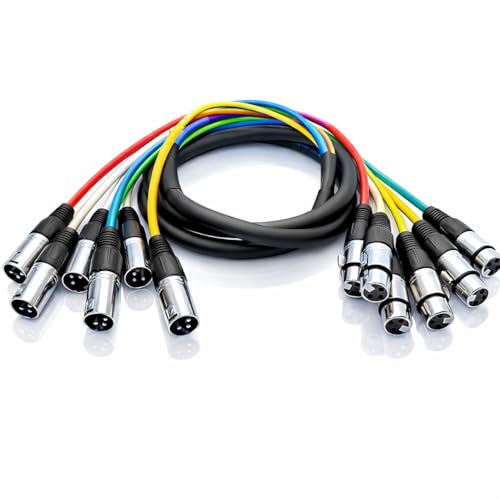
Features: 6-Channel XLR Snake with 6x Female and 6x Male connectors. Includes color-coded & numbered design. Shielded 22 AWG copper.
Best for: Quick multi-line patching in studio or live work where color-coding speeds setup and troubleshooting. Better for short distances due to connector count and compact build; avoid if you need longer runs without adding adapters.
Seismic Audio SARLX-6×10 6-Channel XLR Snake
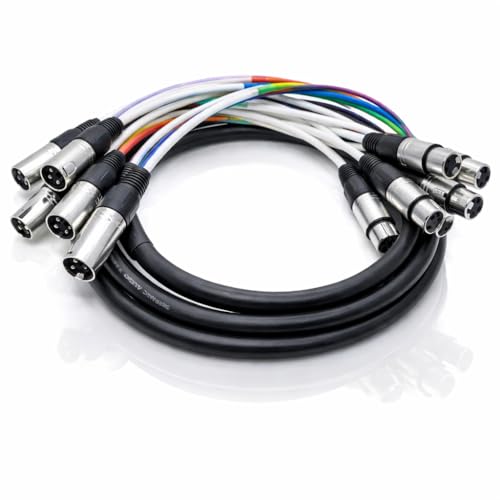
Features: 6-Channel XLR Snake (10 ft). XLR Female to XLR Male: 6F / 6M balanced connections. Numbered & color coded for fast setup.
Best for: Live events or studio sessions needing a longer yet compact multi-channel path. Choose this if you require clearer separation between channels over a 10-foot route; better for centralized stage areas, avoid if you need ultra-short runs elsewhere.
Seismic Audio SAHB-6x2x30 6 Channel Sub Snake

Features: Model #: SAHB-6x2x30. Contents: 6 Channel, 30′ Compact XLR Sub Snake. Application: Sending Microphone signals to Mixing board.
Best for: Scenarios needing two stereo feeds through a single run, particularly for stage subgroups or alternate mic grouping. Better for controlled environments; avoid if you require more than two stereo feeds without adding another module.
Seismic Audio SADROP-6×50 6 Channel Drop Snake

Features: Model #: SADROP-6×50. Contents: 6 Channel 50 Foot Compact Drop Snake. Application: Extending main Front of House Snake.
Best for: Venues requiring longer stage-to-mixer runs without a mid-run patch panel. Better for larger rooms; avoid if you need frequent reconfiguration of channel routing along the way due to its fixed drop design.
Arklove 3ft Short Snake Cables 6 Channel

Features: 6 independent channels with aluminum foil shielded cable. Color-coded channels. Zinc alloy XLR plugs with gold-plated copper contacts.
Best for: Compact studio or stage patches with tight spacing. Choose this if you need quick, short-length patching and strong shielding; better for small stations, avoid if longer runs are required.
Arklove 20ft Pass Through Snake

Features: 6 channel independent with aluminum foil shielded cable. Distinct color coding. Zinc alloy XLR plugs with gold-plated copper contacts for better transmission quality.
Best for: Longer stage-to-mixer runs with organized channel labeling. Better for more complex setups; avoid if you only need ultra-short runs or a single mic path.
Buying Guide
What length should you choose? Measure the distance from stage to desk and consider future re-routes. Shorter snakes reduce clutter; longer snakes reduce the need for extension adapters.
How important is color-coding and labeling? Color-coded channels and numbered connectors speed setup and troubleshooting on busy gigs and in studios.
What about shielding and connector quality? Shielded cables reduce hum and noise. Gold-plated or corrosion-resistant connectors improve durability in live environments.
Should you buy a sub-snake or a drop snake? Sub snakes carry separate mic or line groups with dedicated paths; drop snakes focus on extending main FOH paths with fewer channels.
What about future expansion? If you expect more than six channels or longer distances, consider modular options or longer runs that integrate with your current rack setup.
FAQ
- What is a 6-channel audio snake used for? – It carries six channels of balanced audio from stage to mixer or interface, simplifying cabling and organization.
- What is a drop snake vs a sub snake? – A drop snake extends the main run from FOH to stage; a sub snake provides additional stereo or dual-channel feeds separate from the main path.
- Are color-coded snakes worth it? – Yes, for faster setup and troubleshooting in live environments or busy studios.
- Do I need shielded cables for each channel? – Shielding helps reduce hum and noise, which is beneficial in most live and studio contexts.
- What length is best for one-day gigs? – A length that comfortably reaches from the stage to the mixer without excessive slack is ideal; often 10–30 feet suffices.
- Can I mix brands? – Mixing is possible but may complicate compatibility and labeling; consider consistent channel labeling for clarity.