Best 6 Channel Powered Mixers for Live Sound and Studio Use
The best 6 channel powered mixers combine built‑in amplification with flexible input options, reliable preamps, and easy onboard effects. This guide highlights top picks for performers, DJs, podcasters, and home studios. The top picks below are suited for: live bands needing compact mains, mobile DJs requiring simple transport, and small studios seeking an all‑in‑one solution. Use the quick table to compare key specs at a glance.
Quick comparison table
| Product | Channels | Power (W RMS) | Connectivity Highlights | Best For |
|---|---|---|---|---|
| Rockville RPM80BT | 8 channels | 250W x 2 @ 8Ω | Bluetooth, USB, 8 XLR/8 TRS, RCA | Small to medium gigs, bands on the go |
| Rockville RPM870 | 8 channels | 500W x 2 @ 8Ω | USB, Bluetooth, RCA, XLR, headphone | Live bands and DJs needing headroom |
| TKLBLS | 6 channels | Not specified in features | phantom power, 3‑band EQ per channel, DSP effects | Studio recording and live performances requiring DSP |
| Riworal 6‑Channel | 6 channels | Not specified in features | Bluetooth, USB, DSP reverb, 6 XLR/1/4″ inputs | Budget setups, simple karaoke/streaming |
| Yamnweo TF600 | 6 channels | 450W+450W (power amp) | USB, Bluetooth, 7‑band EQ, DSP effects | Live events and weddings with amplified output |
Rockville RPM80BT 2400w Powered 8 Channel Mixer

Best for: small live setups and mobile performers who want Bluetooth streaming and built‑in effects without extra gear. This unit delivers 500W RMS total (250W x 2 at 8 ohms) with up to 2400W peak, providing ample power for compact venues. It offers 8 XLR/1/4″ inputs, RCA AUX, USB, Bluetooth, and dedicated line outputs for powered speakers, plus a 5‑band master EQ and per‑channel bass/treble/reverb. Use this when you need a compact, feature‑rich all‑in‑one solution.
Caution: While powerful, its 8‑channel layout may be more than necessary for very small rooms where room‑acoustics are the limiting factor.
Rockville RPM870 6000w Powered Mixer
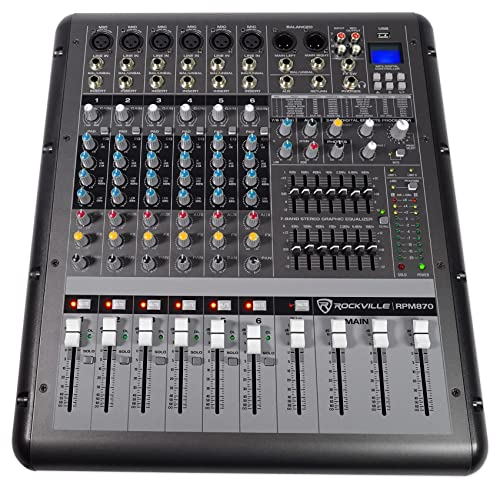
Best for: mid‑size venues and DJs who need robust preamps and strong output. The RPM870 features 6 XDR2 low‑noise mic preamps with +48V phantom power for clean vocal and instrument pickup, plus multiple inputs (USB playback/recording, Bluetooth streaming, RCA, headphone/PFL). It delivers up to 750W x 2 RMS at 4 ohms and 500W x 2 at 8 ohms, with program/peak ratings approaching 3,000W x 2. This mix provides more headroom than smaller models.
Caution: Heavier setups may require careful transport planning due to the amplifier power and I/O complexity.
TKLBLS 6‑Channel Audio Mixer

Best for: studios and live performances requiring DSP effects and clear monitoring. TKLBLS provides independent 48V phantom power, four XLR inputs, two stereo line inputs, and 99 DSP effects with a visible display. Each channel includes a 3‑band EQ for precise tone shaping, while the DSP adds depth to vocals and instruments. The built‑in processing helps deliver polished mixes without external processors.
Caution: The feature set emphasizes DSP effects; users seeking barebones mixing may find the built‑in effects excessive or distracting if not managed well.
Riworal 6 Channel Audio Interface Mixer

Best for: budget‑mocused setups that need Bluetooth, USB recording, and simple DSP. This 6‑channel mixer includes built‑in Bluetooth, USB interface for recording, and DSP reverberation. It handles XLR lines and 1/4″ jacks with phantom power on some channels. It’s a practical choice for home studios, karaoke, or streaming where space and cost are priorities.
Caution: This model notes that some users may encounter operational sensitivity; ensure proper setup to avoid loss of sound on power‑up or input misconfiguration.
Yamnweo TF600 6-Channel Powered Mixer

Best for: events and venues needing strong, dual 450W amplifier outputs for larger rooms. The TF600 combines 450W+450W with a 7‑band EQ, 99 DSP effects, and USB/ Bluetooth inputs for flexible playback and streaming. The onboard processing and power output support live performances and amplified presentations.
Caution: The blend of analog input and DSP effects means users should manage gain staging carefully to avoid feedback or clipping in live settings.
Buying Guide
- Power and headroom: Match the mixer’s output to your speaker system and room size. More watts provide headroom for louder gigs; ensure your speakers can handle the power without distortion.
- Input options: Consider the number and type of inputs you need (XLR, TRS, RCA, USB, Bluetooth). Stage setups with wireless mics or USB playback benefit from versatile I/O.
- Built‑in effects and EQ: Onboard EQ helps shape sound for different venues. DSP effects can enhance vocals and instruments, but ensure they’re easy to manage during a live mix.
- Portability vs. control: Lighter units offer easier transport but may limit on‑the‑fly control. Heavier units often provide more reliable physical controls and higher build quality.
- Phantom power: If you use condensers, phantom power (+48V) is essential. Check which channels supply phantom power and how easily you enable it per channel.
- Connectivity to speakers: Ensure compatibility with your powered or passive speakers. Some models provide integrated amplification, simplifying the chain; others require external amps.
- Layout and monitoring: Look for clear metering, headphone outputs, and PFL/solo options to manage a cohesive mix on stage.
FAQ
- What is a 6‑channel powered mixer? A mixer with six inputs and a built‑in amplifier that drives speakers directly, combining mixing controls, preamps, effects, and amplification in one unit.
- Do I need phantom power? If you use condenser mics, yes. Many 6‑channel mixers provide phantom power on multiple channels; verify per model.
- Can I connect Bluetooth to these mixers? Yes, several models include Bluetooth for wireless playback or streaming from phones or tablets.
- Is built‑in DSP important? It can simplify sound shaping for different venues, but some users prefer outboard effects or a separate audio interface for recording.
- Which is best for a small church or cafe? A compact unit with adequate headroom, multiple mic inputs, and simple EQ—like RPM80BT or RPM85—often suits these environments well.
- What should I avoid? Overloading the output or misusing phantom power can cause distortion or noise. Set gain stages carefully and test with your actual speakers.