
Best 7.1 Home Theater in a Box for Immersive Surround Sound
Answering the search query directly: a 7.1 home theater in a box combines a soundbar with detachable wireless surrounds or a full AV receiver plus speaker set to deliver true multi-channel audio. This guide highlights five capable systems that fit different room sizes and budgets. Ideal buyers include: movie enthusiasts seeking immersive cinema-like sound, and those who want simple setup without assembling multiple components. The table below compares the chosen products at a glance to help you decide quickly.
| Product | Best For | Key Strength |
|---|---|---|
| JBL Bar 700MK2 Soundbar with Subwoofer | Large living rooms, Dolby Atmos fans | Detachable wireless surrounds; 780W with wireless sub |
| Yamaha YHT-4950U 4K Ultra HD 5.1 System | All-in-one home theater beginners | Complete 5.1 setup with Bluetooth |
| Bobtot Surround Sound Systems 1200 Watts | Budget-friendly powerful bass | 1,200W peak; LED lighting effects |
| Pyle 7.1-Channel Hi-Fi Receiver PT796BT.5 | Customizable 7.1 setup | 2000W peak; 4K pass-through |
| Yamaha RX-V6A 7.2-Channel AV Receiver | Flexible multi-room and expansion | HDMI 2.1, MusicCast |
JBL Bar 700MK2 Soundbar With Subwoofer

The JBL Bar 700MK2 offers a true 7.1-channel wireless surround system with detachable end speakers that can be placed behind the listening area for immersive motion audio. It features a 780W total power output and a 10″ wireless subwoofer to deliver deep bass. Dolby Atmos and DTS Virtual:X enable 3D sound that moves around the room. This setup is best for larger living rooms and listeners who want cinema-grade effects without a full AVR setup.
Best for: movie lovers and home theater fans who want wireless surrounds and high bass impact.
Caution: The detachable speakers are designed for placement behind seating; ensure enough space and clean line-of-sight for best effect.
Yamaha YHT-4950U 4K Ultra HD 5.1 System
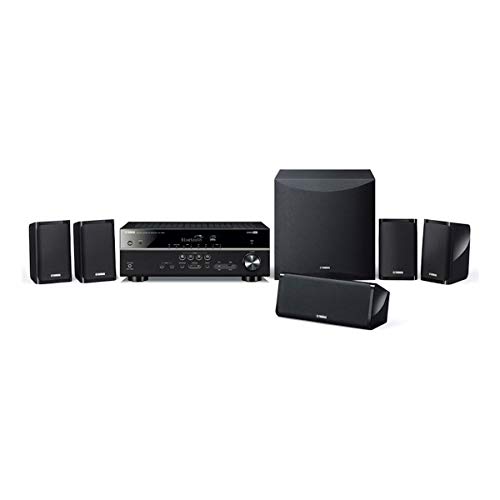
Yamaha’s YHT-4950U delivers a complete 5.1-channel setup with an AV receiver, five speakers, one subwoofer, and integrated Bluetooth. It supports 4K Ultra HD with HDMI connectivity, making it easy to attach modern TVs and Blu-ray players. This system is ideal for entry-level to mid-size rooms where simple setup and reliable, balanced sound are priorities.
Best for: newcomers seeking an all-in-one, budget-friendly home theater with straightforward wiring.
Caution: It’s a 5.1 configuration, not true 7.1, so expansive overhead effects won’t be as pronounced as higher-end systems.
Bobtot Surround Sound 1200W System

Bobtot’s system touts 1200W peak power with a built-in receiver and a large subwoofer, offering a robust cinematic experience in mid-to-large rooms. It supports 5.1-channel configurations with LED lighting effects for atmosphere. The remote-controlled speaker and subwoofer volume adjustments add flexibility for different content and listening preferences.
Best for: households desiring high-volume, punchy bass without a premium price tag.
Caution: LED lighting modes may be distracting in dark rooms for some users; consider turning lights off during late-night viewing.
Pyle 7.1-Channel Hi-Fi Receiver PT796BT.5

The Pyle PT796BT.5 is a 7.1-channel hi-fi AV receiver that provides up to 2000W peak power and supports Bluetooth streaming, 4K UHD TV pass-through, and multiple inputs (USB, RCA, HDMI). It’s a versatile base for a custom 7.1 system, suitable for those who want to tailor speaker placement and choose separate components as budget allows.
Best for: users who want a scalable, customizable 7.1 setup and onboard Bluetooth streaming.
Caution: This option is a receiver-first approach; it requires separate satellite speakers and a subwoofer to complete the system, which may add to setup time and budget.
Yamaha RX-V6A 7.2-Channel AV Receiver

The Yamaha RX-V6A provides a flexible, future-ready AV receiver with 7.2 channels and MusicCast multi-room audio. It supports HDMI 2.1, eARC, 4K60, 4K120, and 8K60, along with wireless connectivity options (Wi-Fi, Bluetooth, AirPlay 2). This receiver is best for users who want expandability, multi-room audio, and advanced optimization for a larger home theater setup.
Best for: tech-forward buyers seeking expandability, high-resolution audio, and seamless multi-room integration.
Caution: Broad feature set may be more than needed for small rooms or simple setups; ensure you have compatible speakers to realize its full potential.
Buying Guide: Choosing a 7.1 System
- Room size and layout: Larger rooms benefit from wireless surrounds or a capable AV receiver with ample power. Smaller spaces can work with a compact soundbar and a powered subwoofer.
- All-in-one vs. modular: All-in-one kits are quick to set up; modular systems offer customization and future upgrades.
- Power and bass: Look for a system with a strong subwoofer and adequate speaker wattage to avoid thin sound in action-heavy scenes.
- Audio formats: Dolby Atmos and DTS:X provide immersive overhead effects; ensure your setup supports overhead sound if you want true 3D audio.
- Connectivity: HDMI ARC/eARC, Bluetooth, and Bluetooth streaming compatibility improve ease of use with modern TVs and devices.
- Expansion options: If you plan to add more speakers, pick a receiver or system that supports additional channels and zones.
- Ease of setup: Detachable surround channels or simple wireless connectivity can save setup time and reduce cable clutter.
Frequently Asked Questions
- What is the difference between 7.1 and 7.2 setups?
– 7.1 has seven main channels plus one subwoofer channel; 7.2 adds a second subwoofer for more bass distribution. - Do I need Atmos for a good home theater?
– Atmos adds overhead effects for a more immersive experience, but strong 7.1 channels can still deliver cinematic sound. - Is a receiver essential for a 7.1 setup?
– A receiver helps manage multiple speakers and sources; some all-in-one systems include built-in receivers. - Can I use any speakers for a 7.1 system?
– Compatibility matters (impedance, power handling). Choose speakers that match the receiver’s supported impedance and power range. - How important is room treatment?
– Room acoustics impact sound; adding rugs, curtains, and diffusers improves clarity and imaging.