
Finding the right 8-inch DJ speaker means balancing power, portability, connectivity, and sound quality. Below is a quick summary of the five selected speakers from trusted brands, followed by detailed product sections and a practical buying guide to help you choose the best option for DJing, small venues, rehearsals, or mobile gigs.
| Product | Key Features |
|---|---|
| ALTO TX408 8″ Powered PA | 350W bi-amplified, Bluetooth, 2-channel mixer, portable monitor |
| JBL IRX108BT 8″ Powered PA | 8″ woofer, dbx DriveRack tech, Bluetooth, XLR/TRS inputs, presets |
| Pioneer DJ VM-80 8″ Active Monitor | DSP control, Low/High EQ, constant directivity horn, studio/monitor focus |
| Rockville TITAN ONE PRO 8″ Battery PA | Battery-powered, 600W peak, DSP modes, TWS, long battery life |
| ALTO TS408 8″ Powered PA | 2000W peak class-active PA, 3-channel mixer, Bluetooth, DSP app |
ALTO TX408 350W 8″ Powered PA Speaker With Bluetooth

The ALTO TX408 is positioned as a compact PA and stage monitor suitable for mobile DJs and small venues. It offers 350W bi-amplified power for a clear output with retained nuance. The on-board 2-channel mixer and simultaneous-source Bluetooth streaming let you run background tracks while using a mic or another input. Its compact design makes it a choice for rehearsals or intimate spaces where monitor placement matters.
- Power: 350W bi-amplified
- Connectivity: Bluetooth plus mixer channels for mic/instrument
- Use Cases: Stage monitoring, small gigs, home studio
JBL Professional IRX108BT Powered PA Speaker With Bluetooth
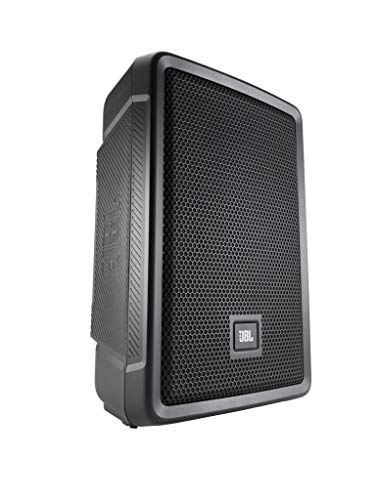
The JBL IRX108BT blends portability with professional features like dbx DriveRack automatic feedback suppression and multiple I/O options. It includes Bluetooth streaming and the ability to link two speakers for stereo imaging. Four real-world EQ presets simplify setup for DJs and presenters who need a straightforward, reliable solution for small to mid-sized events.
- Power/Driver: 8″ woofer, powered 2-way design
- Processing: dbx DriveRack tech, auto feedback suppression
- I/O: Two XLR/TRS combo inputs, XLR loop-out
Pioneer DJ VM-80 8″ Active Monitor Speaker

The Pioneer DJ VM-80 is designed primarily as a DJ monitor with emphasis on accurate stage sound and studio-style monitoring. It includes DSP settings and Low/High EQ controls so DJs and producers can tailor the speaker response to room acoustics or mixing needs. The constant directivity horn helps create a broad listening area useful for club and booth monitoring.
- Monitoring Focus: DSP presets, EQ controls for accurate reproduction
- Design: Hexagonal aluminum front baffle for durability and dispersion
- Use Cases: DJ booths, production/monitoring in home studios
Rockville TITAN ONE PRO 600W 8″ Battery-Powered PA Speaker

The Rockville TITAN ONE PRO is focused on portability and outdoor/events use with a built-in rechargeable battery and True Wireless Stereo (TWS) capability. It offers DSP modes for live, monitor, or subwoofer setups and extended battery performance suitable for long daytime events where AC power isn’t guaranteed.
- Battery: Rechargeable battery with extended runtime (manufacturer-rated)
- Power/Tuning: 600W peak, DSP modes, Bluetooth and TWS pairing
- Use Cases: Outdoor parties, mobile DJs, events without mains access
ALTO TS408 2000W 8″ Powered PA Speaker With Mixer And App

The ALTO TS408 emphasizes higher headroom and modern control with a built-in 3-channel mixer, Bluetooth streaming, DSP, and app control. With a claimed high wattage rating, it aims to serve DJs and venues needing robust output while maintaining compact 8″ driver advantages. The integrated DSP and app-based controls allow on-the-fly tuning to suit venue acoustics.
- Power: High peak/TrueSonic output with 8″ driver and 1.4″ HF driver
- Controls: 3-channel mixer, DSP, wireless speaker linking via app
- Use Cases: Small-to-medium venues, mobile DJs who want app control
Buying Guide: How To Choose The Right 8-Inch DJ Speaker
Selecting an 8″ DJ speaker depends on the way you perform, the venues you play, and your setup needs. Below are the core factors to compare.
1. Power And Output
Consider RMS vs peak/advertised wattage. RMS gives a better sense of continuous output. For small venues and monitors, 300–600W (RMS/continuous-equivalent) can be sufficient; higher peak ratings indicate headroom but are not the same as sustained power.
2. Driver Size, Dispersion, And Coverage
An 8″ woofer balances low-end response and portability. Check the cabinet design and horn/directivity specs (e.g., constant directivity horn) to understand how evenly sound projects across the crowd or into a DJ booth.
3. On-Board Processing And Presets
Built-in DSP, EQ presets, and feedback suppression (like dbx DriveRack) simplify setup for live events. DSP can compensate for room acoustics and reduce feedback risk for vocal use.
4. Connectivity And Inputs
Look for multiple inputs: XLR/TRS combos, RCA, and Bluetooth. XLR outputs/loop-outs enable linking multiple speakers or connecting to a subwoofer. Bluetooth is convenient for backing tracks but shouldn’t be your only source for critical signal paths.
5. Portability And Power Options
If you do mobile gigs or outdoor events, battery-powered models with long runtimes and fast recharge are valuable. For fixed venues, AC-powered units with pole-mount or flyable options matter more.
6. Use Case: Monitor Versus Main PA
Monitors prioritize on-axis clarity and narrower dispersion toward the performer. Main PA speakers require wider dispersion and higher headroom. Choose models with suitable DSP or EQ for the intended role.
7. Build Quality And Mounting Options
Check for pole-mount sockets, M8 fly points, or rugged cabinets. Metal grilles and durable handles help for touring or repeated setup/teardown.
8. Stereo Pairing And Expandability
True Wireless Stereo (TWS) or line-level link outputs let you create stereo setups or expand coverage. For DJs wanting a two-speaker stereo field, confirm pairing reliability and latency specs.
9. Brand Support And Firmware/Apps
Some speakers offer app-based control or firmware updates which can unlock features and tuning. Consider brands with known customer support and documented DSP workflows.
10. Sound Character And Tuning Flexibility
Read specs on frequency response and check whether the speaker allows LF/HF tilt or parametric EQ. For DJing, a speaker that reproduces punchy low-mid and clear highs without excessive boom is typically preferred.
Compare models across these perspectives—power continuity, portability, processing, and connectivity—to match your performance needs. Each of the reviewed speakers emphasizes a different balance of these factors, from studio-grade monitoring to battery-powered portability and app-enabled control.