
Find the Right 8 Ohm Center Channel Speaker — This guide compares top center channel speakers suited for home theater systems that accept 8 ohm impedance. Below is a quick summary table of the selected speakers to help you compare at a glance.
| Product | Brand | Key Features |
|---|---|---|
| Monoprice Premium Home Theater Center Channel | Monoprice | 3″ Mid-Range Driver, 8 Ohms, 100W, Wall Mountable |
| Klipsch R-52C Powerful Detailed Center Channel | Klipsch | Dual 5.25″ Woofers, 1″ Aluminum LTS Tweeter, 90×90 Tractrix Horn |
| Polk Monitor XT35 Slim Center Channel | Polk Audio | 1″ Tweeter, (4) 3″ Woofers, 4- & 8-Ohm Compatibility, Slim Profile |
| Acoustic Audio PSC-43 Dual 4″ 2-Way Center Channel | Acoustic Audio by Goldwood | Dual 4″ Woofers, 1″ Mylar Dome Tweeter, 8 Ohm, 15–150W Recommended |
| Pyle PCS2X4 Center Channel Speaker | Pyle | Dual 4″ Woofers, Silk Dome Tweeter, 8 Ohm Impedance, 100W Peak |
Monoprice Premium Home Theater Center Channel Speaker

This Monoprice center channel is specified as 8 ohms with a 3″ mid-range driver and a 100 watt handling claim. The unit is compact and wall mountable, suitable for setups where space behind or below the TV is limited. Package dimensions indicate a small footprint, and the speaker is sold as a single unit. The acoustic design targets dialogue clarity in small to medium rooms.
Klipsch R-52C Powerful Detailed Center Channel
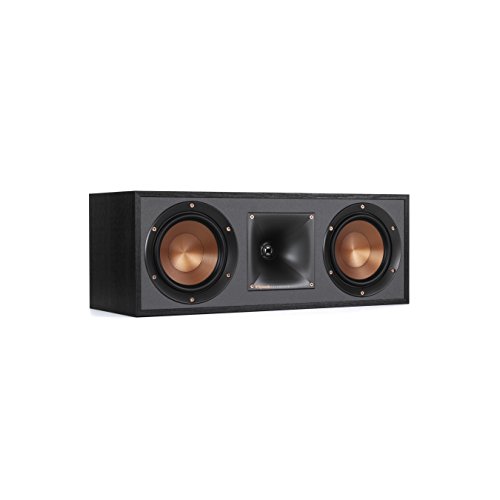
Klipsch lists the R-52C with dual 5.25″ spun-copper IMG woofers and a 1″ aluminum LTS tweeter loaded by a 90×90 square Tractrix horn. Frequency response is given as roughly 89Hz–21kHz (+/-3dB), indicating strong midrange presence and horn-loaded high frequencies aimed at articulate dialogue and high sensitivity. This model suits users who prioritize dynamic output and efficient coupling with moderate-power receivers.
Polk Monitor XT35 Slim Center Channel Speaker

The Polk Monitor XT35 is a low-profile center channel with a 1″ Terylene tweeter and four 3″ dynamically balanced woofers. Polk highlights 4- & 8-Ohm compatibility, making it versatile with many receivers and AVRs. The slim cabinet is designed not to block TVs, and the speaker is marketed for hi-res and object-based formats like Dolby Atmos & DTS:X when used as part of compatible systems.
Acoustic Audio PSC-43 Dual 4″ 2-Way Center Channel

The PSC-43 is specified as an 8 ohm, 2-way passive center speaker with two 4″ full-range woofers and a 1″ Mylar dome tweeter. Recommended power handling ranges from 15–150 watts and frequency response is listed from about 85Hz–25kHz. It includes spring-loaded terminals and a video-shielded, bass-reflex cabinet with an acoustically transparent grille. The dimensions and mounting tab support flexible placement in many setups.
Pyle PCS2X4 Center Channel Speaker
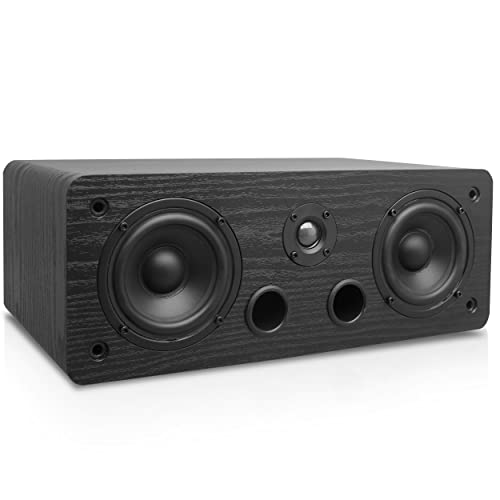
Pyle’s PCS2X4 offers dual 4″ woofers and a silk dome tweeter in an 8-ohm design. It features an electronic crossover network and a 1″ high-temperature voice coil. Specified power handling shows peak capability and it targets users looking for a full-range center channel that integrates with standard home receivers and amps. The design supports wall/ceiling mounting and typical surround sound use cases.
Buying Guide — How To Choose An 8 Ohm Center Channel Speaker
Choosing a center channel involves matching speaker specs to your room, receiver, and listening goals. Below are key considerations and comparison angles to help you decide.
1. Impedance And Receiver Compatibility
- 8 Ohm Matching: Confirm your receiver or AVR supports an 8 ohm load. Most modern receivers handle 6–8 ohm speakers, but always check the manual for minimum impedance and multi-channel limitations.
- Sensitivity And Power: Higher sensitivity (dB/W/m) requires less amplifier power for the same volume. Match speaker sensitivity to your amplifier wattage for efficient, distortion-free dialogue levels.
2. Driver Configuration And Frequency Response
- Midrange Priority: The center channel should emphasize the midrange for clear dialogue — look for dedicated mid drivers or arrays designed for vocal clarity.
- Low-Frequency Extension: Built-in woofers and porting affect how much bass the center produces. If your system includes a subwoofer, a center with modest bass extension is fine; if not, consider models with stronger low-end.
3. Cabinet Size And Placement
- Slim Profiles: Low-profile or slim center channels suit tight spaces and wall-mounting under TVs without blocking the screen.
- Speaker Orientation: Horizontal center channels are typical. Ensure the speaker width and mounting options fit in the available space.
4. Build Quality And Connectivity
- Terminals: Look for secure binding posts or spring clamps rated for your wire gauge.
- Cabinet Construction: Sturdy cabinets with internal bracing reduce resonance and improve clarity.
5. Sound Signature And Imaging
- Horn-Loaded Tweeters: Horns (e.g., Klipsch Tractrix) increase efficiency and directionality — useful for forward-projection and intelligibility in larger rooms.
- Dynamically Balanced Drivers: Multiple small drivers can improve off-axis dispersion and imaging, which helps a wide seating area hear consistent dialogue.
6. Integration With Surround Formats
- Compatibility: If you plan on using object-based audio (Dolby Atmos, DTS:X), verify the speaker works with your processor and speaker topology.
- System Balance: Match tonal character (bright, neutral, warm) across front left, right, and center to maintain cohesive imaging.
7. Room Size And Acoustic Treatment
- Small Rooms: Compact centers or bookshelf centers with good midrange are adequate.
- Large Rooms: Consider higher sensitivity, larger drivers, or center speakers with greater output capability.
- Treatment: Room reflections affect clarity; acoustic panels and proper speaker placement can improve dialogue intelligibility.
8. Practical Comparisons
- Efficiency vs. Power Needs: Horn-loaded Klipsch models deliver high efficiency with less amp power; multiple small-driver arrays (Polk models) distribute output and can smooth dispersion.
- Slim vs. Full-Range: Slim designs (Polk XT35) prioritize placement freedom; fuller cabinets (PSC-43, Pyle) may provide more low-frequency output if a subwoofer isn’t used.
- Features: Wall-mounting, grille finish, and binding terminals influence installation and long-term use.
Use these points to compare the models above based on your receiver’s specs, room size, and placement constraints. Matching impedance, ensuring adequate amplifier power, and prioritizing midrange clarity will lead to the best center channel performance for dialogue-focused home theater setups.