
Choosing the right 8 ohm marine speaker means balancing durability, power handling, and weather resistance for reliable onboard audio. Below is a quick comparison table of the five selected products from the list to help you scan features at a glance.
| Product | Type | Impedance | Marine Rating / Durability | Notable Feature |
|---|---|---|---|---|
| KICKER KM8 Marine Coaxial | 8″ Coaxial | 4 Ω (marine-grade) | UV-treated cones, Santoprene surrounds, corrosion tested | LED lighting (7 colors) |
| Rockville RWB80B 8″ 2-Way Marine | 8″ 2-way wakeboard tower | 4 Ω | Water, salt, and rust resistant | Designed for towers/roll bars |
| Rockville RKL80MB 8″ 2-Way Marine | 8″ 2-way | nominal pair rating (specs listed per pair) | IP66 waterproof, UV-treated cone | Beat-sync LED lights |
| Pyle PLMRW8 Marine Subwoofer | 8″ Marine Subwoofer | 4 Ω | Water-resistant plastic enclosure | 400W peak bass output |
| Pyle 8″ Indoor/Outdoor PA Horn (8 Ω) | 8″ PA Horn | 8 Ω | Weather tolerant design for outdoor use | PA horn voice amplification, 65W peak |
KICKER KM8 8-Inch Marine Coaxial Speakers

The KICKER KM8 is designed as a fully marine-grade coaxial speaker constructed for UV and moisture resistance. KICKER uses UV-treated injection-molded cones and Santoprene surrounds to reduce degradation from sun and salt exposure. These coaxials meet ASTM standards for humidity and corrosion testing, making them suitable for exposed boat installations. LED color options (seven colors standard) add lighting customization; an optional controller expands modes. Note that the KM8 is specified at 4 ohms—verify your amplifier compatibility when planning installations originally seeking 8 ohm nominal speakers.
Rockville RWB80B Pair 8″ 2-Way Marine Wakeboard Tower Speakers

Rockville’s RWB80B speakers are tailored for wakeboard tower and exposed mount use. They feature polypropylene mica cones and 1″ polyimide dome neodymium tweeters, built to withstand marine environments with stainless steel terminals, rubber gaskets, and waterproof coatings. Although rated at 4 ohms, the build quality emphasizes salt and rust resistance and includes adjustable nylon mounting brackets for bars and towers. These are practical when you need robust tower speakers with weatherproofing and adequate power handling for loud outdoor playback.
Rockville RKL80MB 8-Inch 2-Way Marine Boat Speakers
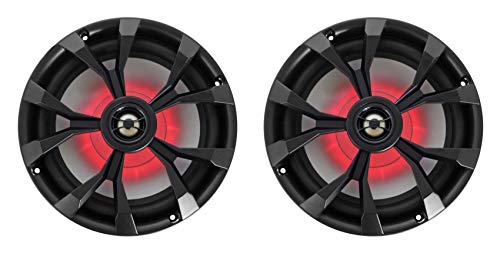
The Rockville RKL80MB pair emphasizes power and visual effects with a high peak power claim and beat-sync LED lights that flash in time with music. The speakers use a 2-way design with a PEI tweeter and 8″ woofer and are IP66-rated for protection against heavy sprays. UV-treated cones and stainless terminals enhance long-term durability in saltwater environments. These are suitable when both high SPL and marine-rated protection are required; check amplifier matching for impedance and power handling when installing.
Pyle PLMRW8 8-Inch Outdoor Marine Subwoofer

The Pyle PLMRW8 is an 8″ compact marine subwoofer built in a waterproof plastic enclosure intended for under-helm or small box mounting. Featuring a 4 ohm impedance and a peak power rating highlighted in the features, it aims to extend low-frequency performance in marine audio systems. The casing is water-resistant for environments with occasional splashes. As a subwoofer, it functions best paired with a suitable amplifier and full-range speakers to round out the sound profile on boats with limited enclosure space.
Pyle Indoor / Outdoor 8” PA Horn Speaker (8 Ohms)

This Pyle 8″ PA horn-style speaker lists an 8 ohm impedance and is optimized for voice and midrange projection across 500 Hz–5 kHz. It is frequently used in indoor/outdoor public-address applications where clear vocal reproduction and robust output are priorities. While not a traditional marine speaker, its weather-tolerant design and mounting hardware can make it a candidate for covered outdoor or sheltered marine areas. Verify marine-rated corrosion protection if you intend to install near saltwater exposure.
Buying Guide: How To Choose 8 Ohm Marine Speakers
Selecting marine speakers involves electrical, acoustic, and environmental considerations. Below are key factors to evaluate across multiple comparison perspectives.
Impedance And Amplifier Matching
- Impedance Compatibility: Ensure your amplifier supports the speaker impedance. Many marine models list 4 ohm; a true 8 ohm speaker places less load on an amp and can be preferred for older or lower-powered systems.
- Parallel/Series Wiring: If combining speakers, plan wiring to achieve overall impedance the amp can safely drive.
Power Handling And Sensitivity
- RMS vs Peak: Prioritize RMS ratings for continuous power compatibility. Peak figures indicate short bursts only.
- Sensitivity: Higher sensitivity needs less amplifier power to reach a given SPL, useful on battery-limited marine systems.
Marine Durability And Ratings
- Waterproof/Water-Resistant Rating: Look for IP ratings (e.g., IP66) or explicit marine-grade claims for saltwater protection.
- Materials: UV-treated cones, Santoprene surrounds, stainless steel terminals, and corrosion-tested components improve longevity.
- Mounting Hardware: Corrosion-resistant brackets or tower mounts are essential for exposed installs.
Speaker Type And Application
- Coaxial vs Component: Coaxials offer easier installs; components provide better imaging if you can mount tweeters separately.
- Subwoofer Needs: Add a marine subwoofer for deeper bass—consider enclosure type and placement for best output.
- Wakeboard/Tower Use: Choose speakers designed for bars/towers with appropriate clamps and bracket ranges.
Sound And Feature Comparisons
- Frequency Range: Match speakers to the dominant music style; broader range improves fidelity across genres.
- LEDs And Aesthetics: LEDs add visual flair but can complicate wiring; select systems that suit your lighting control needs.
- Size And Fit: Confirm cutout and mounting depth for helm panels, enclosures, or tower mounts.
Installation And Maintenance
- Wiring & Seals: Use marine-grade wire, sealed connections, and dielectric grease to minimize corrosion.
- Access: Plan for future maintenance—ease of access can determine long-term reliability.
- Amplification: Match amplifier power to speaker RMS ratings and allow headroom for clarity without distortion.
Use these points to compare the products above against your boat size, exposure to saltwater, desired loudness, and installation constraints. Prioritize corrosion resistance and correct impedance matching to ensure reliable marine audio performance.