
Best 8-In, 8-Out Audio Interfaces for Music Production
Looking for an 8-in, 8-out audio interface to power your home studio or hybrid setup? This guide highlights top options that balance clean preamps, flexible I/O, and reliable connectivity. Ideal buyers include project studios needing multiple mic inputs, producers routing external gear, and musicians tracking bands. Below, five strong picks are compared, followed by a practical Buying Guide and FAQs.
| Product | Key Benefit | Best For |
|---|---|---|
| Fender Quantum LT 16 | 16-in, 8-out with eight MAX-HD preamps | Hybrid studios needing many mic inputs |
| Behringer ADA8200 | 8 In/8 Out ADAT with MIDAS preamps | Expandability on a budget |
| Tascam US-16×08 | 16 inputs, 8 outputs, solid performer | Desktop studios with drum/multi-tracking |
| Focusrite Scarlett 18i16 (4th Gen) | 18 inputs, 16 outputs, high-gain preamps | Creators needing versatile I/O |
| Solid State Logic SSL 12 | 12 inputs, 8 outputs, premium dynamics | Professional projects demanding clean, warm tone |
Fender Quantum LT 16 – 16-In/8-Out USB-C Interface

Fully Expanded I/O for Hybrid Studios: 16-in, 8-out USB-C interface with eight MAX-HD mic preamps and fourteen line inputs. The plentiful inputs simplify outboard gear, synths, mixers, and multi-mic setups. Best for multi-mic drum sessions and guitar/bass rigs that need integrated effects via the Fender Studio app.
Eight MAX-HD Mic Preamps deliver transparent, low-noise gain up to +75 dB. This makes the Fender Quantum LT 16 well-suited for demanding microphones in studio tracks while maintaining clarity in busy mixes. A potential limitation is the need to manage high-gain scenarios to avoid noise if preamps push too close to self-noise.
Track Rig 8-XLR Audio Output Interface
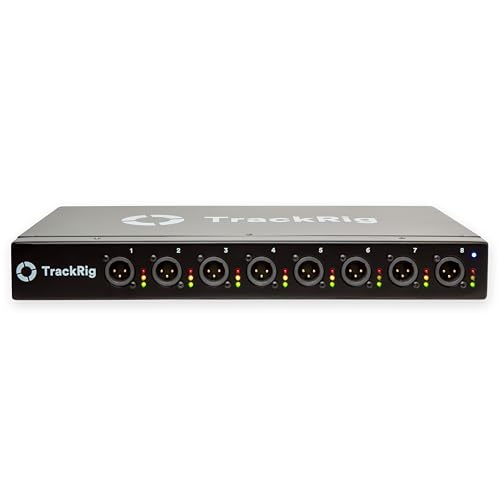
Multitrack Out Audio Interface with 8 XLR Outputs and Line Level. Designed for easy routing of multiple drum kits, percussion, or stage backlines to separate monitors or recording paths. Best for producers who need direct output routing to multiple devices without extra patching.
Advantage: straightforward 8-out configuration. Limitation: information about mic preamps is not specified, so consider pairing with a front-end preamp if high-gain, clean channels are required.
Behringer ADA8200 – 8-In/8-Out ADAT Interface

The ADA8200 provides eight mic preamps feeding ADAT optical out, with eight ADAT channels in. It’s a cost-effective way to expand a smaller interface to 16 inputs total for larger sessions or orchestral tracks. Best for budget-conscious studios needing quick expansion without PCIe or USB-C upgrades.
Limitation: ADAT transport requires compatible master clock; ensure your main interface supports stable optical syncing to avoid jitter in multi-device setups.
Tascam US-16×08 Rackmount USB Audio/MIDI Interface
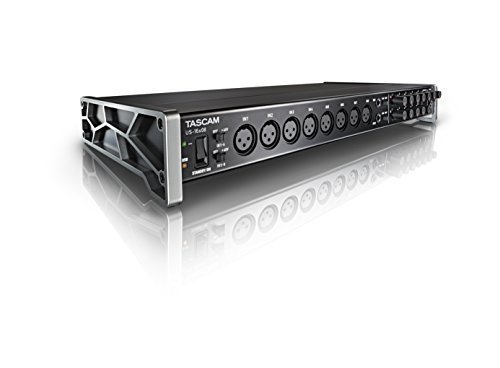
Captures 16 mic and line inputs to your computer with eight outputs. Eight Ultra-HDDA microphone preamps provide clean gain up to 56dB. Eight line inputs offer instrument-level flexibility for direct guitar or bass recording. Best for mid-sized sessions needing strong preamps and solid overall performance.
Limitation: front-panel controls are basic; desktop-friendly layout helps, but expect software to handle certain routing tasks in more complex setups.
M-AUDIO AIR 192×14 – USB-C Interface
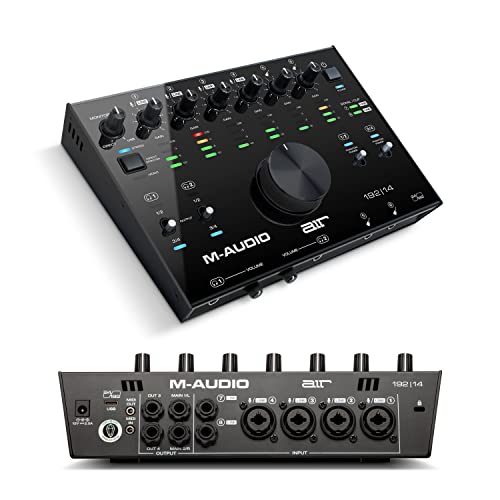
8 In and 4 Out with USB-C, MIDI, and bundled software. Provides 24-bit/192kHz resolution with low latency, making it suitable for home studios needing reliable performance and modern USB-C connectivity. Best for producers who value portability and solid conversion with practical software from MPC Beats and Ableton Live Lite.
Limitation: fewer physical outputs than some competitors; consider expansion if you rely on many outward monitor or outboard connections.
Solid State Logic SSL 12 – USB Audio Interface

SSL 12 delivers 12 inputs and 8 outputs with high-end converter options and a generous dynamic range. Combines professional-class mic preamps and ADAT optical input to expand further. Best for projects requiring a premium-sounding interface with robust dynamic range.
Limitation: premium positioning means a higher price point; ensure you need the SSL sonic character and headroom for your project to justify the investment.
Buying Guide
- Input/Output needs: Count your typical session requirements. If you track a full drum kit, aim for at least 8 mic preamps and multiple line outs for cueing and monitoring.
- Connectivity: USB-C offers modern compatibility and lower latency. Consider ADAT for expanding preamps if your main unit has few built-in preamps.
- Preamps and Gain: Look for clean, low-noise preamps with ample gain. Higher headroom reduces clipping on dynamic or loud sources.
- Latency and Drivers: Low-latency performance is essential for real-time monitoring. Check driver support for your OS and DAW.
- Software Integration: Bundled software can help you get started, especially if it includes industry-standard DAWs or plugins.
- Budget Considerations: Behringer and similar units offer expandability at lower cost but may lack premium features; SSL and Focusrite sit higher on the price/quality scale.
- Future-proofing: If planning growth, prioritize interfaces with expansion options (ADAT, multiple preamps) to avoid frequent replacements.
Frequently Asked Questions
- What does 8-in, 8-out mean? It refers to eight microphone/line inputs and eight outputs for monitors, headphones, or other gear.
- Is USB-C necessary? USB-C offers modern compatibility and lower latency; many users still successfully run USB-A with appropriate cables/adapters.
- Do I need external preamps? If your interface already provides enough clean preamps for your sources, external preamps may not be necessary; they’re useful for color or higher gain requirements.
- What is ADAT, and why connect it? ADAT is an optical protocol for expanding inputs/outputs. It allows you to add eight extra preamps via an ADAT-enabled interface.
- How important is dynamic range? Higher dynamic range helps preserve detail in loud or nuanced passages, especially for studio-quality recordings.
- Which interface should I buy for drums? Look for 8+ preamps with strong gain and low noise, plus reliable clocking for multi-mic configurations.