Best 8″ Sub Box for Deep Bass: Top 5 Choices for Car Audio Enthusiasts
Answering buyers looking for an 8″ subwoofer box, this guide highlights five top options that balance fit, build quality, and bass output. These enclosures are best for compact to mid-size systems, including daily drivers and weekend cars. If you want deep, punchy low-end without excessive space, these boxes are designed to maximize efficiency and minimize vibration. The table below summarizes the five selections to help you compare at a glance.
| Product | |||
|---|---|---|---|
| Skar Audio SK1X8V Single 8″ Ported | Ported | Single-sub installs | Kerf port for deep, accurate bass; universal fit |
| OnlyFactoryDirect 8S Single Sealed | Sealed | Compact spaces | Fully assembled, universal fit, quick drop-in |
| QPower Dual 8″ Vented Port | Vented | Two subs, balanced bass | 1.0 cu ft per sub; easy install |
| Skar Audio SK2X8V Dual 8″ Ported | Ported | Dual-sub systems | High-performance, universal fit |
| QPower 8″ Side-Ported Vented | Side-ported | Space-conscious builds | 1.0 cu ft per sub; rugged MDF |
Skar Audio SK1X8V Single 8″ Ported Subwoofer Enclosure

The SK1X8V is a single-chamber, 8″ ported enclosure designed to deliver deep bass while maintaining a compact footprint. It features a kerf (rounded) port design to improve airflow, resulting in deeper, more controlled low-end response. This box is best for drivers seeking strong output from a single 8″ sub in a relatively tight space. Best for solo sub setups in small trunks or under seats where space is at a premium. A potential limitation is that ported designs can be more sensitive to box tuning and vehicle acoustics, which may require careful sub and amp pairing.
OnlyFactoryDirect New Single 8″ Sealed Car Box
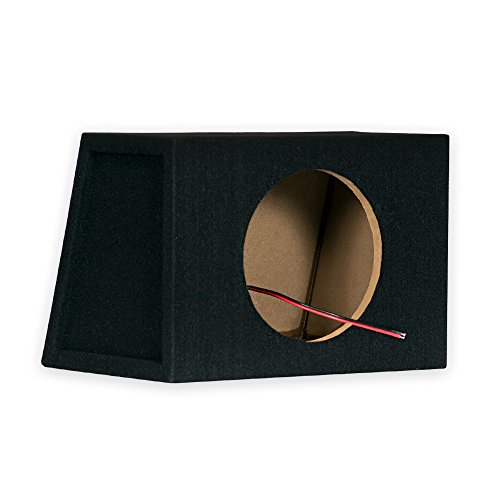
This sealed enclosure is a straightforward drop-in option for an 8″ woofer. It’s designed to be a universal fit with dimensions around 10″ x 14.125″ x 9.75″ and a 7.125″ woofer cutout. The box uses CARB-compliant MDF, has a robust 0.625″ front, and arrives fully assembled. Best for listeners who want a simple, air-tight box with predictable bass and minimal tuning. Limitations include the absence of internal porting, which reduces maximum low-end extension relative to vented designs.
QPower Dual 8-Inch Vented Port Subwoofer Box

This vented enclosure supports two 8″ subs, with a cutout diameter of 7.25″ per sub and a total internal airspace of 1.0 cubic feet per sub. The dimensions are 28″ W x 13″ H x 13″ D, and the exterior features a black bed liner finish. It’s best for systems needing more total bass output from dual subs in a single, straightforward install. Caution: ensure the overall vehicle space accommodates the length and depth of the box, especially in compact cars.
Atrend 8″ Universal Truck Style Vented Subwoofer Enclosure

This 8″ vented enclosure uses 5/8″ MDF with mitered and dado end panels for strong construction. A premium carpet finish and a silver spring-loaded terminal add convenience. Best for listeners who value precise craftsmanship and a refined install in trucks, SUVs, or sedans. Choose this if you want tight seals and strong construction; avoid if you need a sealed design or minimal footprint.
QPower 8 Inch Horn Ported Subwoofer Box

This horn-port enclosure is tuned to 40 Hz, delivering stronger and more controlled bass with a 1.1 cubic feet internal volume and 10″ mounting depth. Built from 5/8″ MDF, it offers robust support for demanding subs. Best for bass-focused builds in larger cars or trucks where precise bass articulation matters. Limitation: horn-port designs can be more sensitive to placement and air movement within the vehicle environment.
Buying Guide: Key Considerations for 8″ Sub Boxes
- Box Type: Ported boxes typically deliver deeper bass and higher efficiency, while sealed boxes offer tight, accurate bass and easier tuning in irregular spaces.
- Internal Volume: Ensure the enclosure volume matches your subwoofer’s recommended airspace. Under- or over-sizing can affect bass extension and power handling.
- Construction Material: 5/8″ to 3/4″ MDF is common for rigidity. Look for solid joints (miters/dados) and a durable exterior finish to resist wear in a vehicle environment.
- Vehicle Fit: Measure trunk height, depth, and seat clearance. Side-ported or shallow boxes are often preferable for compact cars, while larger vehicles can accommodate deeper enclosures.
- Installation Ease: Fully assembled boxes save time. Some require more mounting hardware and precise cutouts; factor in your DIY comfort level.
- Subwoofer Compatibility: Check cutout size, mounting depth, and impedance of the sub(s) you plan to use. Always confirm that the enclosure supports your specific model(s).
- Finish and Aesthetics: If you care about interior styling, consider carpet color and edge treatment that matches your vehicle’s look.
Frequently Asked Questions
- What’s the main difference between ported and sealed 8″ boxes?
Ported boxes boost low-end response and efficiency, while sealed boxes emphasize tighter, more accurate bass with simpler tuning. - How do I know my subwoofer will fit an enclosure?
Verify the enclosure’s cutout diameter, mounting depth, and internal volume align with your sub’s spec sheet. - Is a dual-sub enclosure better than a single-sub box?
Dual-sub enclosures can produce higher overall output and more even bass distribution, but require more space and power management. - Do I need to replace my amplifier when switching enclosures?
Not necessarily, but ensure your amplifier can handle the total impedance and power demands of the new setup. - Can I install any 8″ sub into these boxes?
Most 8″ subs will fit common enclosures, but always confirm cutout diameter, mounting depth, and ventilation requirements. - What installation considerations improve bass performance?
Use proper damping, airtight mounting, and appropriate wiring; avoid gaps around the enclosure to reduce air leaks and unwanted vibrations.