
Best 8-Input XLR Audio Interfaces for Home Studios
Answering the need for true 8-input capability, this guide highlights select 8-input and multi-channel interfaces suitable for home studios, project studios, and small pro setups. Best for multi-mic drums, podcasts with multiple guests, or hybrid recording rigs, these options balance input count, preamp quality, and workflow. The top picks vary from rack-munited ADAT-expansion units to all-in-one USB mixers with integrated audio interfaces.
| Product | Inputs | Best For | Why It Stands Out |
|---|---|---|---|
| Behringer ADA8200 Audiophile | 8 inputs (ADAT) | Expanding a compact audio interface | Affordable 8-channel mic preamp expansion with ADAT output for larger DAWs |
| Tascam US-16×08 | 16 inputs, 8 mic inputs | Small to mid-sized sessions | Eight ultra-HDDA mic preamps and flexible I/O |
| Fender Quantum LT | 16 inputs, 8 mic preamps | Hybrid studios needing many sources | Wide I/O with built-in Fender amp modeling via software |
| Dejasound FX-8usb Mixer | 8 channels on mixer, USB audio | Live streams and studios needing mix control | Integrated FX, Bluetooth, and USB interface for versatile use |
| M-AUDIO M-Track Duo | 2 inputs | Portable 2-input backup or travel setup | Solid 2-in option for compact projects; included for completeness |
Behringer ADA8200 Audiophile 8 In/8 Out ADAT

The Behringer ADA8200 provides eight mic preamps with 24-bit AD/DA conversion and an ADAT optical output. It is best for buyers who use a primary interface with ADAT expansion to add preamps without reconfiguring the main interface. This unit is suitable for drum setups, multi-mic recording, or expanding a smaller interface. Best for budget-conscious buyers who want to scale up. A limitation is that the ADAT expansion requires a compatible mastering or host interface with ADAT inputs for full use.
Tascam US-16×08 Rackmount USB Audio/MIDI Interface
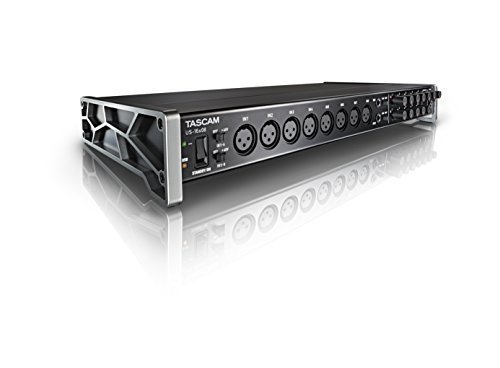
The Tascam US-16×08 is a rackmount USB interface featuring eight Ultra-HDDA mic preamps and a total of 16 inputs. It’s ideal for larger productions or drum kits where eight mics are required simultaneously and a robust monitoring/workflow setup is essential. It suits home studios expanding to semi-professional sessions. A potential limitation is the complexity of routing on larger projects, which may require more hands-on management in the control software.
Fender Quantum LT 16 In / 8 Out USB-C Audio Interface

The Fender Quantum LT offers fully expanded I/O with 16-in, 8-out, and eight MAX-HD mic preamps. This setup is well-suited for hybrid studios that connect outboard gear and multiple microphones for ensembles. The Fender Studio app integration adds access to amp models and effects for guitar and bass work. Choose this if you need a large input surface with ready-made integration for hybrid tones. A caveat is the software ecosystem dependency for getting the most from preamps and effects; ensure compatibility with your DAW and devices.
Dejasound FX-8usb 8-Channel Mixer with USB

The Dejasound FX-8usb mixer is an 8-channel console with USB audio capabilities, Bluetooth, and built-in DSP effects. It’s ideal for podcasting, live streams, and studio sessions requiring on-device mixing and multi-source input. Best for users who value on-mixer control and easy setup. A limitation is that the integrated effects and routing can be more complex than a simple multi-channel interface, potentially requiring time to dial in preferred settings.
M-AUDIO M-Track Duo USB Audio Interface
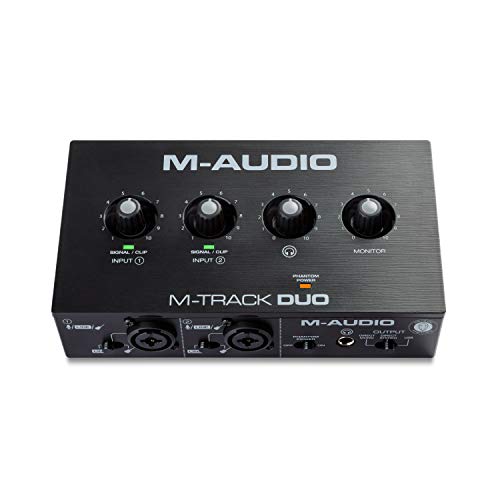
The M-AUDIO M-Track Duo is a compact USB interface with two inputs, included here to represent a common 8-input expansion path when paired with other devices. It’s best for travel or as a backup for larger setups where separate preamp expansion is used. It’s not an 8-input device by itself, so consider it in a modular rack or mixed setup where additional preamps are connected externally. A note: this is a two-input solution and doesn’t meet the 8-input criterion by itself; plan accordingly for your workflow.
Buying Guide
Key considerations when choosing an 8-input or expandable 8-input setup:
- Input type and count: Decide whether you need 8 mic preamps directly in the interface or if adding via ADAT expansion is acceptable for your workflow.
- Connectivity: USB-C vs USB-A, ADAT optical, and MIDI; ensure compatibility with your computer, DAW, and peripheral gear.
- Preamp quality and gain: Look for clean, low-noise preamps with adequate headroom for your typical mics and sources.
- Software and drivers: Confirm stable control software, drivers for your OS, and any bundled plugins or apps that fit your music style.
- Expansion path: If you anticipate growing, choose devices that offer clear, affordable expansion options (like ADAT).
- Form factor and portability: Rackmount units save space in a fixed setup, while desktop units offer easier access for smaller studios.
FAQ
- What is the best 8-input audio interface for drum recording?
– A device with eight mic preamps and clean headroom, such as a rackmounted interface with ADAT expansion, often provides the most flexible drum-mic configurations. - Can I expand an 8-input interface with ADAT?
– Yes, many interfaces like the ADA8200 use ADAT to add eight preamps to a compatible main interface. - Are USB-C interfaces better than USB-A for home studios?
– USB-C can offer improved power delivery and speed on newer computers, but compatibility with your DAW and OS is more important than the connector type alone. - Is a mixer with USB better than a dedicated audio interface for podcasting?
– If you need on-mixer mixing, live adjustments, and built-in effects, a mixer with USB can be advantageous; for pure recording quality, a dedicated interface may be simpler. - Do I need DSP effects built into the device?
– DSP effects are convenient for quick processing but add latency and may complicate routing. They’re optional depending on your workflow.