
Best Guitar Tuner Picks for Accurate, Fast Tuning
Find the right tuner for your guitar setup quickly. This article compares top clip-on and headstock tuners for acoustic, electric, bass, and other stringed instruments. It highlights who each tuner is best for, and why it stands out in noisy environments, stage use, or casual practice. The listed products are chosen to help players maximize tuning accuracy, reading clarity, and comfort during long sessions.
The following table offers a quick snapshot of the selected tuners and their ideal buyers.
| Product | ||
|---|---|---|
| Sound harbor Guitar Tuner Clip On | All stringed instruments; noisy environments | Fast, vibration-based tuning with 360° screen |
| Fender FCT-2 Professional Multi-Instrument Clip-On Tuner | Professional versatility across instruments | Clear color display; dedicated instrument modes |
| SNARK SN5X Clip-On Tuner | Affordable reliability; diverse instrument use | Rotating display; secure “Stay Put” clip |
| D’Addario Eclipse Headstock Clip On Guitar Tuner | Left/right-handed players; stable in multiple viewing angles | Wide calibration range; strong clamp |
| AARVI Guitar Tuner Clip On | All instruments; fast, universal tuning | 360° display; auto-off and multi-mode |
Sound harbor Guitar Tuner Clip On 1 Pack

Best for players who need quick, vibration-based tuning in varied environments. This tuner senses frequency from string vibrations, delivering fast responsiveness and precise tuning. It supports acoustic, electric, and many other stringed instruments thanks to a versatile clip-on design, making it suitable for beginners and seasoned players alike. The 360° rotatable screen helps you read notes from any angle.
Who it’s for: ideal for gigging musicians who perform amid crowd noise or stage energy, and for practice rooms with ambient sound. Limitation: tuning accuracy relies on stable contact with the headstock; a loose clip may reduce response speed.
Fender FCT-2 Professional Multi-Instrument Clip-On Tuner

This tuner stands out for players who switch between guitar, bass, ukulele, and violin frequently. It senses vibrations directly from the instrument for accurate tuning in loud venues or quiet practice rooms. The color LCD needle display provides quick visual guidance, helping you see exactly where your pitch sits. It’s especially strong for performers who need a single device to cover multiple instruments.
Best for: multi-instrumentists and performers across genres seeking a single, dependable tuner. Better for: busy stages where ambient noise can challenge traditional mics. Caution: USB power or battery life varies with use; ensure fresh power for long sessions.
SNARK SN5X Clip-On Tuner for Guitar, Bass & Violin

The SN5X is positioned for players who want a reliable, compact tuner with a simple interface. The rotating display supports both right- and left-handed players, and the clip stays firmly in place during rapid tuning. This makes it a good choice for practice sessions and small gigs where quick feedback matters.
Best for: players who value a straightforward interface and stable clip. Caution: some users prefer larger displays for dim stages; the SN5X’s display may require adequate lighting for best readability.
D’Addario Eclipse Headstock Clip On Guitar Tuner
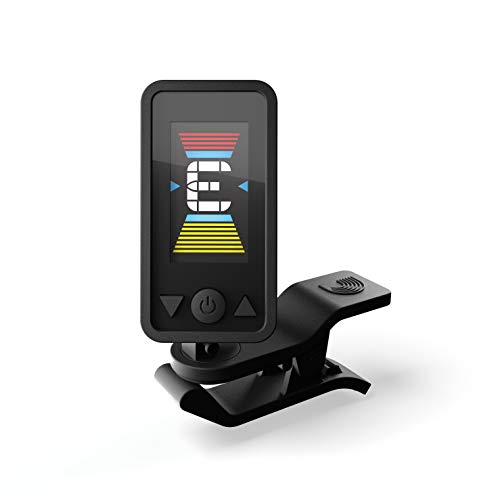
The Eclipse tuner offers quick tuning with a wide calibration range and a strong clamp, making it reliable for both left- and right-handed players. Its vertical full-color screen with dual swivels allows flexible viewing angles, which helps in awkward headstock placements. This is a robust option for players who want precise control over pitch calibration and easy viewing from multiple angles.
Best for: players who frequently adjust tuning in diverse environments and need adjustable angles. Caution: calibration range is specific, so verify if your preferred tuning standard fits within the device’s range before long sessions.
AARVI Guitar Tuner Clip On

The AARVI tuner offers 6 tuning modes plus chromatic tuning and a 360° rotating display for optimal viewing. It supports acoustic and electric guitars, bass, violin, banjo, and ukulele, plus auto-off and bundled picks for convenience. The universal clip fits most headstocks, and the color display aids quick reading on stage or in studio.
Best for: players who need a universal, all-in-one tuner with handy extras. Caution: open tuning detection may require a moment to stabilize in very quiet practice settings.
Buying Guide: Key Purchase Considerations
- Calibration range and tuning modes: If you primarily tune standard guitar notes, a chromatic mode plus a wide range is helpful for varied tunings. Look for tuners with dedicated modes for guitar, bass, ukulele, violin, etc.
- Display readability: A bright, rotating or color display improves legibility on dark stages or in busy practice spaces. Consider 360° rotatable screens for flexible viewing angles.
- Clip quality and headstock compatibility: A secure clip prevents slipping during performance. Ensure the clamp suits your instrument’s headstock thickness and shape to avoid neck scratches.
- Response speed and accuracy: Vibration-based tuning reduces ambient noise impact. For loud environments, prefer tuners that sense vibrations directly from strings.
- Power and battery life: Clip-on tuners typically use small batteries; check expected life and replacement convenience for your practice routine or gig schedule.
- Additional features: Auto-off, open tunings, and included accessories (picks, capos) add value if you need a compact, all-in-one setup for beginners or travel players.
Frequently Asked Questions
- What is the best tuner for noisy stages?
A vibration-based clip-on tuner is generally best for noisy stages because it reads string vibration rather than relying on microphone input.
- Do clip-on tuners work with all stringed instruments?
Most clip-on tuners support multiple stringed instruments through dedicated modes or chromatic tuning. Check the instrument modes before purchase.
- Should I choose a color display or a monochrome display?
A color display improves quick pitch recognition, especially in dim lighting. A high-contrast display with a bright backlight is preferable for stage use.
- Is a rotating display necessary?
A rotating display helps when tuning from various angles, especially if you switch between left- and right-handed playing positions.
- Do I need an open-tuning feature?
Open tuning is useful for players exploring alternate tunings or learning songs that require quick switching between tunings.