
Best Car Power Inverters for 12V DC to 110V AC in Vehicles
Answer: These car power inverters convert 12V DC from your vehicle into 110V AC for charging laptops, cameras, or other devices on the go. They’re best for travelers, road-trippers, and commuters who need off-car charging power without outlets. The top picks below cover a range of wattages, outlets, and USB charging options to suit different devices and budgets.
Buyer-friendly overview:
| Product | Best For | Max Power | USB Options |
|---|---|---|---|
| BESTEK Power Inverter 300W | Laptops, tablets, multiple USB devices | 300W continuous | 2 USB ports |
| Pro Chaser 400W Inverter | Road trips, camping, higher-wattage needs | 400W continuous | USB-A QC 18W, USB-C PD 65W |
| BESTEK 200W Inverter | Compact but versatile | 200W continuous | USB-C PD, USB-A QC |
| FOVAL 150W Inverter | Basic needs, compact setup | 150W continuous | 2 USB ports |
| PiSFAU 200W Inverter | Quiet, efficient charging | 200W continuous | 4 USB ports |
BESTEK Power Inverter 300W Car Plug
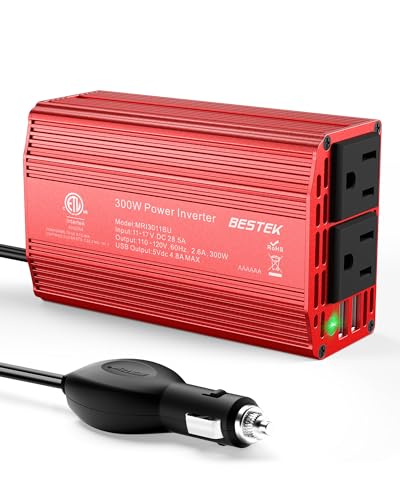
Best for high-demand devices on longer trips. This model offers 300 watts continuous DC to AC power and 700 watts peak, with two AC outlets and two USB ports for simultaneous charging. It’s compact enough to fit in cup-holder spaces and is designed for use with most vehicles, including some Tesla models thanks to its wider voltage compatibility.
Best for: travelers who need to run laptops, tablets, and multiple USB devices at once. Consider this if you regularly power larger electronics or blend work and travel on the road.
Limitation: Heavier use can generate noticeable heat; ensure adequate ventilation and avoid prolonged high-load operation.
Pro Chaser 400W Power Inverter

Best for road trips requiring robust power with versatile charging ports. The 400 watts continuous power and up to 800 watts peak support devices like laptops, breast pumps, CPAP machines, and various electronics. It includes dual 110V outlets, a USB-A QC port, and a USB-C PD port for fast, flexible charging.
Best for: families or professionals who need reliable power for multiple devices during travel. Choose this if you often operate high-wattage gadgets from the car.
Limitation: A longer cord (about 30 inches) is useful but can clutter the area; plan cable management for back-seat setups.
300W Portable Charger Inverter (YSOLX)

Best for budget-conscious travelers who still need multiple outputs. This 300W inverter provides four USB-C/A charging ports plus two 110V AC outlets. It is designed for rugged outdoor use and to power devices like cameras, tablets, and small appliances during camping or longer trips.
Best for: casual travelers who want abundant ports in a compact form. Avoid if you regularly power high-wattage devices for extended periods.
Limitation: It may run hotter under heavy load; ensure adequate airflow and avoid stacking devices directly on top of it.
FOVAL 150W Car Power Inverter
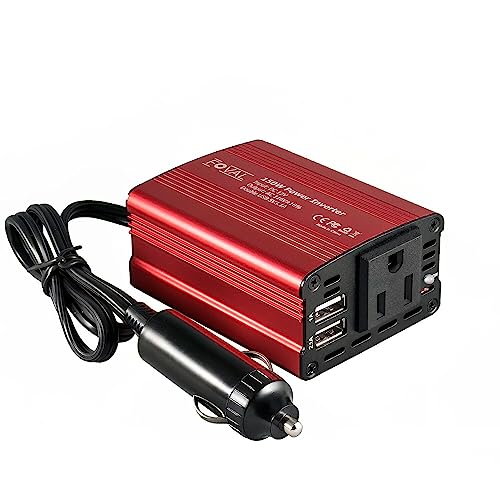
Best for lightweight charging on the road, this compact inverter provides 150 watts continuous power with two USB ports and one AC outlet. Its aluminum shell and small footprint make it easy to stash in a glove compartment or center console.
Best for: users who need simple, low-wattage support for phones, tablets, or small accessories while traveling. Choose this if space and weight are primary constraints.
Limitation: Limited wattage means not suitable for power-hungry devices like laptops for long sessions.
PiSFAU 200W Car Power Inverter

Best for a balanced mix of wattage and portability. This inverter delivers 200 watts continuous power, plus four USB ports for quick charging. It uses a smart dual-protection approach and includes both AC and USB outputs to support a range of devices from laptops to phones.
Best for: travelers who want multiple charging options without compromising space. Choose this if you need more USB ports than the typical dual setup.
Limitation: Higher-wan tage devices may require careful load management to avoid tripping the internal protection features.
Buying Guide: Key Considerations for Choosing a Car Inverter
- Wattage needs: Assess peak and continuous power to match devices you plan to run. Laptops and CPAP machines often require higher continuous power.
- Outlet mix: Decide between dual 110V outlets, USB-C PD, USB-A QC, and smart USB ports. More outlets help power multiple devices simultaneously.
- Size and portability: If you travel light, prioritize compact, cup-holder-friendly designs with short cords.
- Protection features: Look for automatic shutoff on fault, overheat protection, and surge protection to safeguard devices.
- Cooling and noise: Upgraded cooling fans reduce heat buildup; consider fan noise if used in quiet environments.
- Build and durability: Aluminum shells tend to be more durable and heat-dissipating than plastic options.
- Compatibility: Check for compatibility with your vehicle’s accessory outlets and voltage ranges, especially if you drive high-wattage EVs or boats.
Frequently Asked Questions
- What wattage should I choose for a laptop and charger combo?
– If you plan to run a laptop and charge other devices, aim for at least 300W continuous or more for higher-wattage laptops. - Is it safe to use an inverter in a car for long periods?
– Yes, with proper ventilation and by staying within the inverter’s power rating to prevent overheating and battery drain. - Do USB-C PD ports provide faster charging in cars?
– Yes, USB-C PD ports can deliver higher power for laptops and fast-charging devices, depending on the inverter’s PD capability. - Will a 150W inverter run my CPAP machine?
– Some CPAP machines may require more than 150W; check the specific wattage requirement of your device before use. - What’s the risk of overloading a car inverter?
– Exceeding the continuous wattage rating can trip protections or cause overheating; distribute load across outlets when possible. - Should I buy an inverter with multiple USB ports?
– If you frequently charge multiple devices, a model with USB-A and USB-C options provides flexibility and faster charging for USB devices.