
Best Acoustic Guitar Combo Amp Options for Every Player
Looking for an acoustic guitar combo amp that delivers clear tone, reliable output, and features tailored to your style? This guide highlights five strong picks across budgets and needs. Each entry includes who it’s best for, why it stands out, and a practical caveat to consider before you buy. Whether you’re practicing at home, performing live, or teaching, these amps help you shape your sound with ease.
Buyer snapshot table (quick comparison):
| Product | Best For | Key Benefit | Limitations |
|---|---|---|---|
| Fishman Loudbox Micro | Live performers, small venues | Rich acoustic voice with two channels | Compact power for larger stages |
| Fender Acoustasonic 15 | Practice + small gigs | Versatile inputs; built-in whizzer cone | Lower wattage for bigger venues |
| COOLMUSIC Acoustic Amp | Musicians needing Bluetooth and versatility | Two channels, Bluetooth streaming, DI output | 0-volt features require setup |
| Best Choice 41in Starter Set | Beginner to intermediate players | All-in-one kit with amp and accessories | Integrated guitar amp isn’t as customizable as a dedicated amp |
| Flatsons Crush20 | Singer-songwriters, battery-powered use | Rechargeable, dual-channel, stage-ready | Battery life varies with use |
Fishman Loudbox Micro 40-watt Acoustic Combo

The Fishman Loudbox Micro is a compact, 40-watt acoustic combo with two channels: instrument and microphone. It includes built-in digital reverb and chorus plus a master volume control. This model is best for players who need a reliable stage-compatible tone in smaller venues or practice spaces. The dual-channel design helps performers switch between guitar and voice without extra gear. A potential limitation is its size and power relative to larger rooms, requiring careful mic placement and stage planning.
Who this is best for: Acoustic solo performers or small ensembles seeking a clear, natural amplified sound with simple control. Why selected: It prioritizes acoustic integrity with dependable feedback management and flexible tone shaping. Caution: The output may be underwhelming for larger crowds or noisy outdoor environments.
Taylor Circa 74 Acoustic Amp

The Taylor Circa 74 is a 150-watt solid-state amp with a 1 x 10″ speaker. It offers a three-band EQ, line-out, and a two-channel setup designed for acoustic guitars and mic inputs. This amplifier is well-suited for small- to mid-size venues where a strong amplified voice and guitar tone are needed. It’s a strong choice for players who want ample headroom and a straightforward, stable sound. Limitation: It may be overkill for home practice or tiny rooms where lower-wattage amps suffice.
Who this is best for: Players performing in intimate venues who need reliable volume with clear EQ control. Why selected: It provides robust amplification with a dedicated line-out for PA integration. Caution: Higher power means more weight and power management considerations.
COOLMUSIC Acoustic Guitar Amplifier with Bluetooth
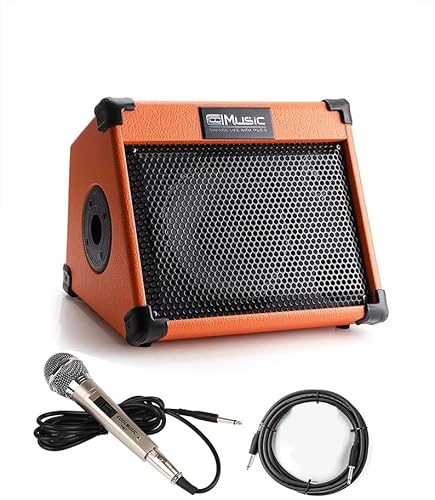
This 20-watt Bluetooth-enabled amp offers 2-channel input capability (guitar and microphone), a three-band EQ, built-in reverb, and a variety of connectivity options including Bluetooth, USB, and DI output. It’s ideal for practicing with accompaniment or streaming tracks directly to the amp. A potential caveat is that Bluetooth streaming can introduce latency or compression if used for real-time performance, so wired inputs are often preferred for live playing.
Who this is best for: Home players and small gigs who want modern features like Bluetooth and DI output in a compact solution. Why selected: It combines essential acoustic tone shaping with flexible connectivity and wireless streaming. Caution: Bluetooth quality can vary with devices and environment.
Best Choice Beginners Acoustic Electric Set

This all-in-one starter set includes an acoustic-electric guitar, an amplifier, gig bag, strap, and picks. It’s designed for beginners and intermediate players exploring both acoustic and electric tones. The guitar’s controlled volume and tonal options pair with the amp’s settings to help new players discover how different controls affect sound. One limitation: the included amplifier may lack advanced tonal shaping found in higher-end models, which could require later upgrades for growing players.
Who this is best for: Beginners or players seeking a complete, turn-key kit with less upfront shopping. Why selected: The all-in-one approach supports rapid practice and experimentation across acoustic and electric tones. Caution: It’s a good starter setup, but may not satisfy advanced tone control needs long-term.
Donner 41-Inch Full-Size Acoustic-Electric Starter Kit

The Donner 41-inch acoustic-electric guitar in this kit features a built-in passive pickup with volume and tone controls, a spruce top, and a slim body for portability and a bright, balanced tone. The full-size cutaway design enhances access to upper frets, making it versatile for a range of styles. This product is best for beginners and intermediate players who want an all-in-one experience: a guitar that’s ready to amplify plus accessories for immediate practice. Caution: The guitar’s on-board electronics are basic compared with premium amps, so tone shaping is more guitar-driven than amp-driven.
Who this is best for: Players seeking an affordable, ready-to-play acoustic-electric setup that grows with them. Why selected: It combines a full-size cutaway guitar with built-in amplification options, supporting quick practice and performance readiness. Avoid this if you prioritize advanced onboard preamps or premium acoustic tone shaping in a standalone setup.
Buying Guide: Key Purchase Considerations
- Power and venue size: Choose wattage that matches where you’ll play. Small rooms benefit from 20–40W; larger venues may require 60W or more.
- Channels and inputs: If you plan to sing while playing, pick amps with at least two channels (guitar and mic). DI outputs help connect to a PA system.
- Tone shaping: Look for at least a three-band EQ (bass, mid, treble) and built-in effects (reverb, chorus) to tailor your sound.
- Portability vs. durability: Slim-line models are easy to transport, but ensure the cabinet and handles can withstand frequent use.
- Connectivity: Bluetooth or USB can aid practice with tracks; consider a dedicated headphone output for silent practice.
- All-in-one kits: For beginners, starter sets save time and money. You may later upgrade components as skills grow.
Frequently Asked Questions
- What is a “guitar combo amp”? A single unit that combines an amplifier and speaker designed for electric or acoustic guitars, often with built-in effects and inputs.
- Do I need a separate mic for vocals with an acoustic guitar amp? Not always. If the amp has a dedicated mic input, you can sing through the amp; otherwise you’ll need a separate mixer or PA.
- Is 20W enough for live gigs? For intimate venues or rehearsals, yes. For larger venues, consider a higher-wattage amp or connect to a PA system.
- Should I buy an amp with Bluetooth? Bluetooth is convenient for practice and playback, but ensure wired inputs are available for real-time performance.
- Can I use an acoustic-electric guitar without an amp? Yes, you can unplug and play acoustically; the guitar itself does not require amplification.
- What’s the difference between a dedicated guitar amp and a combo amp? A dedicated guitar amp focuses on tone shaping for guitar, while a combo integrates speaker and amplification in one unit for convenience.