Best Acoustic Guitar Preamp Pedals for Live and Studio Use
Finding the right acoustic guitar preamp pedal helps you shape your tone, control feedback, and connect cleanly to a PA or recording interface. This guide highlights five solid options for different players—whether you’re a stage-focused performer, a home-recording guitarist, or a busker needing reliable DI. Each entry explains who it’s best for and why, plus practical limitations to consider.
Summary table of chosen products:
| Product | Best For | Key Benefit |
|---|---|---|
| SONICAKE Acoustic Guitar Effects Pedal with Analog Preamp and Digital Reverb | Stage players seeking warmth and built-in reverb | Analog preamp with digital reverb and XLR output |
| SONICAKE Acoustic Pedal Guitar Effect Acoustic Pedal Multi Effects | All-in-one gigging musicians | 2-band EQ, chorus, delay, reverb, XLR |
| Fishman Platinum Pro EQ DI | Professional live sound and studio work | DI, onboard compression, EQ, balanced XLR |
| LR Baggs Venue DI | Insert-ready stage signal control | 5-band EQ, notch filter, adjustable gain |
| BOSS AD-2 Natural Acoustic Preamp | Players needing intuitive controls | Advanced DSP with acoustic resonance modeling |
SONICAKE Acoustic Guitar Effects Pedal with Analog Preamp and Digital Reverb

This pedal combines an analog preamp with digital reverb for a natural, live-sized acoustic tone. It includes a notch filter and mute function with gain and frequency range adjustments to quickly tackle feedback or harsh whistling. The high-impedance input and balanced XLR output simplify connection to PA systems or recording interfaces. Best for performers who want a compact, all-in-one pedal with built-in ambiance.
Who it’s best for: live solo performers or small ensembles needing a straightforward, reliable preamp with on-board effects.
Limitations: While it offers reverb, it may lack the broader multi-effects suite of some larger pedalboards. If you need extensive presets, consider alternatives with more effects slots.
SONICAKE Acoustic Pedal Guitar Effect Acoustic Pedal Multi Effects

This all-in-one acoustic pedal integrates an analog preamp with 2-band EQ and a selection of chorus, delay, and reverb effects. It’s designed to be a one-stop gig solution for acoustic players who need multiple tones within a compact unit. It also provides an XLR output for direct DI-style connectivity. Best for players who want a versatile, street-ready pedalboard alternative.
Who it’s best for: performers who value a built-in array of effects for live scenarios without lugging multiple pedals.
Limitations: The sound sculpting is broad but not as surgical as dedicated DI pedals; use this if you prefer convenience over granular control.
Caline CP-40 DI-Box for Acoustic Guitar
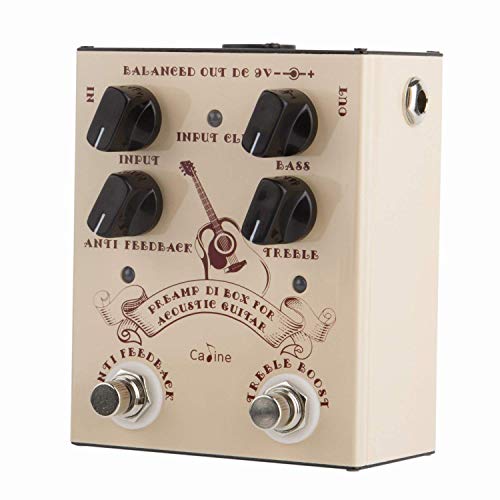
Caline’s CP-40 is a dedicated DI-box designed to deliver clean, balanced output for acoustic guitars. It emphasizes a true bypass and anti-feedback foot switch, helping preserve your guitar’s natural tone while reducing unwanted noise. Best for players who want a reliable, simple DI option that minimizes tone coloration.
Who it’s best for: players needing a straightforward DI solution for stage or studio use; ideal when you already have effects elsewhere in your chain.
Limitations: It’s a DI box rather than a full preamp; use in combination with a separate preamp if you need more tone shaping before amplification.
Fishman AFX Pro EQ Mini Acoustic Preamp & EQ

The Fishman AFX Pro EQ Mini blends a preamp with a 5-band EQ and switchable true/buffered bypass. The 5-band EQ helps tailor tone to room and guitar, while the preset options support quick setup. Best for players who want precise EQ control in a compact form factor and can rely on a DI or amp with the proper inputs.
Who it’s best for: acoustic players seeking tonal shaping with easy bypass options for live switching.
Limitations: It may require additional DI or amp stage gear to maximize output depending on your rig.
Fishman Platinum Pro EQ DI Analog Preamp Pedal

The Platinum Pro EQ DI offers a balanced XLR output with pre/post EQ switching, a footswitchable boost, and onboard compression. Its DI-focused design makes it suitable for live sound engineers and players who rely on stage-quality signal control. Best for performers who need clean, studio-style EQ and a boost option on stage.
Who it’s best for: professional performers and studio players who require robust DI features and dynamic control.
Limitations: It’s a higher-end option; ensure your rig benefits from onboard compression and post-EQ switching for your typical gigs.
LR Baggs Venue DI Acoustic Guitar Preamp and DI
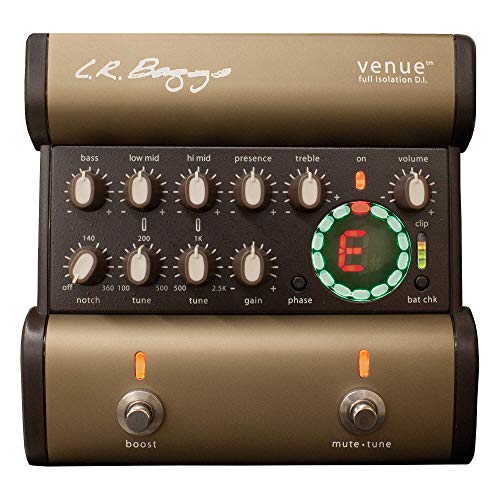
Venue DI provides adjustable gain for passive and active pickups, a 5-band EQ with tunable low-mid and high-mid bands, and a Garret Null notch filter for feedback control. It’s designed to be a reliable on-stage DI with tone shaping for a wide range of acoustic guitars. Best for players who want strong feedback management and flexible EQ in a compact unit.
Who it’s best for: touring players and studio musicians needing precise feedback suppression and flexible tonal shaping.
Limitations: Some setups may benefit from a separate preamp or additional tone-shaping pedals depending on the guitar configuration.
BOSS AD-2 Natural Acoustic Preamp Guitar Pedal

The BOSS AD-2 preamp features advanced DSP-based processing with multiple interlocked parameters and simple stompbox controls. It emphasizes acoustic resonance to reproduce the complex tonal characteristics of unplugged guitars. Best for players who want a user-friendly pedal with sophisticated under-the-hood processing for natural-sounding results.
Who it’s best for: players who value a refined acoustic character with straightforward knobs and presets.
Limitations: The tone shaping relies on DSP routines; if you need extreme EQ voicings, you may require additional pedals in your chain.
Buying Guide: Key Purchase Considerations
- What signal path do you need? DI vs. preamp: If you primarily feed a PA, a DI with EQ and notch filters (like Venue DI) can be ideal. If you also want color and effects, a multi-effects pedal may suit you better.
- Do you require onboard effects? For solo gigs, a pedal with built-in reverb, chorus, or delay can reduce gear. If you already own effects, focus on transparent preamps and clean DI outputs.
- How important is feedback control? Notch filters and phase controls help reduce squeals. Check the product’s notch/filter options and adjustability to match your guitar and venue.
- What guitar type are you using? Passive or active pickups influence gain structure. Some pedals offer adjustable gain to accommodate both pickup types without clipping.
- Connectivity and compatibility: Ensure the pedal provides a balanced XLR output for PA systems and a 1/4″ input that matches your guitar’s output level.
Frequently Asked Questions
- What is an acoustic guitar preamp pedal? A device that boosts an acoustic guitar’s signal and shapes tone before amplification, often with DI outputs for direct PA connection.
- Do I need a DI box if I use a preamp pedal? A DI box provides a balanced signal to a mixer; some preamps have built-in DI outputs, but a separate DI can offer extra isolation in noisy venues.
- Is a notched filter essential for acoustic guitars? Not always, but it’s helpful in venues with feedback-prone monitors, reducing specific frequencies that cause squeals.
- Can I use multiple pedals for acoustic tone? Yes, many players combine a preamp with EQ, compression, and reverb, adjusting order for best tone. Start with a preamp, then EQ, then effects.
- What should I consider for live use? Reliability, easy access to controls while playing, and compatibility with your PA or amplifier are key factors to evaluate.
- Is true bypass important? True bypass minimizes signal loss when the pedal is off, which some players prefer for preserving your guitar’s natural tone.