
Best Acoustic Guitar Sound Enhancers for Clean, Loud, and Feedback-Free Tone
Answering the common buyer question, these select acoustic guitar sound enhancers improve projection, reduce feedback, and expand tonal control. They’re best suited for players performing live, recording at home, or rehearsal settings who want clearer amplified sound without excessive noise. Below is a practical summary table of five top options, followed by detailed sections for each product and a concise buying guide.
| Product | Type | Best For | Key Benefit |
|---|---|---|---|
| D’Addario O-Port Sound Enhancer | O-Port in soundhole | Live performance, stage guitarists | Richer, fuller sound with better projection |
| GOGHOST Clip-On Acoustic Pickup | Clip-on pickup | Players needing quick amplification | Instant upgrade, no batteries or drilling |
| Ernie Ball 4-Inch Soundhole Cover | Soundhole cover | Stage players seeking feedback control | Reduces feedback, easy install |
| D’Addario Screeching Halt | Soundhole plug | Live performers | Eliminates feedback, quick install |
| TraderPlus Soundhole Pickup | Magnetic pickup | Value-focused players | Tone and volume control, easy setup |
D’Addario O-Port Sound Enhancer

The D’Addario O-Port is designed to increase volume and clarity by channeling air through a built-in port that accelerates sound waves inside the guitar’s body. It’s best for players who want a fuller, louder acoustic voice without electronic pickups. It’s a simple, non-permanent modification that works well for stage performances or practice rooms.
Who it’s best for: players seeking a straightforward, non-electronic boost to acoustic resonance and projection. This option is particularly suitable for those who want to avoid adding pickups or drilling into the guitar. A potential limitation is that the device sits in the soundhole and may affect playing feel for some strummers.
GOGHOST Clip-On Acoustic Pickup
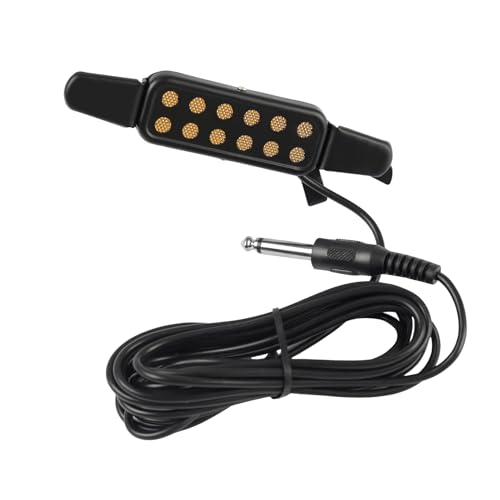
This clip-on pickup is a quick, portable solution that turns a standard acoustic into an amplified instrument without permanent modifications. It’s compact, with a long cable for flexible positioning and easy connection to an amplifier or PA system.
Who it’s best for: players who need an immediate, non-invasive way to amplify without tool use or battery dependence. Better for smaller gigs or practice spaces. Caution: some players may find the cable length excessive in tight setups or prefer a built-in volume control rather than a separate amp input.
Ernie Ball Acoustic Soundhole Cover 4″

This 4-inch soundhole cover is designed to fit standard 4″ soundholes and helps reduce feedback by muting problematic acoustic resonance around the soundhole. It’s easy to install and remove, making it convenient for players who alternate between unplugged and amplified playing.
Who it’s best for: performers seeking reliable feedback suppression during live sets. Limitation: designed for 4″ soundholes; measure your guitar’s hole to avoid a poor fit.
D’Addario Screeching Halt Soundhole Plug
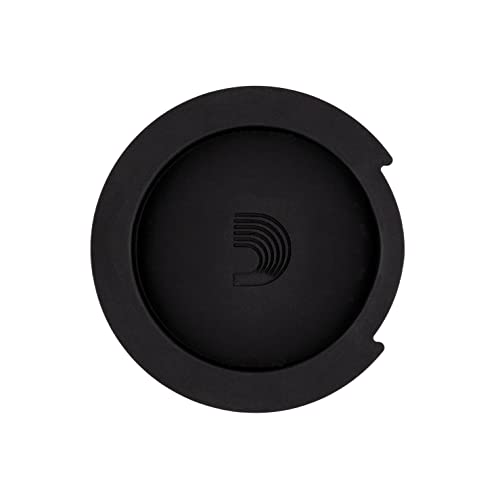
This plug-style solution reduces feedback and stage volume without permanent changes. It installs and removes quickly and uses a soft rubber insert to protect the guitar’s finish while delivering a tighter sound for amplified performances.
Who it’s best for: players needing a quick, non-permanent way to curb feedback in loud environments. Caution: fit must be snug to avoid rattling or inadvertent movement during energetic playing.
TraderPlus Soundhole Pickup

This magnetic pickup offers tone and volume control, with a 10-foot cable for flexible setup. It’s a cost-conscious option for amplifying an acoustic guitar without altering its structure—ideal for players who want adjustable control at a budget.
Who it’s best for: players who want an affordable, easy-to-install pickup with basic tone shaping. Limitation: magnetic pickups can be sensitive to body resonance and may pick up playing noise in high-gain settings.
Buying Guide: How to Choose the Right Acoustic Guitar Sound Enhancer
What should you consider when selecting a sound enhancer? Start by identifying your playing environment and goals: live stage use, practice space, or home recording. Decide whether you prefer a non-permanent modification (like an O-Port or soundhole cover) or a detachable pickup for flexible use across guitars.
Key factors to compare include amplification method (passive resonance boost vs. active pickup), ease of installation, potential impact on playing feel, feedback suppression capabilities, and whether you want built-in controls (volume, tone) or rely on yourAmp or PA system.
For live amplification, consider products that maximize projection and reduce feedback without altering core acoustic tone. For home recording, prioritize clarity and natural tone preservation. If you play multiple guitars, a non-permanent enhancer may be more practical than a mounted pickup.
Frequently Asked Questions
- What is an acoustic guitar sound enhancer? A device or accessory that increases volume, clarity, and projection or reduces feedback, often without permanent modification to the guitar.
- Do soundhole plugs affect guitar tone? Yes, they can reduce feedback and smooth stage volume, sometimes at the expense of a tiny reduction in acoustic resonance.
- Are clip-on pickups easy to install? Yes, most clip-ons require no tools and can be placed on the soundhole or near the bridge, then connected to an amplifier.
- Which option is best for beginners? A non-permanent solution like an O-Port or a simple soundhole plug can provide quick results with minimal setup.
- Can these enhancers damage the guitar? When used as directed, most accessories are designed to be non-damaging, but improper fit or force can affect finishes or playability.
- Do I need a preamp with a pickup? Some pickups include built-in volume and EQ controls; others rely on external preamps or amplifiers for shaping tone.