Best All-in-One Soundbar for Easy Home Theater and Clear Dialogue
If you want a simple, powerful, all-in-one soundbar that delivers clear dialogue and immersive sound, these top picks fit American living rooms of any size. They’re ideal for small apartments, family rooms, and home offices where fewer components mean less setup time. This guide highlights five solid options, explains who each is best for, and compares key benefits to help you choose quickly.
Quick comparison table
| Product | Channel Count | Dolby/DTS | Best For |
|---|---|---|---|
| Amazon Fire TV Soundbar Plus | 3.1 | Dolby Atmos, DTS:X | Big sound + built-in streaming hub |
| Sony S100F | 2.0 | — | Small spaces, simple setup, clear dialogue |
| SAMSUNG HW-S50B | 3.0 | Dolby Digital 5.1, DTS Virtual:X | Balanced home theater in compact form |
| Bose TV Speaker | 2.0 | — | Speech clarity and compact design |
| JBL Bar 300MK2 | 5.0 | Dolby Atmos, MultiBeam 3.0 | Premium surround feel without extra speakers |
Amazon Fire TV Soundbar Plus (Newest Model)

The Amazon Fire TV Soundbar Plus is an all-in-one 3.1-channel system with built-in bass and support for Dolby Atmos and DTS:X. It emphasizes crisp dialogue through a dedicated center channel, making it well-suited for streaming-heavy living rooms and home theaters that want minimal wiring. Best for buyers who want streaming integration and compact design without adding separate subwoofers or receivers.
Who it’s best for: households wanting a combined sound system and streaming hub that keeps setup fast and straightforward. Why selected: its integrated bass and clear dialogue channel help movies and TV feel more immersive without extra components.
Limitations: Some users may desire a separate subwoofer for deeper bass in very large rooms. It’s optimized for mid-to-small spaces where a full 3.1 setup fits neatly.
Sony S100F 2.0ch Soundbar

The Sony S100F provides a compact 2.0-channel setup with a built-in tweeter and Bass Reflex speaker. It’s easy to install and delivers clean, theater-like sound for smaller rooms or desk setups. Best for buyers who need a simple, affordable upgrade to TV audio without a lot of cables or space.
Who it’s best for: small living rooms, dorms, or home offices requiring a slim, unobtrusive soundbar. Why selected: slim design, straightforward Bluetooth pairing, and solid midrange clarity.
Limitations: Lacks a dedicated center channel and height for true multi-channel surround; not ideal if you specifically want Atmos or deep bass from a separate subwoofer.
SAMSUNG HW-S50B All-In-One Soundbar
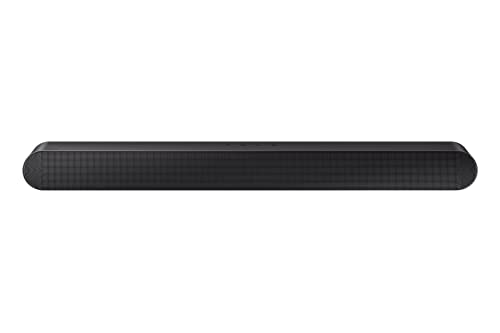
The Samsung HW-S50B combines a 3.0-channel setup with two built-in woofers and tweeters. It supports Dolby Digital 5.1 and DTS Virtual:X for immersive sound, and Q-Symphony synchronizes with compatible Samsung TVs for cohesive playback. Best for: users who want a room-filling experience in a compact form with smooth integration with Samsung TVs.
Who it’s best for: homes with Samsung TVs or those who want a balanced all-in-one system that fills a medium room. Why selected: strong all-around performance, effective virtual surround, and convenient built-in center support.
Limitations: may have limited upgradable bass without external subwoofer in very large rooms; best pairing with compatible Samsung devices.
Bose TV Speaker

The Bose TV Speaker focuses on speech clarity within a compact, all-in-one design. Two angled drivers help create a wider, more natural soundstage, and it includes Bluetooth and HDMI-ARC for easy connectivity. Best for buyers prioritizing vocal clarity and a minimal footprint.
Who it’s best for: apartments or bedrooms where space is at a premium and dialogue clarity is the primary goal. Why selected: strong vocal presence in a small package with straightforward setup.
Limitations: not the fullest surround experience; lacks a dedicated subwoofer and wide-ranging bass for action-heavy scenes.
JBL Bar 300MK2 All-in-One

The JBL Bar 300MK2 delivers a 5.0-channel experience with built-in subwoofer and support for Dolby Atmos and MultiBeam 3.0. Its 450W peak output supports punchy bass and a wide soundstage, while JBL’s app aids calibration. Best for: home theaters that want a premium all-in-one with a wider soundfield without extra speakers.
Who it’s best for: fans of immersive cinema-like sound who prefer a single-bar solution with strong bass and flexible setup. Why selected: high output, multi-directional sound, and easy calibration through the app.
Limitations: Dolby Atmos requires compatible content and setup to fully benefit; some users may notice room-dependent bass nulls if not properly placed.
Buying Guide
What should I consider when choosing an all-in-one soundbar?
Room size, TV compatibility, and content type should drive your choice. For small rooms, 2.0 or 2.1 channels with clear dialogue may suffice. For larger spaces, look for 3.0 or 3.1 configurations with built-in subwoofers and Dolby Atmos/DTS support to boost immersion.
Do I need built-in streaming or a simple audio upgrade?
Some models, like the Fire TV Soundbar Plus, combine streaming features with sound output, making it ideal for dorms and apartments. If you already have streaming devices, you might prefer a straightforward audio upgrade like the Bose TV Speaker or Sony S100F.
How important is dialogue clarity?
Many top models emphasize enhanced speech clarity via dedicated channels or targeted processing. If dialogue is your priority, consider Bose, Sony S100F, or Samsung HW-S50B with Center-channel enhancements.
Is Atmos or Virtual Surround a factor for me?
Atmos and Virtual:X provide a more immersive feel, especially for movies and gaming. For a true Atmos experience, ensure your content and TV support Atmos and that the soundbar’s processing aligns with your setup.
What about placement and wiring?
All-in-one bars benefit from front placement, away from walls that block bass. HDMI ARC/eARC compatibility simplifies setup; Bluetooth can keep cords minimal but may introduce latency for some setups.
How should I compare features vs. price?
Focus on core strengths: dialogue clarity, bass depth without a separate sub, room-filling sound, and ease of use. Higher-priced models typically offer wider soundstages, better calibration, and Atmos or advanced processing, but the best value depends on your room and usage.
Quick buying checklist
- Room size and seating layout
- TV compatibility: HDMI ARC/eARC, Bluetooth
- Dialogue clarity vs. surround needs
- Need for built-in streaming or extra devices
- Space and cable management preferences
Frequently Asked Questions
Q: Do all-in-one soundbars require a subwoofer? A: Not always. Some include built-in subwoofers, while others rely on the main cabinet for bass. Choose based on how deep you want the bass to be.
Q: Can I pair an all-in-one soundbar with a gaming console? A: Yes. Ensure HDMI ARC/eARC or Bluetooth compatibility and check any game mode features offered by the model.
Q: Is Atmos necessary for a good experience? A: Atmos enhances multi-directional sound but is not essential for enjoying movies and shows. Dolby Digital and DTS Virtual:X can still provide a rich experience.
Q: Which setup is easiest for beginners? A: A compact model with simple HDMI setup and Bluetooth connectivity, such as the Bose TV Speaker or Sony S100F, tends to be very beginner-friendly.
Q: Can I upgrade later with a subwoofer? A: Some models allow expansion with an optional subwoofer, but not all do. If deep bass is a priority, verify compatibility before buying.