Best Am Fm Receiver Tuner for Home Audio and Small Studios
Looking for an am fm receiver tuner that combines reliable radio reception with versatile amplifying and streaming capabilities? This guide highlights five tuners and receivers well-suited for different buyers, from casual radio enthusiasts to home theater runners. Whether you want built‑in Bluetooth, USB/SD playback, or karaoke-ready mics, these picks offer solid AM/FM tuning, robust outputs, and practical features for American households.
Product Comparison Table
- Daakro AK45 — 300W per channel, Bluetooth 5.0, USB/SD, FM radio.
- Yamaha R‑S202BL — Stereo receiver, Bluetooth, 40 station FM/AM presets, dual system speaker options.
- Facmogu FM Radio Receiver — Si4730 FM chip, global frequency support, long antenna.
- Joengoep AK50 — 400W, FM radio, Bluetooth 5.0, USB/SD/AUX, mic with echo.
- Pyle PDA5BU.0 — 200W, AM/FM radio, USB/SD, karaoke mic inputs, remote control.
Daakro AK45 Stereo Audio Amplifier

The Daakro AK45 combines strong multi-channel power with convenient wireless and media options. It provides 300W+300W peak power and 40W+40W rated power, making it suitable for 4–16 inch passive speakers. This compact amplifier is ideal for karaoke, home theater, or small music rooms. It supports Bluetooth 5.0 for seamless streaming and includes USB and SD Card inputs for direct playback from flash drives or memory cards. Best for small living spaces or bedrooms where robust, room-filling audio is desired. Limitation: Bluetooth range can be reduced by walls; keep devices within about 30 feet (10 meters).
Yamaha R‑S202BL Stereo Receiver
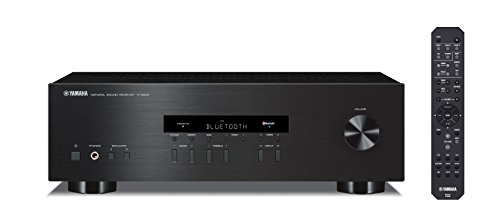
The Yamaha R‑S202BL is a compact stereo receiver with dual system speaker selectors, Bluetooth streaming, and a built-in FM/AM tuner. It supports 40 station FM/AM presets and offers a broad frequency response for balanced playback. This model suits listeners who want a reliable, space-saving amplifier with straightforward tuning and modern wireless music options. Best for living rooms or small home studios that prioritize simple operation and dependable radio access. Limitation: No built‑in phono stage, so vinyl lovers may require an external phono preamp.
Facmogu FM Radio Receiver

The Facmogu FM Radio Receiver emphasizes reception quality with a professional Si4730 chip for better signal sensitivity and interference resistance. It includes a 33-foot retractable antenna for flexible positioning and global frequency support in multiple bands (64–108 MHz, 76–108 MHz, and 87–108 MHz). It offers easy manual and auto search memories to quickly lock in stations. Best for radio enthusiasts in apartments or homes who value clear signal capture and wide geographic compatibility. Limitation: Functionality focuses on radio reception; it lacks integrated amplification beyond a separate receiver unit.
Joengoep AK50 Home Audio Amplifier

The Joengoep AK50 is a versatile 400W+400W two-channel amplifier with FM radio, Bluetooth 5.0, USB/SD/AUX inputs, and an active subwoofer output. It includes mic input with echo control, making it suitable for home karaoke, small parties, or media rooms. It offers broad compatibility with 4–16 ohm passive speakers and emphasizes HiFi-level sound with low distortion. Best for home theaters or party setups that need a strong wireless and wired input mix. Limitation: Higher wattage requires careful speaker matching to avoid overpowering smaller rooms.
Pyle 4-Channel Audio Amplifier With Bluetooth

The Pyle 4-Channel Bluetooth Amplifier delivers a robust 500W peak power across four channels, suitable for multi-speaker setups in home theaters or venues. It features Bluetooth wireless streaming, seven inputs (including USB, micro SD, AUX, and FM radio), and two microphone inputs with echo effects. Best for entertainers who want flexibility in input sources and a built‑in FM tuner for live or background radio play. Limitation: The extensive feature set can complicate configuration for pure stereo listening needs; consider a simpler unit if you only require two-channel sound.
Buying Guide: Am Fm Receiver Tuner Buyer’s Checklist
- Do you need an integrated AM/FM tuner or a receiver with optional tuner? If you primarily want radio, ensure strong antenna options and auto/manual scan features.
- Match amplifier wattage to your speaker impedance and room size. Higher wattage is useful for larger rooms, but oversizing can cause distortion in small spaces.
- Consider Bluetooth, USB/SD playback, AUX, and mic inputs. If karaoke or announcements are planned, mic inputs with echo control are advantageous.
- Check impedance and recommended speaker range (2–16 ohms common). Ensure your chosen unit supports your speaker lineup.
- For FM tuning, evaluate antenna length, mounting options, and the chip used for reception (e.g., Si4730). Global frequency support is helpful for travelers or multi-region homes.
- Larger amplifiers require suitable ventilation and stable shelving. Consider compact designs for bedrooms or apartments.
- If you want a dedicated radio experience, a more focused tuner may suffice. For multi-media use, a feature-rich amplifier with FM included provides versatility.
FAQs
- What is the advantage of Bluetooth in am fm receivers? It enables wireless streaming from modern devices, reducing the need for extra cables and enabling easy music playback from phones or tablets.
- Do all am fm receivers include a built-in FM tuner? Not all, but most models in this guide include FM tuners. Verify tuner coverage and preset capacity in product specs.
- Is a dedicated phono input important if I have vinyl records? Yes, a phono input preserves proper equalization for vinyl playback; otherwise you need a separate phono preamp.
- How many FM presets should I expect? Preset counts vary; expect 40 presets on many home receivers, which covers common stations in most regions.
- Can these receivers drive multiple speakers? Most can handle 2 or more speakers, but verify impedance and channel configuration to avoid mismatch.
- Is global frequency support necessary? If you travel or live near border areas, global frequency support helps you tune a wider range of stations.