
Best AM/FM Weather Radios for Emergency Prep and Everyday Use
Find a reliable AM/FM weather radio that meets your needs, from portable emergency units to compact bedside radios. This guide highlights five top options, ideal for weather alerts, off-grid use, or simple daily listening. Each entry explains who it’s best for and why, with practical trade-offs to help you choose.
| Product | Best For | Notes |
|---|---|---|
| Retekess TR604W AM FM NOAA Radio | Home and outdoor use; seniors or kids | No frills operation with a simple interface |
| XHDATA D221 NOAA Weather Radio | Compact, portable backups | Very small, DSP-enhanced reception |
| Weather Radios Portable AM FM NOAA Alert with Battery Backup 12000mAh (Mesqool) | Off-grid emergencies and camping | Includes solar charging and hand crank |
| PRUNUS J161 NOAA Weather Radio | Budget-friendly portable option | AA battery powered; basic weather coverage |
| Midland ER310 Emergency Crank Weather AM/FM Radio | Rugged prep and disaster kits | Crank-powered option (hand-crank) |
Retekess TR604W AM FM NOAA Radio
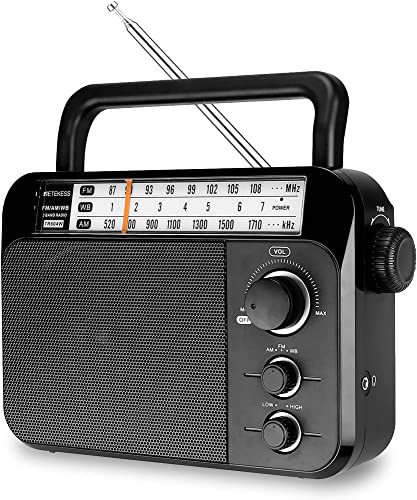
The Retekess TR604W serves as a straightforward, easy-to-use emergency radio with NOAA weather alerts. It supports seven NOAA channels and includes a portable carry handle for mobility. This model is best for buyers who want a simple device that provides timely weather information without complex settings, making it suitable for the elderly or children who prefer a basic interface. A potential limitation is that features are focused on essential listening rather than advanced digital options.
XHDATA D221 NOAA Weather Radio

The XHDATA D221 is a compact AM/FM/Shortwave radio with NOAA weather capability. It’s ideal for travelers or small-space users who still want reliable weather broadcasts and broad reception. Its DSP chip improves reception, and the device is designed to be carried easily in a pocket or bag. It’s best for individuals who need a discreet, portable option, but keep in mind the compact form may limit loudness or extra features found on larger radios.
Mesqool Weather Radios Portable AM FM NOAA with 12000mAh
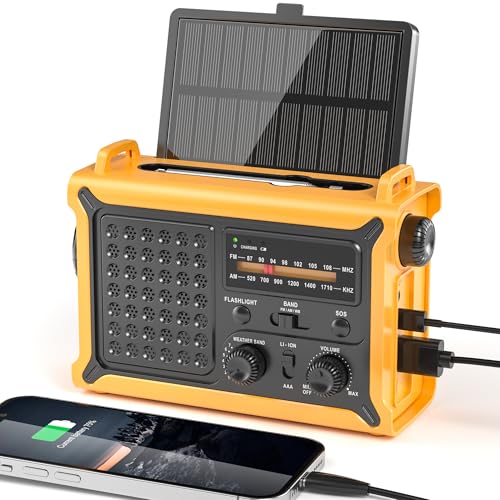
This Mesqool model combines AM/FM/NOAA weather reception with a large 12000mAh battery and solar charging. It’s best for off-grid users and campers who require longer operation between charges and the option to use a hand crank for emergency power. The solar panel is described as high-efficiency, and the hand crank significantly boosts charging in a power outage. A consideration is the device’s size and weight compared with ultra-portable pocket radios.
PRUNUS J161 NOAA Weather Radio

The PRUNUS J161 is a compact, affordable option that covers 7 NOAA weather bands and operates on AA batteries. It’s best for budget-conscious buyers who want a simple device to monitor weather alerts during power outages or outdoor activities. The key limitation is that it does not support automatic NOAA alert notifications, so users must actively check the radio.
Midland ER310 Emergency Crank Weather Radio

The Midland ER310 combines wind-up crank power with AM/FM and weather alerts, making it a solid choice for disaster kits and homes that want independent charging. It’s best for users who value a hands-on charging option in emergencies. A potential caveat is that performance depends on manual cranking, which may be less convenient for users with limited hand strength or mobility.
Buying Guide: Key Purchase Considerations
- Coverage: Ensure the radio can access NOAA channels relevant to your area. Look for 7 NOAA station support for broad coverage.
- Power options: Consider models with batteries, USB charging, solar charging, or hand-crank options for outages. A multi-source power approach increases reliability.
- Portability: If you plan to take the radio on the go, prioritize compact size, light weight, and a carrying handle or lanyard.
- Ease of use: For seniors or kids, choose a device with simple controls and clearly labeled knobs or buttons.
- Reception quality: DSP chips or advanced antennas help with clear reception across bands (AM/FM/SW).
- Additional features: Look for extra features such as SOS alerts, headphone compatibility, and built-in flashlight if relevant to your needs.
FAQ
- Q: What is the difference between NOAA weather radio and standard AM/FM radios?
A: NOAA radios specifically receive official weather alerts and forecasts, often on dedicated weather bands, while standard AM/FM radios cover general broadcasts. - Q: Do these radios require internet access to work?
A: No. Most models rely on radio signals, batteries, or off-grid power sources. They do not require internet access. - Q: Which features are essential for a home emergency radio?
A: NOAA weather alerts, reliable power options (batteries or multiple charging methods), and easy operation are essential for home use. - Q: Can I listen to non-weather stations on these radios?
A: Yes. Most AM/FM radios include standard broadcasts, and some include shortwave or auxiliary bands for broader listening. - Q: Are crank or solar-powered radios truly reliable in a power outage?
A: They provide independent charging options, but the practicality depends on usage. A combined system (crank, solar, batteries) offers the most reliability. - Q: Which radio is best for portability and everyday carry?
A: The XHDATA D221 is a compact, highly portable option suitable for pockets or small bags.