Best Bluetooth Speaker Amplifier Boards for DIY Audio Projects
For buyers seeking reliable Bluetooth-enabled amplifier boards for DIY speakers, these selections combine solid power, clear sound tuning, and easy input options. Each model targets a different use case—from compact home setups to small workshops. The top picks below are best for: hobbyists building compact Bluetooth speakers; hobbyists needing flexible input options; users prioritizing bass and treble control; and those seeking higher power for subwoofer-heavy setups.
| Product | Key Use | Power (approx.) |
|---|---|---|
| ARRAROWN ZK-1002T | Compact DIY Bluetooth speaker amp | 100W+100W |
| ZK-TB21 | 2.1-channel DIY amp with subwoofer boost | 50W+50W+100W |
| Fosi BT20A | 2-channel home audio DIY amp | 100Wx2 |
| Cozychord ZK-1002T | HiFi 2.0-channel DIY amp | 100W+100W |
| DAMGOO 440W Board | High-power DIY wireless speaker amp | 220W+220W |
ARRAROWN ZK-1002T RPO 2.0 Channel Bluetooth 5.0 Amplifier

Best for: DIY builders seeking a straightforward 2.0-channel amp with Bluetooth 5.0 and independent treble/bass controls. This board supplies two 100W channels and offers USB and AUX inputs. It is suitable for compact bookshelf speakers or small subwoofer-integrated designs. Caution: AUX mode requires disconnecting Bluetooth to avoid signal conflicts. Selection rationale: strong balance of Bluetooth reliability and simple tone control makes it a versatile base for budget projects.
ARRAROWN ZK-TB21 2.1CH Amplifier With Subwoofer Support

Best for: DIY setups needing a 2.1-channel configuration with a dedicated subwoofer channel. The board delivers 50W+50W with a 100W sub, along with Bluetooth 5.0 plus AUX inputs and independent treble/bass controls. Selection rationale: the extra subwoofer channel helps create richer low-end performance for compact home theaters or music systems. Limitation: like other boards, ensure proper heat management in enclosed enclosures.
Fosi Audio BT20A Bluetooth Stereo Amplifier
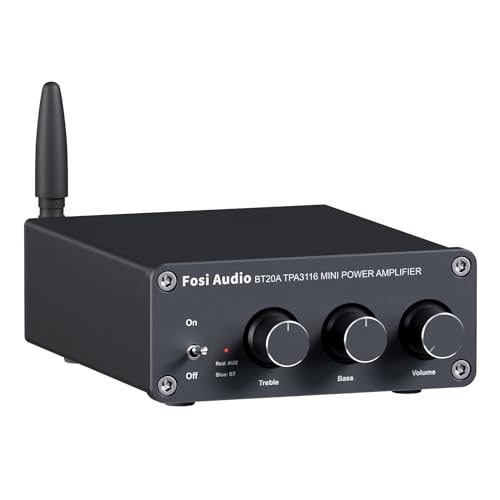
Best for: Those seeking a compact, no-frills 2-channel power amp for passive speakers in homes or small offices. The BT20A offers up to 100W per channel, easy setup, and smooth bass/treble controls. Selection rationale: its simplicity makes it a solid entry point for straightforward Bluetooth playback without extra features getting in the way. Caution: this is a practical choice, but it lacks some of the more advanced DSP options found in higher-end boards.
Cozychord ZK-1002T Bluetooth 5.0 Stereo Amplifier

Best for: DIY projects that need HiFi-grade sound with easy tone shaping. This 2.0-channel board delivers 100W+100W and includes Bluetooth 5.0 plus AUX inputs, with dedicated bass and treble knobs for direct sound tuning. Selection rationale: dual TPA3116D2 chips and shielding help minimize distortion, making it suitable for compact HiFi builds. Caution: ensure proper dissipation and avoid overdriving in small enclosures.
DAMGOO 440W Audio Amplifier Board With Treble and Bass Control

Best for: DIY projects requiring higher power output for medium-sized rooms or louder listening scenarios. The board delivers two 220W channels, Bluetooth 5.2, and multiple inputs (USB, AUX) with treble and bass control. Selection rationale: higher power makes it better suited for louder setups or subwoofer-heavy configurations. Caution: high power means more heat, ensure adequate cooling and safe enclosure design.
Buying Guide: Key Considerations For Bluetooth Amplifier Boards
- Power needs: Match speaker impedance and target volume. Consider whether you need 2.0, 2.1, or higher channel counts for subwoofer support.
- Input options: Bluetooth version, AUX, USB, SD, and other sources. Verify compatibility with your playback devices.
- Tone control: Independent treble and bass knobs offer direct tuning. Some boards include equalizers or DSP features; weigh complexity vs. control.
- Heat management: Higher wattage requires proper cooling, especially in compact enclosures. Look for boards with good shielding and heat dissipation design.
- Connectivity stability: Bluetooth range and interference resistance matter for reliable streaming.
- Compatibility and installation: Check voltage range (DC 9–24V or 12–24V) and connector types to fit your project.
Frequently Asked Questions
- What is the difference between 2.0 and 2.1 channel boards?
– 2.0 provides two channels (stereo). 2.1 adds an additional subwoofer channel or dedicated bass/low-frequency support for richer bass. - Do these boards require external power supplies?
– Yes. Most boards operate on DC input (common ranges include 12–24V) and require a compatible power supply. - Can I use Bluetooth and AUX simultaneously?
– Typically not. Many boards require disconnecting Bluetooth when using AUX mode to avoid conflicts. - Are these boards suitable for bookshelf speakers?
– Yes, especially 2.0 and 2.1 boards with appropriate power ratings and proper enclosure design. - Is treble and bass control necessary?
– It helps tailor sound quickly without changing source devices, beneficial for compact or varied listening spaces.