Best Amp-in-a-Box Pedals for Rich, Studio-Quality Guitar Tones
Looking for compact, convenient ways to dial in authentic amp and cabinet tones without a full rig? Amp-in-a-box pedals deliver versatile, all-analog or hybrid emulations that suit practice rooms, stage setups, and recording apps. This guide highlights five top options that cover a range of styles—from American and British amp voicings to vintage and modern distortions—so you can pick the right fit for your guitar, style, and performance needs. Best for players who want portable tone without carrying a stack, or for those who need a reliable practice or recording solution.
Buyer’s quick-reference summary table:
| Product | Best For | Notable Feature |
|---|---|---|
| Guitar Effect Pedal Amplifier Simulation for Electric Guitar (Black) | All‑in‑one analog tone with multiple amp voicings | All-analog signal path, three amp voicings |
| Marshall JCM800 Overdrive/Distortion Pedal | Classic high-gain British tone | Iconic JCM800 inspiration |
| BOSS IR-2 Amp & Cabinet | Premium amp emulation with IR loading | 11 amp types, Celestion IRs |
| JHS Little Black Amp Box | Pushes front end for natural amp response | Effects-loop driven tone shaping |
| LEKATO EP-01 Amp Simulator | Versatile tonal palette with analog path | True bypass, USB-C power options |
Guitar Effect Pedal Amplifier Simulation for Electric Guitar (Black)

This pedal offers an all-analog signal path designed to re-create traditional amp stages, including tube breakup, tone stack, and cabinet simulation. It provides a fully analog preamp, power amp sim, and cabinet emulation, delivering an immediate and responsive feel. Best for players who want a compact studio or stage solution with authentic analog dynamics. A caution: this unit requires a standard 9V power supply, which is not included.
- Three amp voicings with distinct gain structures for American and British tones
- Analog preamp, power amp sim, and cabinet emulation
- Stereo out for flexible routing
- Best for players seeking a fully analog, compact tone box
Best for: Players who want a self-contained, all‑analog tone box with multiple voiced options for live or studio use. Choose this if you value authentic signal coloration and direct-on-a-desk simplicity.
Caution: Power supply not included; you’ll need a compatible 9V adapter.
Marshall JCM800 Overdrive/Distortion Pedal – Black and Gold

Inspired by the legendary JCM800, this pedal aims to deliver a classic high‑gain British tone with straightforward controls. It’s ideal for players who want a punchy lead sound and classic crunch without the bulk of a vintage stack. Best for classic rock and hard rock tones. A potential limitation is that gain and dynamics are tied to traditional pedal feel, which may not suit players seeking ultra-clean headroom at lower volumes.
- Iconic tone inspiration from the JCM800
- Gain control for adjusting grit
- Sensitivity control to fine‑tune overdrive dynamics
Best for: Guitarists chasing a recognizable, vintage British overdrive character for riffs, riffs with grit, and classic rock textures. Choose this if you want a focused, iconic lead/drive sound.
Caution: This pedal emphasizes gain and drive—not the cleanest option if you need pristine cleans at modest levels.
BOSS IR-2 Amp & Cabinet

The IR-2 is a compact, premium amp emulator and cabinet IR loader. It processes at 32‑bit floating‑point with 96 kHz sampling and includes eleven amp types plus Celestion IRs. This option is well-suited for players who want high‑fidelity cab resonance and flexible recording or live setup. A limitation to consider is the learning curve with multiple presets and IR management for seamless live transitions.
- Eleven amp types, high‑quality cabinet IRs
- 32‑bit/96 kHz processing for clear, dynamic tone
- USB‑C for recording and playback
Best for: Musicians who require a versatile, high‑fidelity amp/cabinet solution with easy USB recording and playback. Choose this if you value professional-sounding cab simulations and robust software integration.
Caution: More features mean a steeper setup process for first-time users.
JHS Pedals JHS Little Black Amp Box
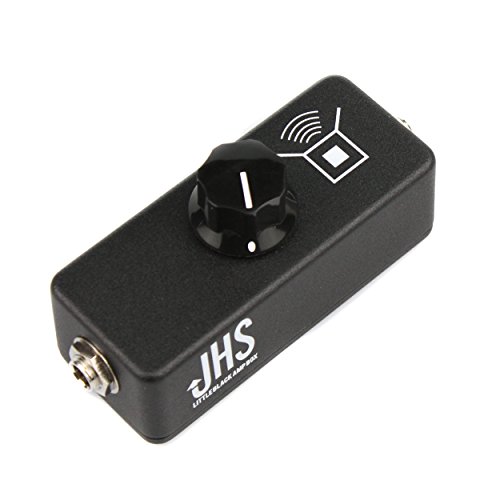
The Little Black Amp Box serves as a signal converter that helps push your amp into its natural front-end response by routing through the effects loop. It’s best for players who want to preserve their amp’s core behavior while adding effects or drive. A limitation is that it relies on the strength of your existing amp’s front end, so choose this if your goal is to maximize your amp’s own tone rather than replace it entirely with modelled sounds.
- Pushes the front end of a tube amp for natural tone
- Controls the amount of signal sent to the power section
- Retains amp’s sweet spot response at lower levels
Best for: Players who want to capture the authentic feel of their amp with more control over drive and dynamics. Choose this when your current amp’s core tone is a priority and you want enhanced responsiveness.
Caution: Effectiveness depends on your existing amp’s architecture and the interaction with the pedal loop.
LEKATO Amp Simulator EP‑01

The LEKATO EP‑01 combines a versatile tone palette with a pure analog path to preserve your guitar’s natural voice. It supports USB‑C and 9V DC inputs for flexible powering options. This pedal is suitable for players who value do-it-all amp tones—from clean to overdrive—without sacrificing analog character. A potential limitation is that the tonal range may require thoughtful dialing to avoid digital artifacts when pushed hard.
- Versatile amp tone with various gain stages
- Pure analog signal path with premium bypass
- USB‑C or 9V DC optional power
Best for: Players seeking broad tonal coverage in an analog signal path, useful for both studio and live applications. Choose this if you want flexibility with minimal tone coloration.
Caution: Some users may need careful dialing to prevent edge-case digital artifacts at extreme settings.
Tone City Model M V2

The Model M V2 delivers a Distortion/Amp-In-A-Box style effect with a classic British Plexi flavor. It’s lightweight and straightforward, making it accessible for players who want a strong drive character without fuss. Best for players who want a gritty, mid-gain rock tone. A limitation is that it may lack the ultra-clean headroom some players require for certain styles.
- Distortion with Plexi-inspired character
- Lightweight, easy to dial in
- Compact form factor for pedalboards
Best for: Players chasing a vintage‑style crunch and lead tone in a small package. Choose this if you want a ready-to-go Plexi vibe for rock tones.
Caution: Not ideal for ultra-clean, high-headroom contexts.
GOKKO VINTAGE BOX GK‑33

The GK‑33 emulates a 57 Deluxe‑style voice with all-analog circuitry and a 6‑band EQ. It offers a vintage character with a broad tonal range from clean to overdrive, packaged in rugged aluminum. This makes it a strong pick for players who want a versatile vintage character on a compact board. A limitation is that, as with many analog pedals, the exact response can vary with guitar pickups and amp interactions.
- 57 Deluxe tone capture for vintage clarity
- Six‑band EQ with voice and drive controls
- All‑analog circuitry for pure sound
Best for: Players seeking authentic vintage amp flavors with flexible EQ shaping. Choose this if you want a classic sparkle and smooth overdrive on a compact pedal.
Caution: All‑analog designs can react differently with various guitars and amps.
Buying Guide: Amp-In-A-Box Pedal Selection
- Tone goal: Decide whether you need British crunch, American cleans, or versatile studio tones. Pick pedals with voicings or IRs that align with your preferred style.
- Power and compatibility: Check power requirements (9V, USB-C, etc.) and whether a power supply is included or required. Consider whether you need battery-free operation.
- Signal path: All-analog paths tend to preserve dynamics and feel; digitally modeled units may offer broader presets and integrated IRs. Choose according to your workflow—live, studio, or practice.
- Live vs. studio: For stage use, consider effect loops and output options (stereo, XLR, USB). For recording, look for reliable USB or DAW integration and high‑quality cab IRs.
- Ease of use: If you need quick tone changes, prioritize intuitive controls and clear labeling. For complex tones, ensure you can access multiple presets and routing options.
Frequently Asked Questions
- What is an amp-in-a-box pedal? – It is a compact pedal that emulates amplifier and cabinet tones within a single effects unit, often including drive or distortion, cabinet IRs, or power-amp simulations.
- Do these pedals require power? – Most require a 9V adapter or USB-C power; some do not include power supplies, so plan accordingly.
- Can I use amp-in-a-box pedals with a real guitar amp? – Yes; they can be used as a front-end preamp or as a standalone tone source, depending on the pedal’s routing options.
- Are analog models better than digital? – Analog path pedals often deliver more natural dynamics and warmth, while digital units may offer broader presets and consistent performance.
- Which pedal is best for beginners? – Pedals with simple controls and clear voicing options are ideal for beginners. The JCM800-inspired and Plexi-style pedals can be good starting points for classic rock tones.
- Do amp-in-a-box pedals replace a real amp? – They can replace some needs in practice or recording, but for certain players, a full amp may still be preferred for feel and stage volume.