
Best Amp Switcher With Effects Loop for Guitarists
Answering the need for clean signal integrity and flexible tone shaping, an amp switcher with effects loop helps guitarists manage multiple pedals and amps without tone loss. This guide highlights five top options, explaining who benefits most from each and why they were chosen. The included buyer table compares core features to aid quick decisions for gigging players, home studio builders, and live sound engineers alike.
| Product | Type | Best For | Key Benefit |
|---|---|---|---|
| EX Loop Box | 2-Loop ABY Switcher | Players wanting simple dual-loop routing | Direct A/B switching with bypass control |
| Hotone Patch Kommander | 4-Channel Programmable Loop Switcher | Complex rigs needing multiple loops | Independent true bypass loops and input buffer |
| Btuty 3 Loop Switcher | 3-Loop True Bypass Pedal | Gigging players needing three loops | Three independent loops with true bypass |
| JOYO PXL8 | 8-Group FX LOOPS Controller | Rig with many effects and presets | Programmable groupings up to 32 combinations |
| Voodoo Lab Control Switcher | MIDI Amp Commander | Studio and stage with MIDI control | Isolated relays and quick access |
EX Loop Box: Simple 2-Channel Switcher
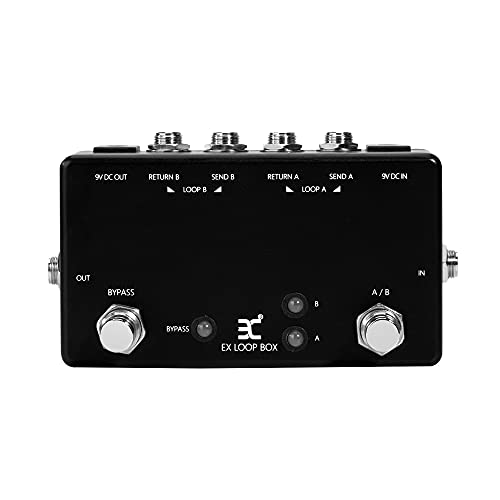
The EX LOOP BOX is described as a straightforward pedal switcher enabling switching two loop channels and bypassing. It can function as a two-loop selector and as an amp loop with a bypass option. This makes it suitable for players who want quick front-end tone control and amp switching without extra routing complications. The device supports switching between effect loops via A/B foot switches and toggling the overall bypass. Best for players who want a compact, budget-friendly solution with clear on/off control for two loops.
Who it’s best for: guitarists who need a compact dual-loop setup for live rigs or home studios. Why selected: simplicity, direct two-loop control, and a built-in bypass path help preserve signal integrity when disengaged.
Caution: limited to two loops; for more complex rigs, a multi-loop option may be preferable.
Hotone Patch Kommander: Four-Channel Loop Switcher

The Hotone Patch Kommander offers four independent relay-based true bypass loops with a compact aluminum chassis. It also includes a switchable high-quality input buffer to prevent high-frequency loss when running many pedals. This makes it a strong choice for players with larger pedalboards who need reliable loop routing without tone coloration. It is best for mid-large rigs where precision loop control and a robust build are priorities.
Who it’s best for: players with multiple effects needing reliable, independent loops. Why selected: more loops, true bypass, and a buffer option reduce tone-sucking risks in dense pedal configurations.
Caution: larger footprint than a two-loop box; portability considerations for solo gigs may apply.
Btuty 3 Loop Switcher: Three-Loop True Bypass

The Btuty 3 Loop Switcher provides three independent loops with true bypass switching. The product description emphasizes total rig control, tone preservation, and ease of use, making it well-suited for electric guitar players who want to manage multiple effects while maintaining signal integrity. It is best for gigging players who frequently switch between different pedal combinations during performances.
Who it’s best for: players needing three discrete loops with reliable true bypass. Why selected: three loops support layered tones, while true bypass helps minimize tone coloration when engaged/disengaged.
Caution: three loops may still be limiting for very large pedalboards; consider a higher-loop option if needed.
JOYO PXL8: Eight FX Loop Controller

JOYO PXL8 is an eight-group FX loop pedal controller with a programmable grouping system. It can store up to 32 effect combinations in memory and uses a true bypass design with TAKAMISAWA miniature signal relays. This makes it ideal for players who run large pedal arrays and want to organize presets and quick switch capabilities without signal loss. It is best for studio setups or live rigs requiring extensive loop management and dependable bypass.
Who it’s best for: players who need complex preset management and many loops. Why selected: high loop count, programmable groupings, and true bypass preserve tone when switching.
Caution: greater complexity may require learning the programming interface and setup time.
Voodoo Lab Control Switcher MIDI Amp Commander

The Voodoo Lab Control Switcher combines relay-based switching with MIDI control, enabling complex routing for amps and effects. Its four isolated relay controls and front-panel instant-access buttons support quick workflows, while separate 1/4-inch mono jacks add routing flexibility. This product suits studios and live engineers who rely on MIDI for precise stage setups. It’s best for users who want fast, programmable control over multiple periphery devices.
Who it’s best for: users seeking MIDI-braced control of multiple amps and effects. Why selected: MIDI compatibility plus isolated relays help ensure clean, repeatable switching during performances.
Caution: MIDI-oriented workflows may be overkill for small rigs needing only simple switching.
Buying Guide: How to Pick the Right Amp Switcher With Effects Loop
How many loops do you need?
Assess whether you need two, four, or more loops. Simple two-loop models work well for compact rigs, while four- and eight-loop units excel with larger pedalboards and multiple amplifiers.
Override options: bypass vs. true bypass
True bypass preserves the guitar signal when the loop is disengaged, preventing tone coloration. If you run many pedals, true bypass is often preferred to maintain signal integrity.
Channel routing and amp switching capabilities
Consider whether you need just effects looping, or also amp selection. Some units function as amp switchers, allowing smooth transitions between amps or amp channels in addition to effects loops.
Control interface: foot switches, MIDI, or presets
Foot switches are essential for live use. MIDI-based controllers offer advanced presets and programmable scenes for quick, repeatable setups. Choose based on how you perform and how much setup time you’re willing to manage.
Size, build quality, and portability
Smaller rigs prioritize compact builds; larger rigs should emphasize rugged enclosures and reliable relays. Aluminum chassis often provide durability for touring players.
Signal integrity and cable management
Look for true bypass and quality relays to minimize tone loss. A clean, organized signal path reduces noise and ensures consistent performance across venues.
Compatibility and future expansion
Check whether the switcher supports your current pedals and amps and whether it can scale if you add more equipment later.
Practical setup tips
- Label loops clearly to avoid live confusion during gigs.
- Test each loop with your board powered both with and without the amp to verify tone preservation.
- Plan for quick transitions by placing the most-used pedals in easily accessible loops.
FAQ
- What is an effects loop switcher best used for?
It manages multiple pedals or amp channels, allowing quick changes to routes without manually unplugging gear.
- Do all switchers preserve tone by default?
Most true bypass loop switchers emphasize minimal tone coloration when disengaged, but always verify with your gear.
- Can a switcher replace an entire pedalboard?
Not usually; it mainly streamlines routing and switching. You may still retain a few essential pedals outside the loop.
- Is MIDI control worth it for most players?
For players with complex rigs and stage presets, MIDI control offers fast, repeatable switching; for simpler rigs, it’s optional.
- What should I consider regarding loop count and room for expansion?
Plan for current needs and potential future additions to avoid outgrowing your switcher quickly.
- Are there any performance drawbacks to multi-loop switchers?
More loops can introduce complexity and potential signal latency; ensure your setup remains clean and tested.