Best Guitar and Microphone Amp Combos for Home Practice and Small Gigs
If you need an all-in-one amplifier that handles guitar and microphone inputs with ease, these options are well suited for practice rooms, small gigs, busking, or open-mic nights. Each model below offers at least one dedicated mic input, plus features like Bluetooth, built-in effects, or delay to expand your tonal palette. This guide helps you choose based on output power, portability, and feature sets for different playing situations.
Buyer focus summary:
| Product | Best For | Key Benefit | Limitations |
|---|---|---|---|
| Rockville G-AMP 30W | Vocalists and hobbyists needing high volume | 30W, mic input with independent level | Bulkier, needs space |
| Rockville G-AMP 20W | Practice players who want built-in delay | 20W, built-in delay, Bluetooth | Smaller speaker may limit larger rooms |
| Fender Acoustasonic 15 | Acoustic players with mic | Two-channel, dedicated mic/instrument channels | Acoustic voice emphasis |
| Flatsons Crush20 | Singer-songwriters on the go | 20W, rechargeable battery, two channels | Battery life varies with volume |
| Rockville G-AMP 40 | Small performances with extended headroom | 40W, multiple effects, mic input | Higher price; heavier |
Rockville G-AMP 30 Watt Guitar Combo Amplifier

Best for: vocalists and players who want loud practice and small gig capability with mic handling. This 30-watt amp uses an 8-inch speaker for clear projection. It includes a dedicated mic input with independent volume control, making it easy to sing while playing or connect other vocal sources. Bluetooth lets you jam along to tracks from a phone or tablet, expanding practice options without extra gear. The combination of power, mic control, and wireless streaming makes it suitable for bedroom studios and intimate stage settings.
Caution: Larger rooms may require more than 30 watts for full stage coverage, and the built-in speaker may struggle in larger venues without DI or PA support.
Rockville G-AMP 20W Guitar Amplifier Combo

Best for: practice players who want built-in flexibility without overkill. This 20-watt amp uses a compact 6.5″ speaker, offering crisp, dynamic sound ideal for home rehearsal rooms or small venues. Bluetooth connectivity lets you stream backing tracks, while a built-in delay effect adds ambient depth to your tone, beneficial for developing texture in performances. Choose this if you value portability and a straightforward, all-in-one practice rig.
Caution: The smaller speaker size may limit low-end punch in larger rooms; pair with a DI or PA if you need more audience reach.
Fender Acoustasonic 15 Acoustic Guitar Amplifier
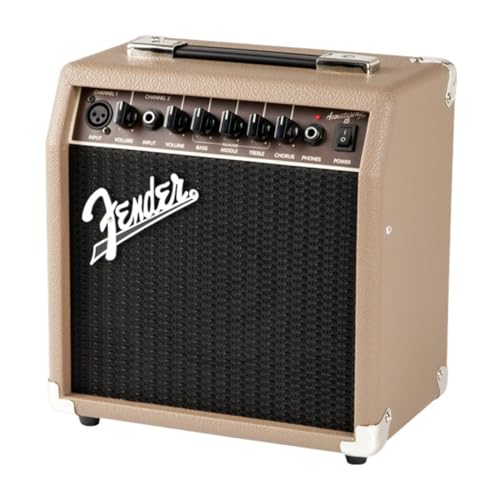
Best for: acoustic players needing two channels for instrument and microphone. The Acoustasonic 15 provides dedicated instrument and vocal channels with independent volume controls, enabling clean acoustic guitar tones alongside vocal amplification. Its 6″ Fender Special Design speaker is voiced to highlight acoustic clarity, making it ideal for live intimate performances, busking, or small gatherings where natural acoustic tone matters. The model includes a two-year warranty, reinforcing its suitability for frequent gigs.
Limitation: Primarily tuned for acoustic output; electric guitar tones may require additional EQ shaping to fit a rock or metal setting.
Flatsons Crush20 Acoustic Guitar Amp

Best for: singer-songwriters seeking portable, battery-powered performance. The Crush20 delivers 20W through a 5.5″ full-range speaker and includes independent guitar and vocal channels with built-in reverb. A rechargeable battery offers up to 8 hours of operation, making it suitable for street performances or practice-away-from-wall power. The dual-channel design and 2-band EQ help tailor both guitar and vocal tones for balanced in-venue sound.
Limitation: Battery-powered operation can reduce headroom compared to AC-powered models; volume may vary as the battery cycles.
Flatsons FBA-10 Mini Amp

Best for: portable practice and travel. The FBA-10 packs a 10W output with a clean and drive channel, USB-C charging, and a 3.5mm headphone/aux jack for quiet practice and easy compatibility with external devices. Its analog signal path helps preserve natural guitar tone, and the option to switch between clean and drive modes makes it a flexible travel companion for casual players or students. Use this when a compact, lightweight unit is paramount.
Limitation: Lower power limits volume in larger rooms; not ideal as a primary gig amplifier for bigger audiences.
Rockville G-AMP 40 40W Guitar Combo Amplifier
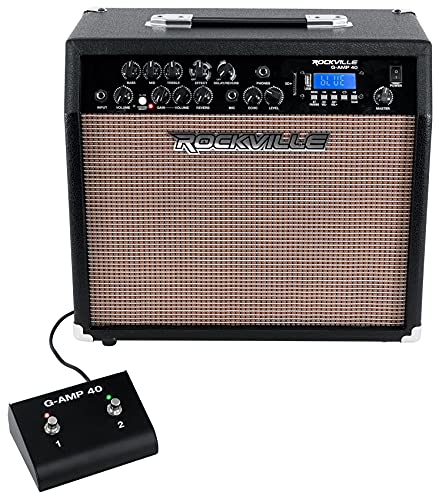
Best for: players who need extra headroom and built-in effects for small performances. The 40-watt amp powers a 10″ speaker for clearer, louder output. It includes Bluetooth, USB/SD playback, and a microphone input with adjustable echo, plus a suite of built-in effects such as reverb, delay, chorus, flanger, phaser, tremolo, and spring reverb. This design supports vocal performances, open mics, and compact stage work by providing a wide tonal range without external pedals.
Limitation: Higher wattage means more weight and size; may be overkill for strictly home practice rooms with modest volume needs.
Buying Guide: How To Choose The Right Amp With Mic Input
- Power versus room size: For bedroom practice, 20W or less is typically sufficient. Small gigs benefit from 30W–40W for adequate stage presence, while larger rooms may require amplification through a P.A. system or a dedicated microphone channel with a higher wattage.
- Dedicated mic channel quality: Look for a separate mic input with volume control and, if possible, a mic-specified EQ or feedback suppression. This helps singers stay balanced with the guitar signal.
- Built-in effects and features: Reverb, delay, chorus, and conduit options like USB/SD playback can reduce pedal clutter and expand tonal options for practice and performance.
- Portability and power options: Battery-powered models offer flexibility for street performing and venues without easy AC access. Consider rechargeable battery life and total weight when planning travel.
- Connectivity: Bluetooth for practice tracks, AUX for external audio sources, and DI outputs for direct stage connections are practical additions for flexible setups.
- Channel separation: Two-channel amps dedicated to instrument and vocal inputs prevent one signal from overpowering the other and help tailor volumes for live play.
FAQ
Do amps with mic inputs require a separate PA system?
Not always. Smaller amps with mic inputs can handle personal performance spaces, but for larger venues, DI or PA support may still be needed to reach the audience effectively.
Is Bluetooth streaming essential in a practice amp?
It’s convenient for practice, allowing you to jam along with tracks. It’s not essential if you plan to use only wired sources.
Can I use a guitar amp for vocals?
Many amps offer mic inputs, but dedicated vocal processing or a separate mic preamp may improve vocal clarity and gain staging.
Which amp is best for open mic nights?
Consider models with mic input, built-in effects, and portable design, such as the Rockville 30W or 40W options, to handle quick setup and varied sound needs.
This guide emphasizes clear, objective comparisons across models with mic inputs. Each option is chosen for practical use in home practice or small live settings, with explicit notes on who benefits most and where a limit might apply. For more detailed specs, consult the product pages linked in each section.